
Inca Trail vs Salkantay Trek: Which Should You Choose?
By the Goo Machu Picchu team · Checked against official sources (editorial policy) · Updated October 2026 · 5 min read
Choose the Inca Trail if you want Inca ruins along the way and to walk into Machu Picchu through the Sun Gate, and you can book months ahead for a permit. Choose Salkantay if you want bigger mountain scenery, more flexible last-minute dates and no permit, and you can handle a longer, higher trek.
This comparison covers every factor that matters so you can decide in a few minutes.
- Inca Trail
- About 26 mi, 4 days, max about 13,800 ft
- Salkantay
- About 40 to 46 mi, 4 to 5 days, max about 15,200 ft
- Permit
- Inca Trail yes, Salkantay no
- Harder trek
- Salkantay
- More ruins
- Inca Trail
Inca Trail vs Salkantay Side by Side
The Inca Trail is shorter, lower and full of ruins but needs a permit booked months ahead. Salkantay is longer, higher and more scenic in an alpine way, needs no permit, and ends by train or bus to Aguas Calientes, visiting Machu Picchu the next morning instead of hiking in.
Prefer a guided option? See our Inca Jungle trek.
| Factor | Inca Trail | Salkantay Trek |
|---|---|---|
| Distance | About 26 mi (42 km) | About 40 to 46 mi (65 to 74 km) |
| Days | 4 (classic) | 4 to 5 |
| Highest point | About 13,800 ft | About 15,200 ft (Salkantay Pass) |
| Difficulty | Moderate to challenging | Challenging |
| Permit | Required, limited daily | Not required |
| Book ahead | Often 4 to 6 months for peak season | Weeks ahead usually fine |
| Ruins on route | Many | Few (Llactapata on some routes) |
| Scenery | Cloud forest, Inca stonework | Glacier peak, turquoise lake, jungle |
| Arrival at Machu Picchu | On foot via Sun Gate | By train or bus from Aguas Calientes |
| February | Closed | Open |
Figures are rounded and vary by operator route; Salkantay length depends on the itinerary.
For a closer look at the classic route, see the Inca Trail map and campsites and how hard the Inca Trail is. Altitude affects both treks, so read Cusco altitude acclimatization too.
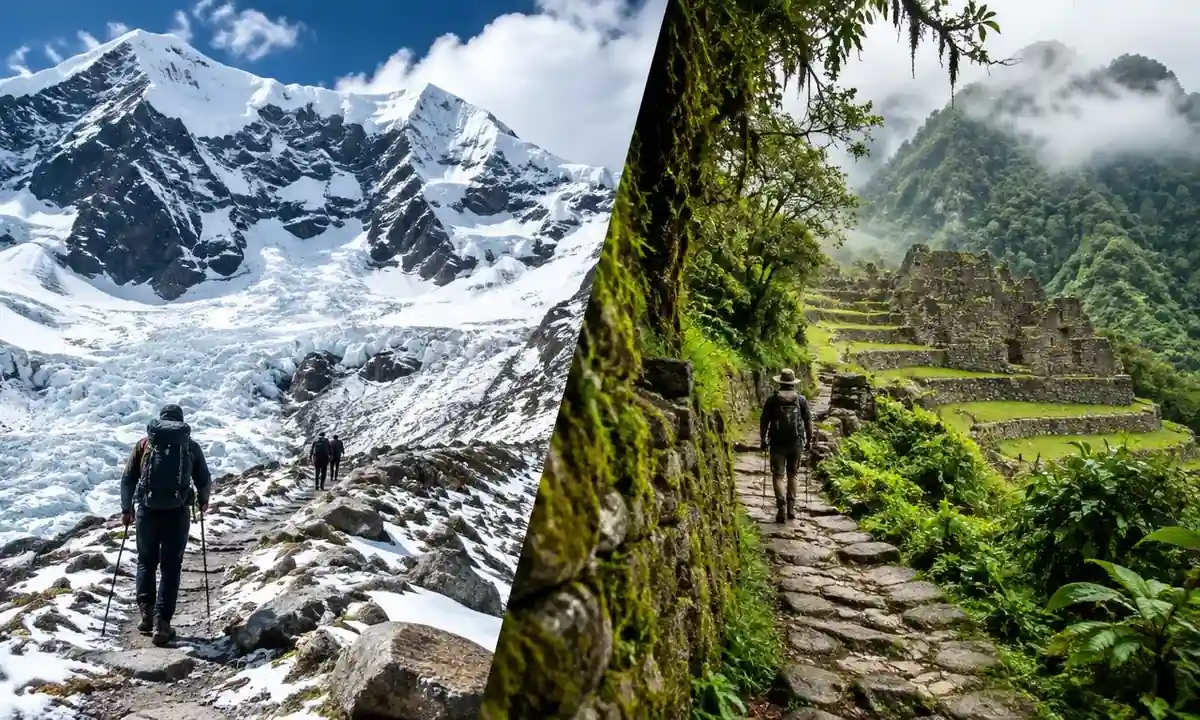
Which Is Harder: Inca Trail or Salkantay?
Salkantay is harder. It is roughly 15 to 20 miles longer and its pass is about 1,400 feet higher than Dead Woman's Pass, so altitude hits harder. The Inca Trail has more stone steps, which some hikers find tougher on knees, but overall Salkantay asks for more stamina.
Both need good acclimatization in Cusco first. For the full Inca Trail breakdown, read our Inca Trail difficulty guide.
Scenery and Ruins: What You See on Each Trek
The Inca Trail is about history: you pass a chain of Inca sites and finish through the Sun Gate. Salkantay is about landscapes: the glacier-covered Salkantay peak, Humantay Lake on many itineraries, and a dramatic drop from high Andes to coffee-growing cloud forest.
If seeing Inca stonework every day matters most, the Inca Trail wins. If snow peaks and changing ecosystems excite you more, Salkantay wins. Our Inca Trail map lists the ruins along the classic route.
Permits, Availability and Booking
The Inca Trail requires a government permit tied to your passport, with limited daily spaces that often sell out months ahead, especially May to August. Salkantay needs no trail permit, so you can usually book weeks ahead, but you still need a Machu Picchu entrance ticket.
See Inca Trail permits for how the system works and Machu Picchu tickets for the entrance ticket both treks need.
Which Costs More: the Inca Trail or the Salkantay Trek?
The Inca Trail usually costs more than the Salkantay Trek for a comparable group trip. Inca Trail prices carry a government permit, a mandatory licensed operator and regulated porter conditions, and only about 500 people per day, staff included, can start. Salkantay needs no permit, so far more operators compete and prices are lower.
| Cost factor | Inca Trail | Salkantay Trek |
|---|---|---|
| Trail permit | Required, limited daily numbers | Not required |
| Who can sell it | Only licensed Inca Trail operators | Any Cusco trekking company |
| Machu Picchu entry ticket | Included in the permit package | Bought separately, often included by operators |
| Return train to Cusco or Ollantaytambo | Usually included | Usually included; check the class |
| Upgrades that raise the price | Private departure, extra porter, sleeping bag rental | Glamping domes or lodges, private group, mule for gear |
| Booking pressure | Sells out months ahead in May to August | Available a few weeks ahead most months |
Compare like for like: group or private, camping or lodges, and what each quote includes. Most travelers also tip the guide, cook and porters on both treks. Ticket and train prices are broken down in the Machu Picchu cost guide, and the permit process is explained in Inca Trail permits.
Crowds, Camping and Comfort
The Inca Trail is busier because every permitted group walks the same path and shares assigned campsites. Salkantay has more spread-out groups, and some operators use fixed camps or lodges. Salkantay's highest camp is colder, often near or below freezing at night.
Which Trek Should You Choose?
Pick the Inca Trail if you have fixed dates booked well ahead and want the classic Sun Gate arrival. Pick Salkantay if you are booking late, traveling in February, want fewer people, or love high mountain scenery and are fit for a tougher hike.
For a day-by-day look at the effort, read our Salkantay trek difficulty guide.
Want this handled for you? Take a look at our Choquequirao trek.
- Booking under 2 months out in peak season: Salkantay.
- First multi-day trek, moderate fitness: Inca Trail or the Short Inca Trail.
- Visiting in February: Salkantay (Inca Trail closed).
- History lover: Inca Trail.
- Photographer chasing glaciers and lakes: Salkantay.
Compare full itineraries on the Classic Inca Trail 4 days and Salkantay Trek 5 days pages. Another permit-free option is the Lares Trek, shorter and focused on Andean village culture.
Frequently asked questions
Is Salkantay better than the Inca Trail?
Neither trek is better for everyone. Salkantay offers bigger mountain scenery, glacier views and no permit, so it suits late planners and strong hikers. The Inca Trail offers more Inca ruins and the famous Sun Gate arrival into Machu Picchu. Choose by your travel dates, fitness level and whether history or landscapes excite you more.
Do you need a permit for Salkantay?
No trail permit is needed for the Salkantay Trek, unlike the Inca Trail, so dates rarely sell out. You still need a Machu Picchu entrance ticket for your visit day, plus bus and train seats for the end of the trek. Reputable operators book those for you; check what is included before you pay.
Does the Salkantay trek go through the Sun Gate?
Standard Salkantay itineraries do not pass through the Sun Gate. The trek ends in Aguas Calientes, and the next morning you take the bus or walk up to the Machu Picchu entrance. If arriving through the Sun Gate matters to you, the Inca Trail or the Short Inca Trail are the routes that include it.
Which trek is better in the rainy season?
Salkantay stays open all year, while the Inca Trail closes every February for maintenance, so Salkantay is the only option of the two that month. Both trails are muddier and views are less reliable from December to March. Our [Machu Picchu weather guide](/guides/machu-picchu-weather) shows rainfall by month to help you decide.
Can I do both treks?
Some operators combine the Salkantay Trek with the final day of the Inca Trail, joining at Km 104 and entering Machu Picchu through the Sun Gate. That combined route still needs an Inca Trail permit, so it books out like the classic trek. Ask us for current combination options and availability for your dates.
Still deciding between the two treks?
Send your dates and fitness level and we will tell you which trek fits and what is available. Prefer to read first? Get the free Machu Picchu trip guide.
Sources checked October 4, 2026
Recommended tours
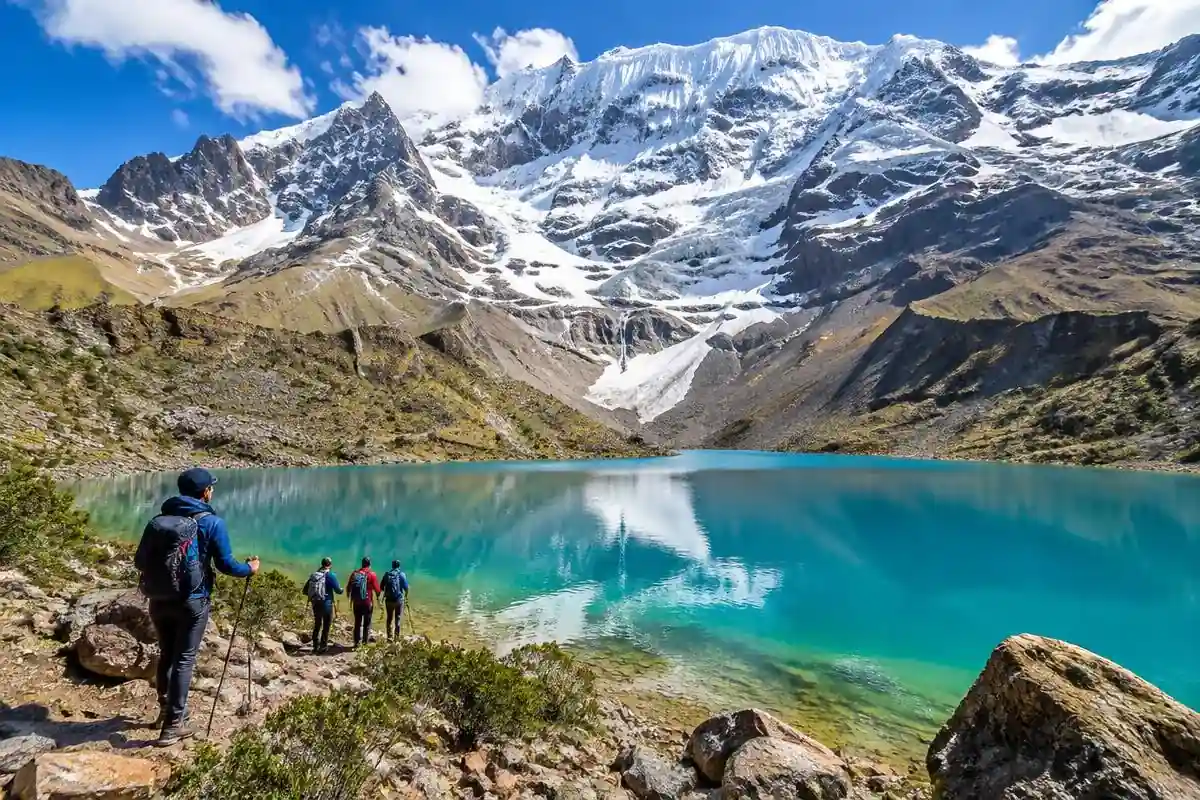
Treks · 5 days
Salkantay Trek to Machu Picchu, 5 Days
The best alternative to the Inca Trail: Humantay Lake, a 4,630 m pass and cloud forest.
from $490
View tour →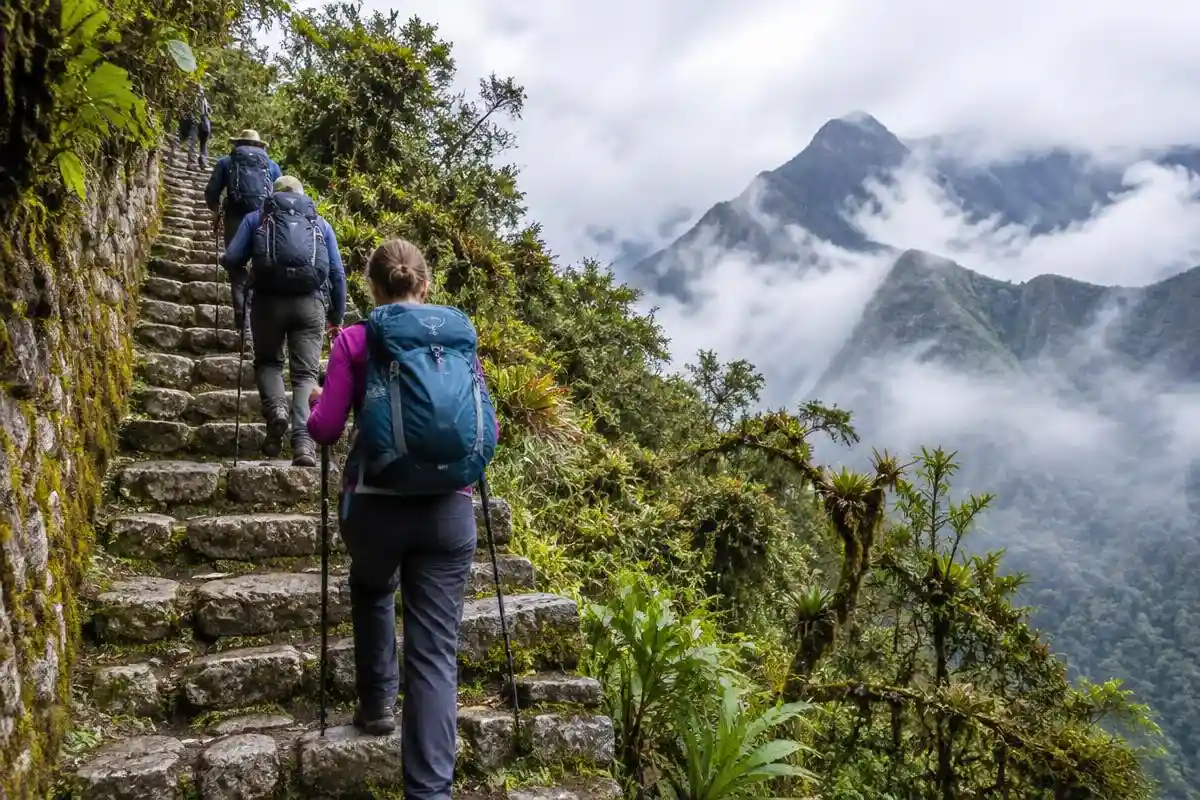
Inca Trail · 4 days
Classic Inca Trail to Machu Picchu, 4 Days
The world-famous 43 km trek on original Inca stone paths, ending at the Sun Gate.
from $827
View tour →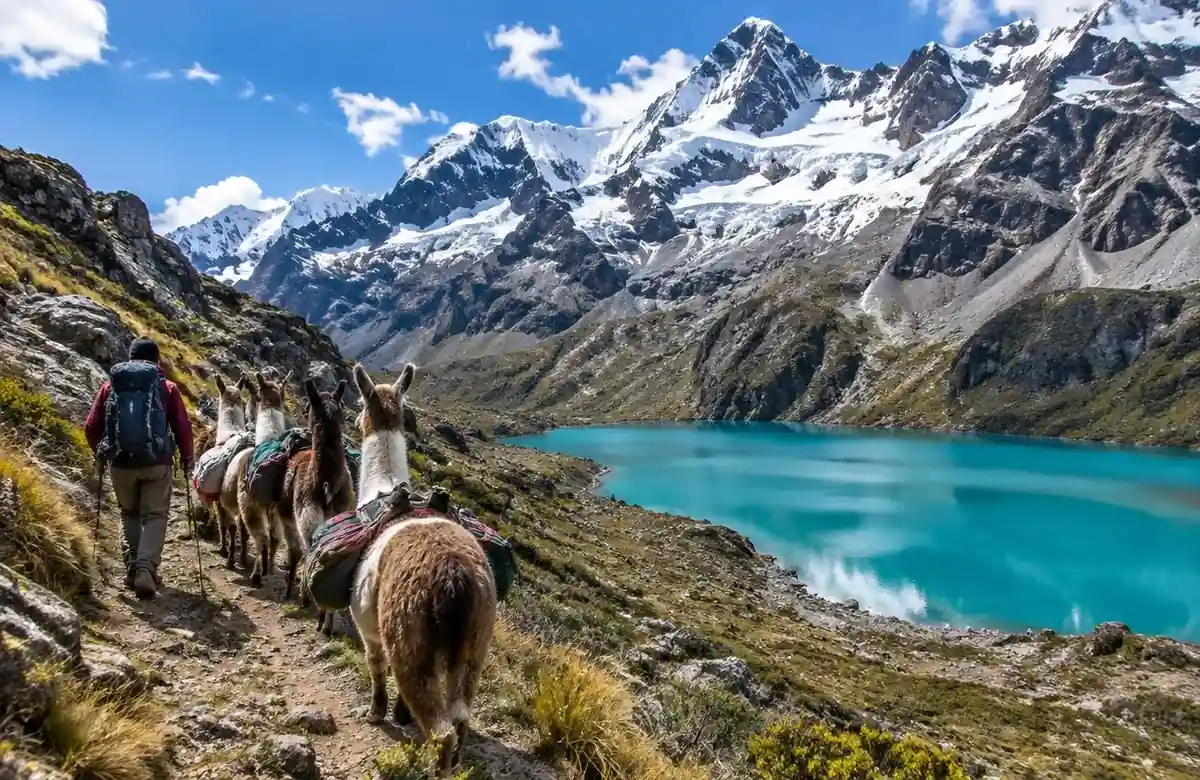
Treks · 4 days
Lares Trek to Machu Picchu, 4 Days
Quiet trails, Andean weaving villages and natural hot springs on the way to Machu Picchu.
from $610
View tour →Keep planning
- Inca Trail Permits: How to Get One, Daily Limits and Availability
- Inca Trail Difficulty: How Hard Is the Inca Trail, Really?
- Inca Trail Map: Route, Campsites and Elevation Profile
- Machu Picchu Tickets 2026: Prices, Ticket Types and How to Buy
- Best Time to Visit Machu Picchu: Best Months, Seasons and Time of Day
- How to Get to Machu Picchu: Every Route From Cusco Compared
- Machu Picchu Bus: How the Shuttle From Aguas Calientes Works
- Machu Picchu Hotels: Best Places to Stay Near the Citadel by Area and Budget