
Machu Picchu Weather: Climate, Temperatures and Rainfall by Month
By the Goo Machu Picchu team · Checked against official sources (editorial policy) · Updated October 2026 · 8 min read
Machu Picchu weather is mild all year, with daytime highs of about 69 to 74°F and nights around 49 to 54°F, based on Peru's official 1991 to 2020 climate normals. The big difference between seasons is rain, not heat: roughly 13 inches fall in each of the wettest months, compared with about 2 inches in June.
This guide explains what shapes the climate, gives temperature and rainfall for every month in US units, compares Machu Picchu with Cusco and Aguas Calientes, and shows how to read the forecast before your visit.
- Climate type
- Subtropical mountain cloud forest
- Average high
- About 69 to 74°F (21 to 23°C)
- Average low
- About 49 to 54°F (9 to 12°C)
- Yearly rainfall
- About 83 inches (2,116 mm)
- Wettest months
- January to March
- Driest months
- June to August
What Is the Weather Like at Machu Picchu?
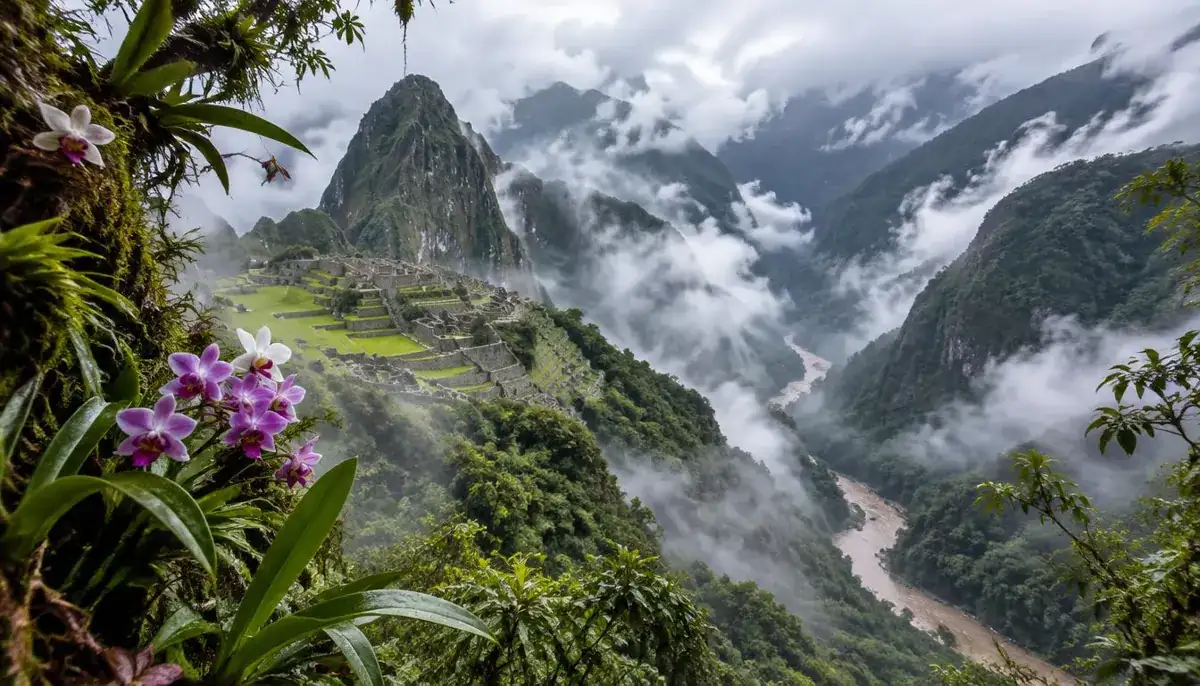
Machu Picchu has a mild, humid mountain climate, warmer than Cusco and cooler than the Amazon. The citadel sits at about 7,970 feet on a ridge above the Urubamba River, where cloud forest meets the Andes. Days are pleasant all year, nights are cool, and weather can shift from sun to cloud within an hour.
Warm, moist air rising from the Amazon basin meets the cooler Andes right around Machu Picchu. That collision creates the clouds, morning mist and sudden showers the site is known for, even in drier months.
Because the temperature barely changes through the year, Machu Picchu weather is best understood by rainfall. The site has a wet season and a dry season, while the altitude itself is covered in our Machu Picchu elevation guide.
How Warm or Cold Does Machu Picchu Get?
Machu Picchu temperatures stay in a narrow range. Official normals show average highs between 69°F in January and 74°F in September, and average lows between 49°F in July and 54°F in November and December. Strong sun can make middays feel hotter, while early mornings in the dry season feel noticeably colder.
- Warmest days: August to October, with average highs around 73 to 74°F (23°C).
- Coolest nights: June to August, with July averaging about 49°F (9°C).
- Daily swing: often 20°F or more between dawn and early afternoon.
- Feels-like heat: high-altitude sun is intense, so shade feels much cooler than sunlit terraces.
- Freezing: not typical at the citadel itself, unlike Cusco on dry-season nights.
These figures come from Peru's National Meteorology and Hydrology Service (SENAMHI) for a station at about 7,870 feet. Some travel sites list higher averages, so treat any single number as a guide rather than a promise.
What Is Machu Picchu Weather by Month?
Machu Picchu weather by month changes mainly in rainfall. January to March each average about 12 to 13 inches of rain, April and October to November sit in between at 6 to 7 inches, and May to September drop to about 2 to 3 inches. Highs stay near 70°F all year, with the coolest nights in July.
Travelers planning this often read our Cusco weather by month guide next.
Values are 1991 to 2020 averages from SENAMHI, rounded. Which of these months suits your plans is a different question, answered in our guide to the best time to visit Machu Picchu.
January to June Temperature and Rainfall
| Month | High / Low | Rain | What to expect |
|---|---|---|---|
| January | 69°F / 53°F (21 / 12°C) | 13.4 in (341 mm) | Very wet, frequent cloud, lush green |
| February | 69°F / 53°F (21 / 12°C) | 12.8 in (325 mm) | Very wet, slippery steps |
| March | 70°F / 53°F (21 / 12°C) | 13.4 in (341 mm) | Still wet, rain starts easing late |
| April | 71°F / 53°F (22 / 12°C) | 7.3 in (184 mm) | Drying out, mix of sun and showers |
| May | 71°F / 51°F (22 / 11°C) | 2.9 in (73 mm) | Mostly dry, clear mornings |
| June | 72°F / 50°F (22 / 10°C) | 2.0 in (51 mm) | Driest month, cold dawns |
July to December Temperature and Rainfall
| Month | High / Low | Rain | What to expect |
|---|---|---|---|
| July | 72°F / 49°F (22 / 9°C) | 2.1 in (54 mm) | Dry, coolest nights of the year |
| August | 74°F / 50°F (23 / 10°C) | 2.4 in (61 mm) | Dry, sunny, warm afternoons |
| September | 74°F / 52°F (23 / 11°C) | 3.0 in (76 mm) | Warmest days, first light showers |
| October | 73°F / 53°F (23 / 12°C) | 6.4 in (163 mm) | More showers, still many clear spells |
| November | 73°F / 54°F (23 / 12°C) | 6.8 in (173 mm) | Wet season begins, humid |
| December | 70°F / 54°F (21 / 12°C) | 10.8 in (275 mm) | Wet, regular afternoon rain |
When Is the Rainy Season at Machu Picchu?
The rainy season at Machu Picchu runs roughly from November to March, with the heaviest rain from January to March. In those months the site averages 12 to 13 inches of rain each, about six times the June total. Showers often build in the afternoon, but some days bring steady rain and low cloud for hours.
- Rain pattern: frequent short showers, plus occasional all-day drizzle in peak months.
- Trails and steps: wet granite becomes slippery, so grip matters more than warmth.
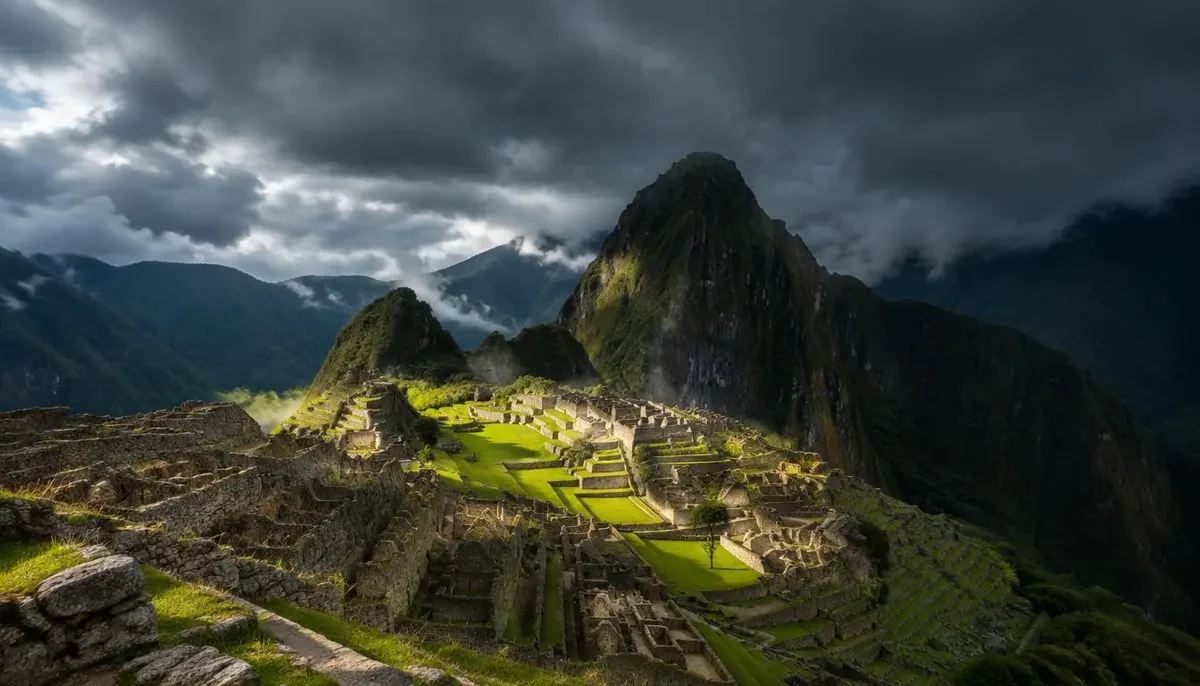
- Views: clouds can hide Huayna Picchu, then lift within minutes.
- Access: heavy rain can cause landslides on mountain roads and the Hidroeléctrica route.
- Rail: some Cusco departures switch to bus plus train in the wettest months.
Route impacts are explained in our guide on how to get to Machu Picchu. The Inca Trail also closes every February, as covered in the how Inca Trail permits work.
What Is the Dry Season Weather Like?
The dry season at Machu Picchu runs roughly from May to September, when monthly rain drops to about 2 to 3 inches. Expect clear, cold mornings near 50°F, sunny afternoons in the low 70s and strong ultraviolet light. Brief showers can still happen, especially at the start and end of the season, so a light rain layer stays useful.
- Mornings: crisp and often clear, ideal for wide views over the citadel.
- Afternoons: warm in full sun, cooler in shade and wind.
- Sun: high UV at nearly 8,000 feet, so sunscreen and a hat matter.
- Dust: trails stay firm and dry, good for the steeper side hikes.
Dry, stable weather is the reason steep climbs feel safer in these months. Conditions on the summit trail are described in our Huayna Picchu hiking guide.
Why Is Machu Picchu Often Foggy or Cloudy?
Machu Picchu is often foggy because humid air from the Amazon cools as it rises up the Urubamba canyon and condenses into cloud. Fog is most common early in the morning and during the rainy season. As the sun warms the valley, mist usually lifts or breaks up by mid-morning, opening the classic view.
Fog rarely lasts the whole day, so staying a few hours often pays off. Travelers with early entry slots sometimes wait 30 to 60 minutes at the upper terraces for clouds to clear, which is normal rather than bad luck.
Cloud also explains why photos from the same month can look completely different. Weather here is local and fast-moving, so a cloudy forecast for the region does not mean a cloudy visit all day.
How Does Machu Picchu Weather Compare With Cusco and Aguas Calientes?
Machu Picchu is warmer and more humid than Cusco, and slightly cooler than Aguas Calientes in the valley below. Cusco sits about 3,200 feet higher and has cold, often freezing dry-season nights. Aguas Calientes is lower, greener and more humid. Pack for all three, since most trips pass through each.
The town at the foot of the mountain is described in our Aguas Calientes travel guide. Travelers arriving from the coast should also read the Lima to Machu Picchu route guide, since Lima's weather is completely different.
Related reading: our Machu Picchu packing list guide.
| Place | Elevation | Typical weather | Packing note |
|---|---|---|---|
| Cusco | About 11,150 ft | Sunny days, cold nights, frost possible in dry season | Warm jacket and layers |
| Ollantaytambo / Sacred Valley | About 9,160 ft | Milder than Cusco, dry and sunny in winter | Light layers |
| Machu Picchu citadel | About 7,970 ft | Mild, humid, quick cloud and rain changes | Rain layer and sun protection |
| Aguas Calientes | About 6,690 ft | Warmest and most humid, frequent showers | Breathable clothes, insect repellent |
| Huayna Picchu summit | About 8,835 ft | Cooler and windier than the citadel | Extra layer for the top |
What Should You Wear for Machu Picchu Weather?
Dress for Machu Picchu weather in layers: a breathable base, a warm mid layer for cold mornings, and a waterproof jacket or poncho in any season. Add sturdy shoes with grip, a sun hat, sunglasses and high-SPF sunscreen. In the rainy season, quick-dry pants and spare socks make the visit far more comfortable.
- Dry season: fleece or light down for dawn, t-shirt for afternoon, sun hat.
- Rainy season: waterproof jacket or poncho, quick-dry layers, shoes with good tread.
- All year: sunscreen, sunglasses, refillable water bottle and insect repellent.
- Backpack: keep it small, since large bags are restricted at the entrance.
- Cusco nights: a warm hat and jacket, even if Machu Picchu days feel mild.
How Can You Check the Machu Picchu Weather Forecast?
Check the Machu Picchu weather forecast on a global service such as AccuWeather or Weather.com and on SENAMHI, Peru's national weather service, starting a few days before your visit. Mountain forecasts are less reliable than city forecasts, so read them as a rain risk, not a guarantee, and pack for both sun and showers.
Month by month detail: Machu Picchu in January, Machu Picchu in February, Machu Picchu in March, Machu Picchu in April, Machu Picchu in May, Machu Picchu in June, Machu Picchu in July, Machu Picchu in August, Machu Picchu in September, Machu Picchu in October, Machu Picchu in November and Machu Picchu in December.
- Search the forecast for Machu Picchu or Aguas Calientes, not Cusco, since conditions differ.
- Look at rain probability by hour rather than the daily icon.
- Check again the evening before and the morning of your entry.
- Read rail operator notices in the rainy season for schedule changes.
- Pack a rain layer even when the forecast shows sun.
Rain rarely closes the citadel, but trains can change in heavy weather. Our train to Machu Picchu guide explains rainy-season service, and an organized one-day Machu Picchu tour from Cusco includes timing adjustments if the weather shifts.
Frequently asked questions
Does it snow at Machu Picchu?
No. Snow does not fall at the Machu Picchu citadel, because its elevation of about 7,970 feet and humid climate keep temperatures well above freezing. You can see snow-capped peaks such as Salkantay on clear days and on nearby treks, and Cusco can get frost, but the ruins themselves stay snow-free all year.
Does it rain every day in the rainy season?
Not every day, but rain is likely on most days from January to March. Many days mix dry mornings with afternoon showers, while others bring steady drizzle and low cloud. December, November and April have more dry spells. Carry a poncho or rain jacket on any rainy-season visit.
Is Machu Picchu humid?
Yes. Machu Picchu is humid compared with Cusco because it sits in cloud forest above the Urubamba River, fed by moist air from the Amazon. Humidity is highest in the rainy season and in Aguas Calientes. Breathable, quick-dry clothing feels more comfortable than cotton in these conditions.
How strong is the sun at Machu Picchu?
The sun at Machu Picchu is strong because thinner air at nearly 8,000 feet filters less ultraviolet light. Sunburn can happen quickly, even on cloudy days. Use high-SPF sunscreen, sunglasses and a hat, and reapply during a long visit, since shade on the open terraces is limited.
Can bad weather close Machu Picchu?
Machu Picchu rarely closes for weather, but heavy rain can disrupt access. Landslides sometimes block roads or rail lines, and authorities may close specific trails, such as steep mountain paths, for safety. Check rail notices and official announcements during the rainy season, and keep some flexibility in your plans.
Are there bugs at Machu Picchu?
Small biting insects, often called sandflies, are commonly reported at Machu Picchu and especially in Aguas Calientes, more so in warm, humid months. Bites can itch for days. Wear long sleeves and pants and use insect repellent, reapplying after rain or heavy sweating.
Is Machu Picchu in the rainforest?
Machu Picchu sits in montane cloud forest, a transition zone between the high Andes and the Amazon rainforest. It is not lowland jungle, but the same moist Amazon air brings its clouds, orchids and heavy rainy-season showers. The true Amazon rainforest lies farther east and much lower, around Puerto Maldonado and Iquitos.
Is cloudy weather bad for Machu Picchu photos?
Not always. Cloudy weather at Machu Picchu softens harsh light and creates dramatic mist around Huayna Picchu, which many photographers prefer. Thick fog can hide the view for a while, so allow extra time on site. Morning and afternoon entry slots are compared in our [Machu Picchu tickets guide](/guides/machu-picchu-tickets).
Planning around the weather?
Share your travel dates and we will tell you what conditions to expect, check entry and train availability, and send our free Machu Picchu planning guide.
Sources checked October 3, 2026
Recommended tours
Machu Picchu · 1 day
Machu Picchu Day Trip from Cusco
Train, bus, entry ticket and guided tour of Machu Picchu in one easy day from Cusco.
from $379
View tour →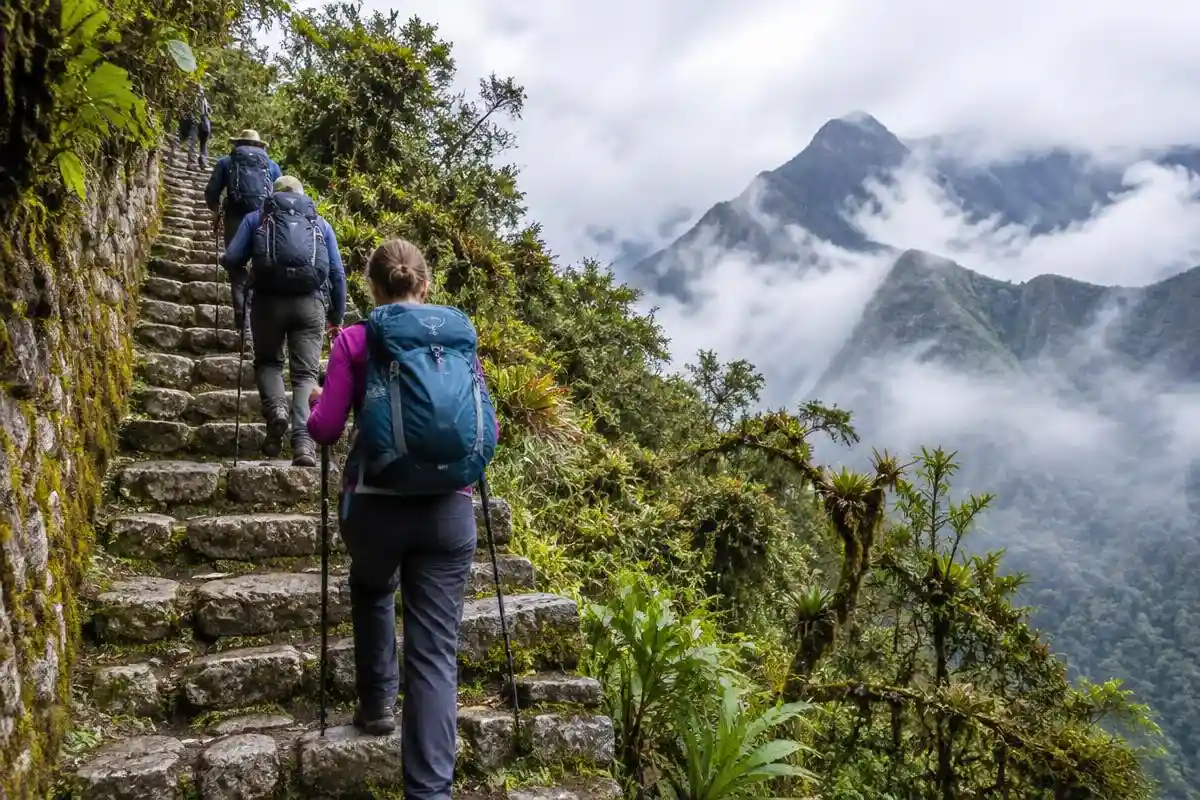
Inca Trail · 4 days
Classic Inca Trail to Machu Picchu, 4 Days
The world-famous 43 km trek on original Inca stone paths, ending at the Sun Gate.
from $827
View tour →Keep planning
- Machu Picchu Tickets 2026: Prices, Ticket Types and How to Buy
- Best Time to Visit Machu Picchu: Best Months, Seasons and Time of Day
- How to Get to Machu Picchu: Every Route From Cusco Compared
- Machu Picchu Hotels: Best Places to Stay Near the Citadel by Area and Budget
- Machu Picchu Map: Where It Is in Peru and How the Ruins Are Laid Out
- Machu Picchu Cost Breakdown: How Much It Costs to Go in 2026
- Machu Picchu Rules and Regulations: The Complete 2026 Visitor Code
- Machu Picchu in December: Is a Rainy-Season Holiday Visit Worth It?