
Aguas Calientes Peru Guide: The Town Below Machu Picchu
By the Goo Machu Picchu team · Checked against official sources (editorial policy) · Updated October 2026 · 9 min read
Aguas Calientes, Peru, officially called Machu Picchu Pueblo, is the small river town at the foot of Machu Picchu. It sits at about 6,690 feet in the Urubamba valley and has no road link to Cusco, so nearly every visitor arrives by train or on foot, then rides a shuttle bus or hikes up to the citadel.
This guide explains what the town is, how to get there, how to get from Aguas Calientes to Machu Picchu, whether an overnight stay is worth it, what to do in and around town, and the practical details US travelers ask about most.
- Official name
- Machu Picchu Pueblo
- Elevation
- About 2,040 m (6,690 ft)
- Region
- Urubamba Province, Cusco, Peru
- How you arrive
- Train, multi-day trek or Hydroelectric walk (no road from Cusco)
- To the ruins
- Shuttle bus about 20 to 30 min, or 1.5 to 2 hour hike
- Currency
- Peruvian sol (S/); cash widely needed
What Is Aguas Calientes and Where Is It?
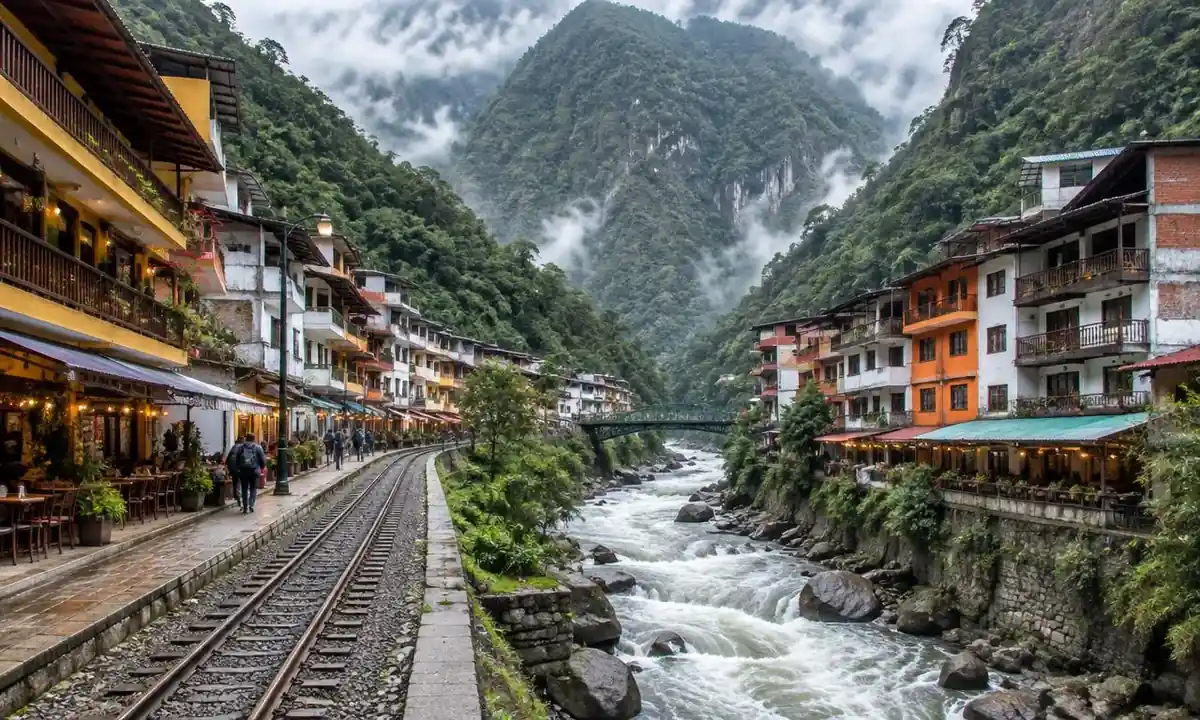
Aguas Calientes: the gateway town for Machu Picchu, roughly 70 miles by rail northwest of Cusco. The town lies in a narrow canyon where the Aguas Calientes stream meets the Urubamba River, surrounded by cloud forest. Machu Picchu Pueblo exists almost entirely for visitors, with hotels, restaurants, a train station and the bus stop.
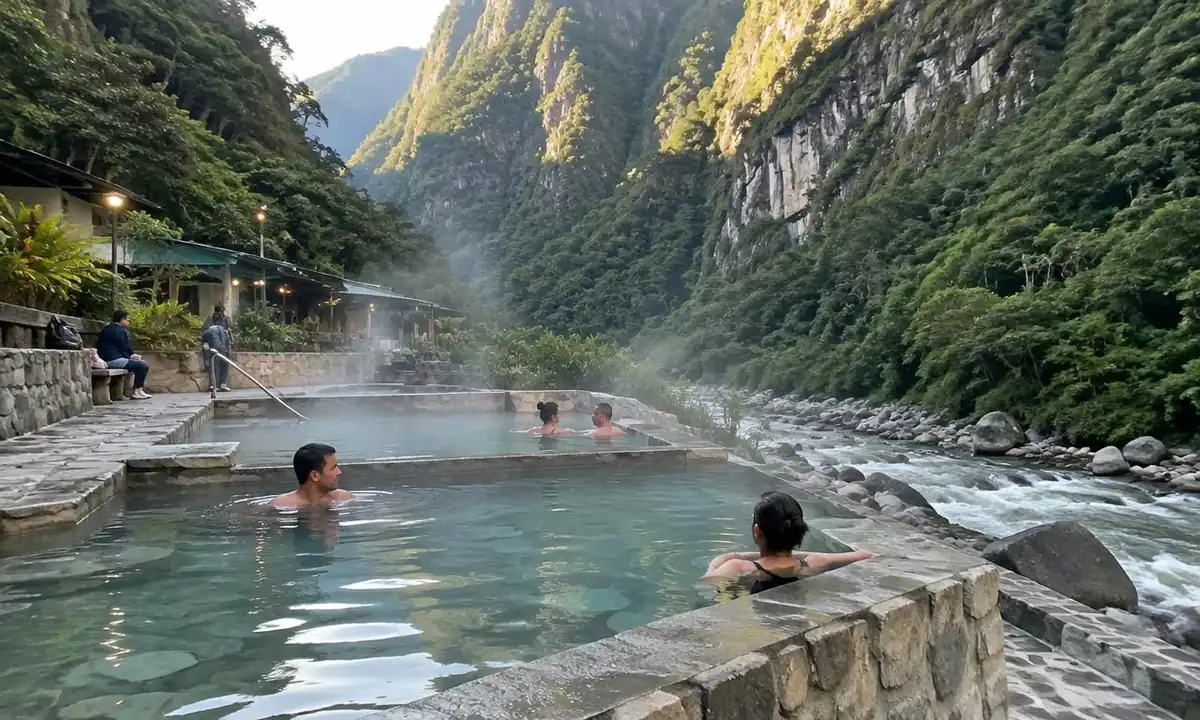
The name means "hot waters" in Spanish and comes from the thermal springs above town. In 1901 a few farming families settled here, and the camp grew around the Cusco to Santa Ana railway before tourism took over.
Today Aguas Calientes belongs to the Machupicchu district of Urubamba Province. Some travel sites place it in La Convención Province, but Wikipedia and most references list Urubamba.
Is Aguas Calientes the Same as Machu Picchu?
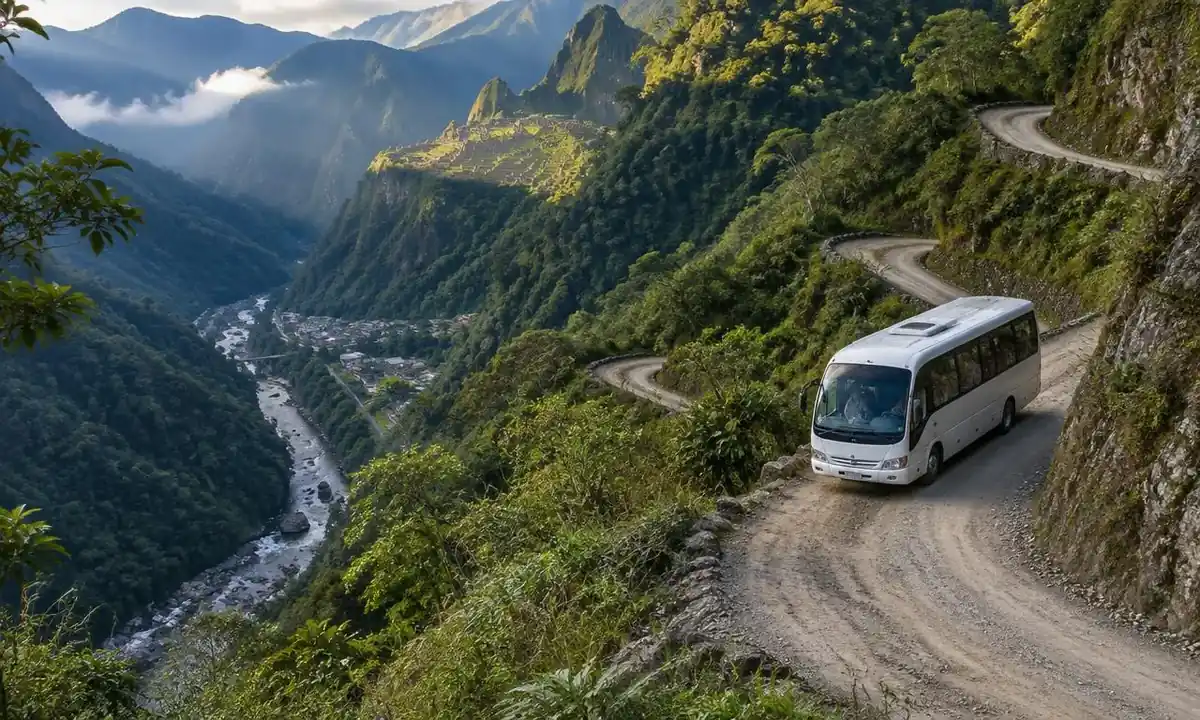
No. Aguas Calientes is the modern town in the valley, while Machu Picchu is the Inca citadel on the ridge about 1,300 feet above it. The two are roughly 5 miles apart by the switchback road. Your train ticket ends in Aguas Calientes, and you still need a timed Machu Picchu entry ticket plus a bus ride or hike.
Train companies label the final stop "Machu Picchu" station, which confuses many first-time visitors. The station is in the middle of Aguas Calientes, not at the ruins.
You cannot buy your way into the citadel at the gate, so book entry in advance using our Machu Picchu tickets guide. The town itself is free to walk around.
How Do You Get to Aguas Calientes?
You reach Aguas Calientes by train from Cusco (Poroy or San Pedro), Ollantaytambo or Urubamba, by a multi-day trek such as the Inca Trail or Salkantay, or by the budget route through Hidroeléctrica followed by a riverside walk. No public road connects the town with Cusco, so private cars and taxis cannot drive in.
| Route | Typical time | Best for |
|---|---|---|
| Train from Ollantaytambo | About 1.5 to 2 hours | Most travelers, most departures |
| Train from Cusco (Poroy or San Pedro) | About 3.5 to 4 hours | Leaving straight from Cusco |
| Inca Trail or other trek | 2 to 5 days | Hikers who want the walk-in experience |
| Van to Hidroeléctrica plus walk | About 6 to 7 hours by road, then 2 to 3 hours walking | Tight budgets with time to spare |
| Helicopter or private road | Not available to the public | None |
Classes, stations and luggage limits are covered in our train to Machu Picchu guide. For every door-to-gate option, read how to get to Machu Picchu. Flying in from the US? Our traveling from Lima to Machu Picchu covers the first leg, and trek access is covered in Inca Trail permits explained.
How Do You Get From Aguas Calientes to Machu Picchu?
From Aguas Calientes to Machu Picchu you either ride the Consettur shuttle bus, about 20 to 30 minutes up a switchback road, or hike a steep stone stairway for roughly 1.5 to 2 hours. The bus costs about $12 each way for foreign adults and starts running around 5:30 a.m. The hike is free but demanding.
| Factor | Shuttle bus | Hike on foot |
|---|---|---|
| Time | About 20 to 30 minutes | About 1.5 to 2 hours |
| Cost | About $12 one way, $24 round trip (reported) | Free |
| Effort | None | Around 1,300 ft of steep steps |
| First departure | Around 5:30 a.m. | Trail bridge opens around 5 a.m. (reported) |
| Best for | Most visitors, early entry times | Fit hikers on a budget |
Ticket offices, first-bus times and queue planning by entry hour are covered in the Machu Picchu bus tickets and schedule guide.
Should You Stay Overnight in Aguas Calientes?
Staying one night in Aguas Calientes is worth it for most visitors who want an early entry, plan to climb Huayna Picchu or Machu Picchu Mountain, or arrive by an afternoon train. A day trip from Cusco works if you only want a standard circuit, but it means about 8 or more hours of travel in one day.
| Your situation | Day trip | Overnight |
|---|---|---|
| Entry time before 8 a.m. | Hard, trains rarely arrive in time | Recommended |
| Huayna Picchu or mountain hike | Tiring and rushed | Recommended |
| Short on vacation days | Works | Optional |
| Traveling with kids or older parents | Long, tiring day | Recommended |
| Want sunrise light on the ruins | Not possible | Recommended |
Hikers heading up early should read our Huayna Picchu climbing guide to match entry slots with the right bus time. If you prefer someone else to handle trains, buses and guides, our full-day Machu Picchu trip shows how a guided same-day visit runs.
Sample Two-Day Plan via Aguas Calientes
A simple two-day plan uses Aguas Calientes as a base so the hardest morning is not also a travel day. You arrive in the afternoon, rest and buy bus tickets, visit the ruins early the next day, then catch an afternoon train back toward Cusco or the Sacred Valley.
- Take a late-morning train from Ollantaytambo and check in at your hotel.
- Buy shuttle bus tickets and confirm your Machu Picchu entry time.
- Spend the afternoon at the hot springs, market or site museum.
- Eat early and sleep by 9 p.m.
- Join the bus line before your entry slot and tour the citadel.
- Return to town, collect bags and board an afternoon train.
What Are the Best Things to Do in Aguas Calientes?
The best things to do in Aguas Calientes are soaking in the thermal baths, browsing the artisan market, visiting the Manuel Chávez Ballón site museum, and walking to Mandor waterfall or the Mariposario butterfly farm nearby. Most attractions take one to three hours, so they fit neatly around your Machu Picchu visit rather than replacing it.
- Hot springs (Baños Termales): public thermal pools about a 10-minute walk uphill from the main plaza; small entry fee, reported at roughly S/10 to S/20.
- Artisan market: stalls next to the train station selling alpaca textiles, ceramics and souvenirs; bargaining is normal.
- Manuel Chávez Ballón site museum: Inca artifacts and the story of Machu Picchu's excavation, about a 30-minute walk along the river road toward the bus bridge.
- Mariposario (butterfly house): a small conservation garden near the museum road, with hours reported as 8:30 a.m. to 5:30 p.m.
- Allcamayo waterfall: a short forest walk along the railway with a small fee reported at about S/10.
- Putucusi Mountain: a very steep trail with ladders opposite Machu Picchu; often closed after rain, so ask locally.
- Mandor gardens and waterfall: a private reserve about 2.5 miles along the tracks; it has had closures, so check before walking out.
For fees, hours and the best time to soak, see our Aguas Calientes hot springs guide. Hotels have Aguas Calientes hotels guide.
Where to Stay and Eat in Machu Picchu Town
Machu Picchu town has lodging for every budget, from simple hostels near the hot springs to luxury lodges by the river and the train tracks. Restaurants cluster around the plaza and along Avenida Pachacutec, serving Peruvian dishes, pizza and craft beer. Expect prices well above Cusco, because nearly everything arrives by train.
For an early start, choose a hotel within a few minutes' walk of the bus stop near the river bridge. Hotel areas, well-known properties and how many nights to book are compared in our guide to Machu Picchu hotels and where to stay.
Many restaurants open early for breakfast on Machu Picchu mornings and offer boxed lunches. Food is not sold inside the citadel, and only small snacks are tolerated, so eat well before the bus.
What Is the Weather and Altitude in Aguas Calientes?
Aguas Calientes is warmer, wetter and lower than Cusco. At about 6,690 feet, it sits roughly 4,500 feet below Cusco and about 1,300 feet below the Machu Picchu citadel. Days are mild and humid all year, with frequent showers from November to March and cooler, drier nights from May to September.
Because of the lower elevation, most travelers sleep better here than in Cusco, and serious altitude illness is uncommon. Monthly temperatures and rainfall for the area appear in our Machu Picchu weather guide, and the full height profile is in our Machu Picchu elevation guide.
Live forecasts for the town are easiest to check on AccuWeather or the BBC weather site. Plan for rain gear in any month, because clouds form quickly in this river canyon. Season and crowd advice sits in our best months to visit Machu Picchu guide.
Practical Tips: Money, Safety and Services
Aguas Calientes is generally safe and compact enough to walk everywhere in 15 minutes. Carry Peruvian soles in cash, since ATMs exist but can run empty in busy periods and small shops rarely take cards. Keep your passport with you for bus and entry checks, and pack light for strict train luggage limits.
- Cash: withdraw soles in Cusco before you travel; US dollars are accepted in some hotels but at poor rates.
- Luggage: most trains limit carry-on bags to about 11 lb (5 kg), so leave big suitcases in Cusco.
- Passport: needed for the bus, Machu Picchu entry and the train.
- Health: a small health center operates in town; serious cases are moved to Cusco, so carry travel insurance.
- Insects: biting sandflies are commonly reported near the river; use repellent and long sleeves.
- Rainy season: landslides have cut the railway in the past, notably in 2010, so keep a buffer day if your schedule is tight.
Frequently asked questions
Can you visit Aguas Calientes without going to Machu Picchu?
Yes. Anyone with a train ticket can visit Aguas Calientes without entering Machu Picchu, and the town has no entry fee. Some travelers come only for the hot springs, the museum or a night by the river. Remember that train fares are high, so most people still pair the trip with a Machu Picchu entry.
Is there an airport in Aguas Calientes?
No. Aguas Calientes has no airport or commercial heliport. The nearest airport is Alejandro Velasco Astete International in Cusco, which receives flights from Lima and a few other cities. From Cusco you continue by train, usually via Ollantaytambo, which together takes about four to five hours door to door.
How many days do you need in Aguas Calientes?
One night in Aguas Calientes is enough for most visitors. A second night makes sense if you plan two Machu Picchu entries, want to hike Huayna Picchu or Machu Picchu Mountain on a separate day, or like slow travel with hot springs and the museum. Beyond two nights the town feels small.
Can you drink tap water in Aguas Calientes?
No. Tap water in Aguas Calientes is not considered safe to drink for visitors, as is common across Peru. Use bottled or filtered water, and refill a reusable bottle at hotels that offer purified water. Brushing teeth with tap water is a personal choice, but many travelers use bottled water to be safe.
Is Aguas Calientes walkable?
Yes. Aguas Calientes is fully walkable, with no cars in the town center apart from the buses that leave for Machu Picchu. Streets are steep in places and paved with stone, so comfortable shoes help. Porters often wait at the station and can carry bags uphill to your hotel for a small tip.
What is the population of Aguas Calientes?
Aguas Calientes has a small permanent population, with the Machupicchu district counting a few thousand residents in Peru's 2017 census. Daily visitor numbers often exceed the number of locals during the dry season. Most residents work in tourism, rail services, restaurants and hotels connected to Machu Picchu.
Does Aguas Calientes have Wi-Fi and phone signal?
Most hotels, cafes and restaurants in Aguas Calientes offer free Wi-Fi, though speeds slow down in the evening. Major Peruvian mobile networks have coverage in town. Signal becomes weaker on the bus road and inside the Machu Picchu citadel, so download tickets and maps before you leave your hotel.
Can you store luggage in Aguas Calientes?
Yes. Most hotels in Aguas Calientes store bags for guests after checkout, so you can tour Machu Picchu and collect them before your train. Large bags are not allowed inside the citadel, and lockers at the entrance are limited. Travelers on day trips often leave big luggage in Cusco or Ollantaytambo instead.
What can you do in Aguas Calientes besides Machu Picchu?
Besides Machu Picchu, you can soak in the hot springs, walk to the Manuel Chávez Ballón site museum and botanical garden, visit the butterfly house, hike Putucusi Mountain when it is open, or browse the craft market by the train station. Inkaterra's hotel grounds also offer orchid and spectacled bear visits.
Planning a night in Aguas Calientes?
Tell us your dates and we will suggest the right train times, check Machu Picchu entry availability, and send our free Machu Picchu planning guide.
Sources checked October 3, 2026
Recommended tours
Machu Picchu · 1 day
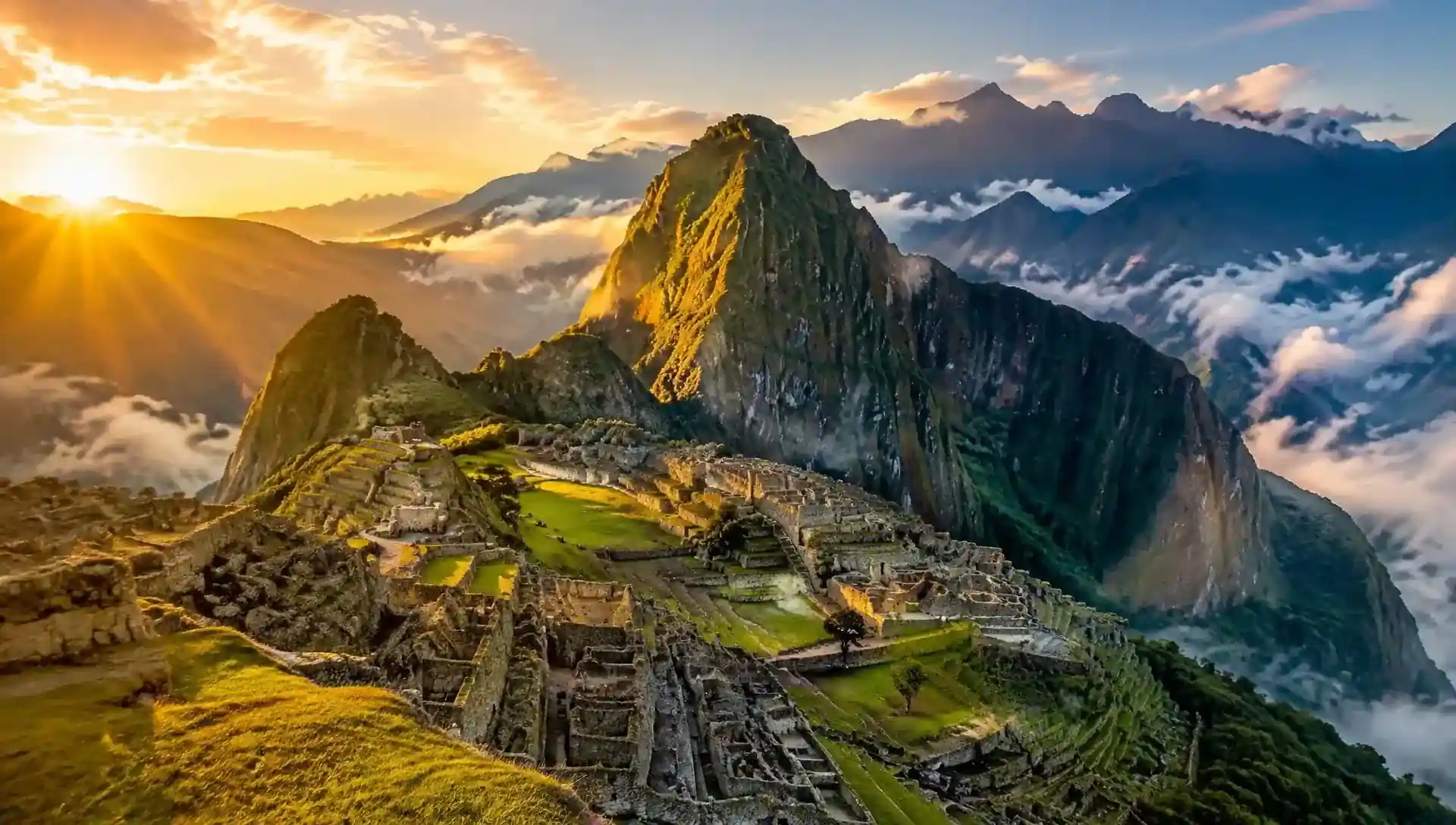
Machu Picchu Day Trip from Cusco
Train, bus, entry ticket and guided tour of Machu Picchu in one easy day from Cusco.
from $379
View tour →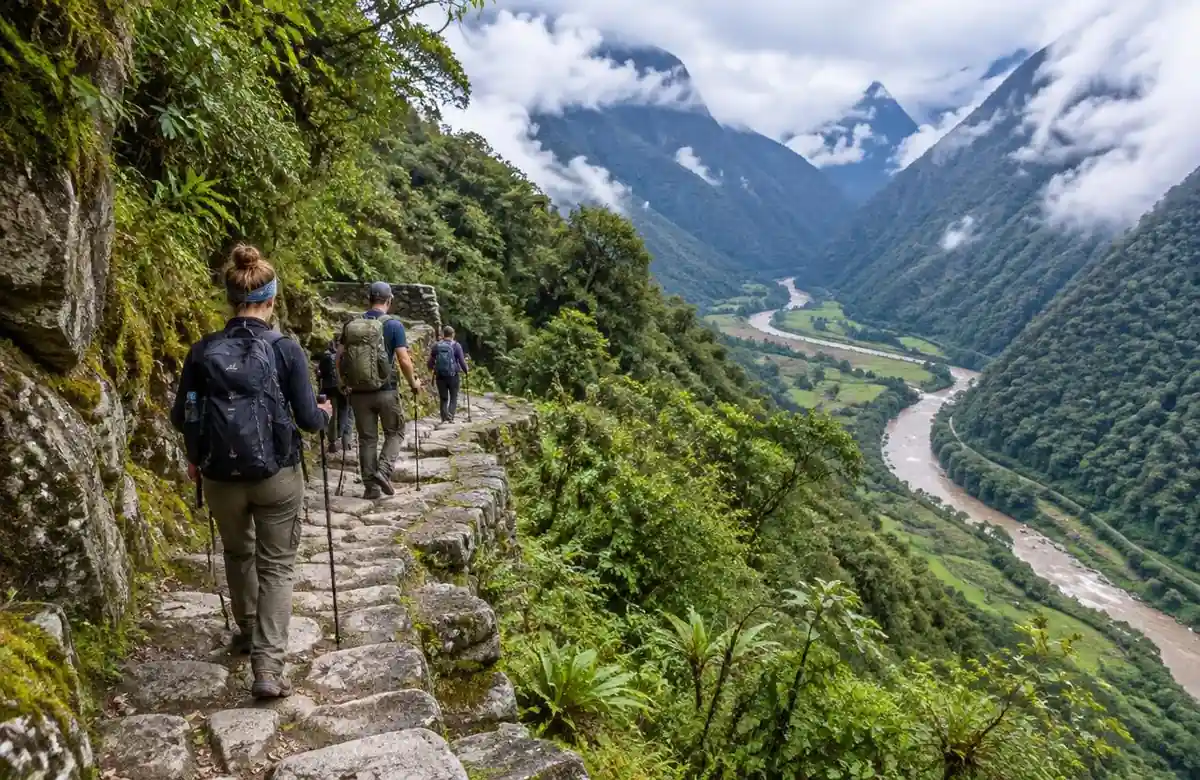
Inca Trail · 2 days
Short Inca Trail to Machu Picchu, 2 Days
The final 12 km of the Inca Trail, Sun Gate arrival and a night in Aguas Calientes.
from $489
View tour →Keep planning
- Machu Picchu Bus: How the Shuttle From Aguas Calientes Works
- Train to Machu Picchu: Complete Guide to Classes, Stations and Tickets
- Lima to Machu Picchu: How to Get There, Distance and Travel Time
- Lima to Cusco: How to Get There by Plane, Bus or Car
- Hiram Bingham Train: What the Belmond Luxury Journey to Machu Picchu Is Like
- Peru Rail vs Inca Rail: Machu Picchu Train Companies Compared Class by Class
- Machu Picchu Tickets 2026: Prices, Ticket Types and How to Buy
- Best Time to Visit Machu Picchu: Best Months, Seasons and Time of Day