- Duration
- 4 days
- Difficulty
- Challenging
- Max altitude
- 3,050 m
- From
- $540 pp
Quick answer
The Choquequirao trek is a 4-day hike from Cusco to Choquequirao, a large Inca site at 3,050 m (10,000 ft) in the Vilcabamba mountains of Peru that can only be reached on foot. From the Capuliyoc viewpoint near Cachora, the trail drops about 1,500 m to the Apurimac river and climbs back up to the ruins, about 60 km round trip. It is challenging because of the steep, hot climbs, not the altitude. No permit is needed, there is no cable car yet, and only a few dozen people visit on most days. Our guided Choquequirao trek costs $540 per person with transport, guide, cook, mules, camping gear, meals and the entrance ticket included.
| Duration | 4 days, 3 nights camping |
|---|---|
| Distance | About 60 km / 37 miles round trip |
| Ruins elevation | 3,050 m / 10,000 ft |
| Lowest point | Apurimac river, about 1,500 m / 4,900 ft |
| Difficulty | Challenging (steep climbs, heat) |
| Permit | Not needed |
| Best months | April to October |
| Price | $540 per person |
Choquequirao Trek Price and What Is Included
Our 4-day Choquequirao trek costs $540 per person, from your Cusco hotel and back, with the entrance ticket included.
When you compare Choquequirao tours, check whether the entrance ticket is included, whether mules carry your gear, and whether you get a full day or only a few hours at the ruins. Our itinerary gives you an afternoon and a full morning at the site.
- Hotel pickup in Cusco and private transport to Capuliyoc and back
- Professional bilingual trekking guide
- Cook and all meals from day 1 lunch to day 4 lunch
- Muleteers and mules to carry tents, food and your personal bag
- Tents, sleeping mats, dining tent
- Choquequirao entrance ticket
- First-aid kit and emergency oxygen
| Not included | Note |
|---|---|
| Sleeping bag | Rent one in Cusco |
| Tips | Optional, for guide, cook and muleteers |
| Showers and snacks at campsites | Paid in cash to local families |
| Travel insurance | Recommended |
Choquequirao Trek Itinerary: Day by Day
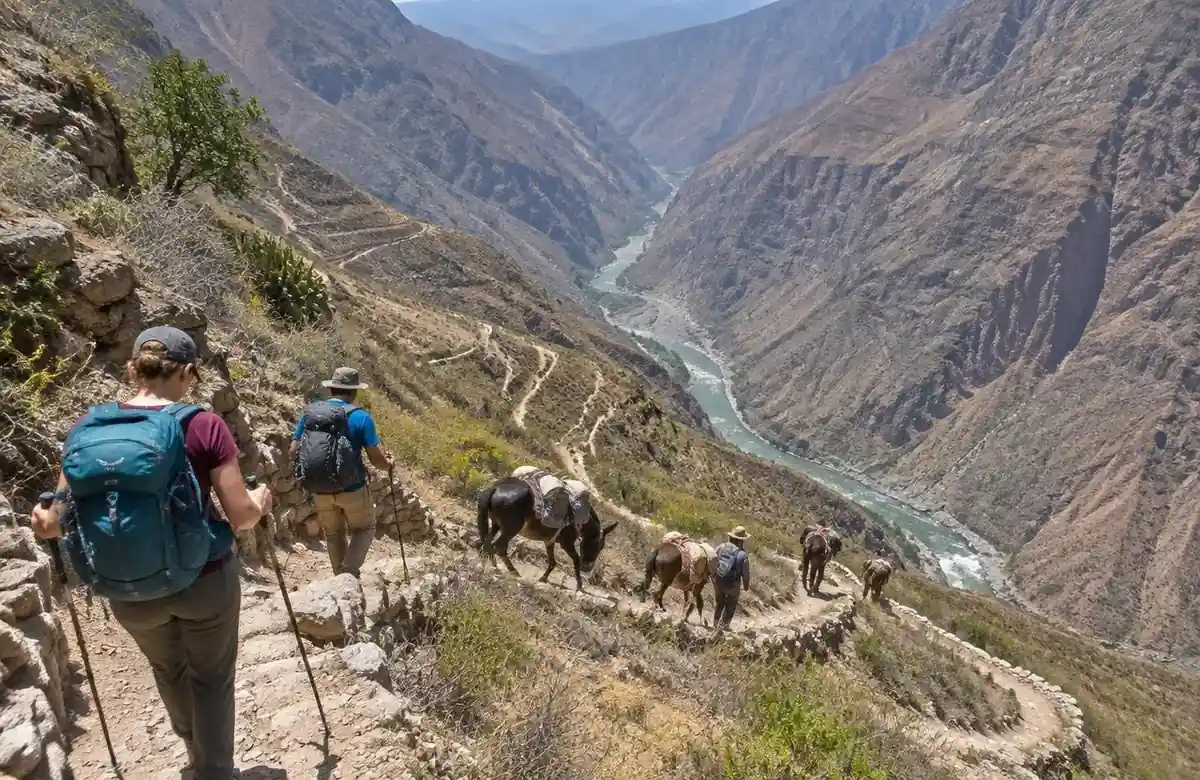
The hard part is days 1 and 4: a long descent into the canyon and the climb back out. Distances and times are approximate.
Day 1: Cusco to Capuliyoc, Playa Rosalina and Santa Rosa
Early pickup and a 4 hour drive to Cachora and the Capuliyoc viewpoint (2,915 m), where you see the Apurimac canyon and, on clear days, Choquequirao on the far side. A steep 1,400 m descent passes Chiquisca to Playa Rosalina by the river (about 1,500 m), then a short climb to camp at Santa Rosa (about 2,100 m). About 19 km, 7 to 8 hours.
Day 2: Marampata and first visit to Choquequirao
The steepest climb of the trek, best started at dawn before the heat, up switchbacks to the village of Marampata (about 2,900 m). From here it is a mostly flat walk to the Choquequirao campsite and an afternoon first visit to the ruins. About 10 km, 5 to 6 hours.
Day 3: Full morning at the ruins, descent to Chiquisca
Sunrise at the main plaza, then a guided visit to the upper and lower sectors and the llama terraces. After lunch, descend back through Marampata and Santa Rosa, cross the river and camp at Chiquisca (about 1,800 m). About 15 km, 7 hours.
Day 4: Climb to Capuliyoc and drive to Cusco
A 1,100 m climb back to Capuliyoc, started early to avoid the midday sun, then lunch in Cachora and the drive to Cusco, arriving around 6 pm. About 13 km, 5 hours walking.
Choquequirao Trek Map, Distance and Elevation
The classic Choquequirao trail is an out-and-back route of about 60 km from Capuliyoc, with roughly 3,000 m of total climbing.
- Location: Vilcabamba range, on the border of the Cusco and Apurimac regions, about 160 km west of Cusco by road
- Trailhead town: Cachora, about 4 hours from Cusco
- Small family campsites along the trail sell water, drinks and snacks
| Point | Elevation | Day |
|---|---|---|
| Capuliyoc viewpoint (start) | 2,915 m / 9,560 ft | 1 |
| Chiquisca | about 1,800 m / 5,900 ft | 1 and 3 |
| Playa Rosalina (Apurimac river) | about 1,500 m / 4,900 ft | 1 and 3 |
| Santa Rosa | about 2,100 m / 6,900 ft | 1 and 3 |
| Marampata | about 2,900 m / 9,500 ft | 2 |
| Choquequirao ruins | 3,050 m / 10,000 ft | 2 and 3 |
How Hard Is the Choquequirao Trek?
The Choquequirao trek is hard because of the long, steep descents and climbs in strong canyon heat, not because of altitude: the highest point is only 3,050 m.
You lose and regain about 1,500 m each way. Many hikers find it tougher on the legs than the Salkantay or Inca Trail, even though it is lower.
Heat and sun
The canyon floor can pass 30°C (86°F) at midday. We start climbs at dawn, and you should carry 2 liters of water, a sun hat and SPF 50.
Knees and legs
Trekking poles help a lot on the descent. A mule can carry you on parts of the climbs if you need a break; ask your guide.
Who should choose another trek
Anyone with knee problems or little hiking experience. The Lares Trek or a Sacred Valley tour are gentler ways to see Andean villages and ruins.
What You See at the Choquequirao Ruins
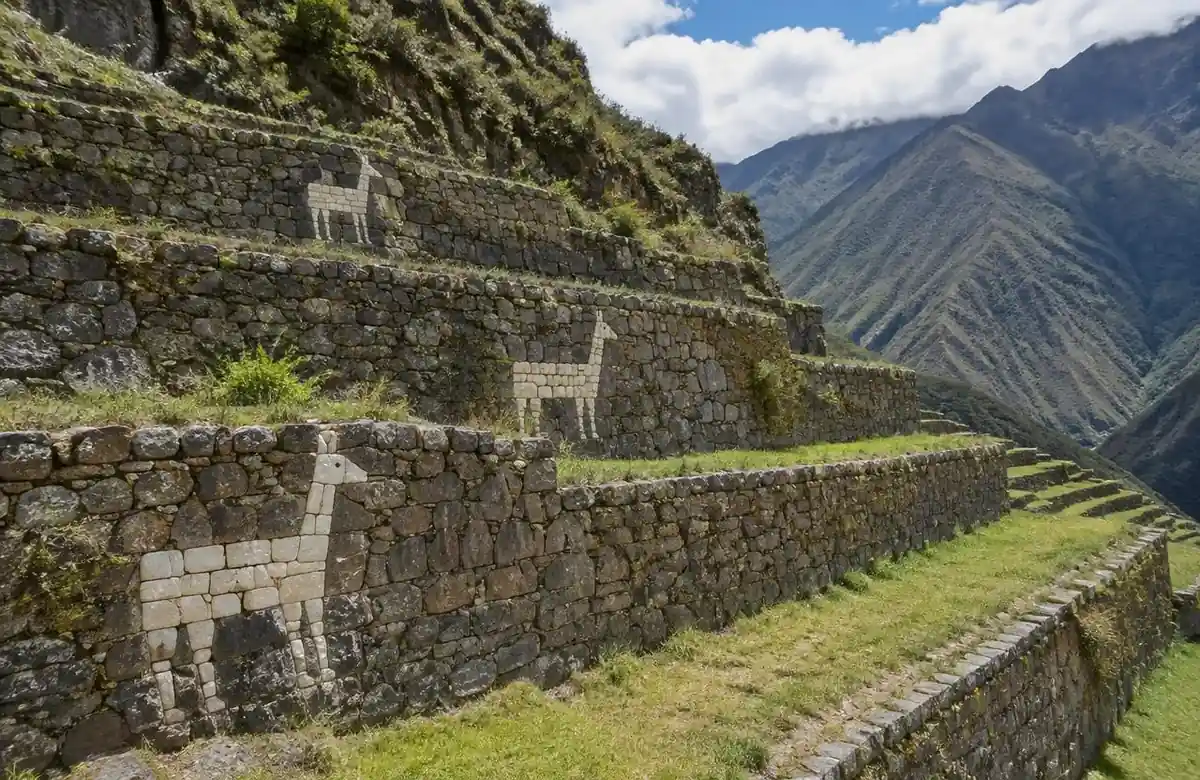
Choquequirao, Quechua for "cradle of gold", was built by the Incas in the 1400s and 1500s and was one of the last refuges of the Inca resistance at Vilcabamba. The Choquequirao Archaeological Park covers a ridge with plazas, temples, houses, canals and long terrace systems.
Only part of the site has been cleared from the forest, and archaeologists believe much more is still hidden. Most days you share it with very few people, a big contrast with Machu Picchu.
- Main plaza and the ceremonial platform (usnu) with views over the canyon
- Llama terraces: more than 20 white stone llamas set into terrace walls on the western slope
- Upper and lower sectors with houses, storehouses and water channels
- Andean condors often fly over the canyon in the morning
Best Time to Hike Choquequirao
The best time for the Choquequirao trek is April to October, the dry season, when trails are firm and skies are clear.
| Months | Weather | Trekking |
|---|---|---|
| May to September | Dry, hot canyon days, cool nights | Best |
| April, October | Some showers, green slopes | Good |
| November to March | Rainy, slippery trail, landslide risk | Hard |
How to Get to Choquequirao from Cusco
There is no road or train to Choquequirao, so every visitor arrives on foot. The usual way is a 4 hour drive from Cusco on the road to Abancay, turning off to the village of Cachora and the Capuliyoc viewpoint, where the trail begins.
Independent hikers take a bus from Cusco toward Abancay to the Cachora junction, then a taxi to Cachora or Capuliyoc. On our tour, private transport takes you straight to the trailhead.
Choquequirao vs Machu Picchu
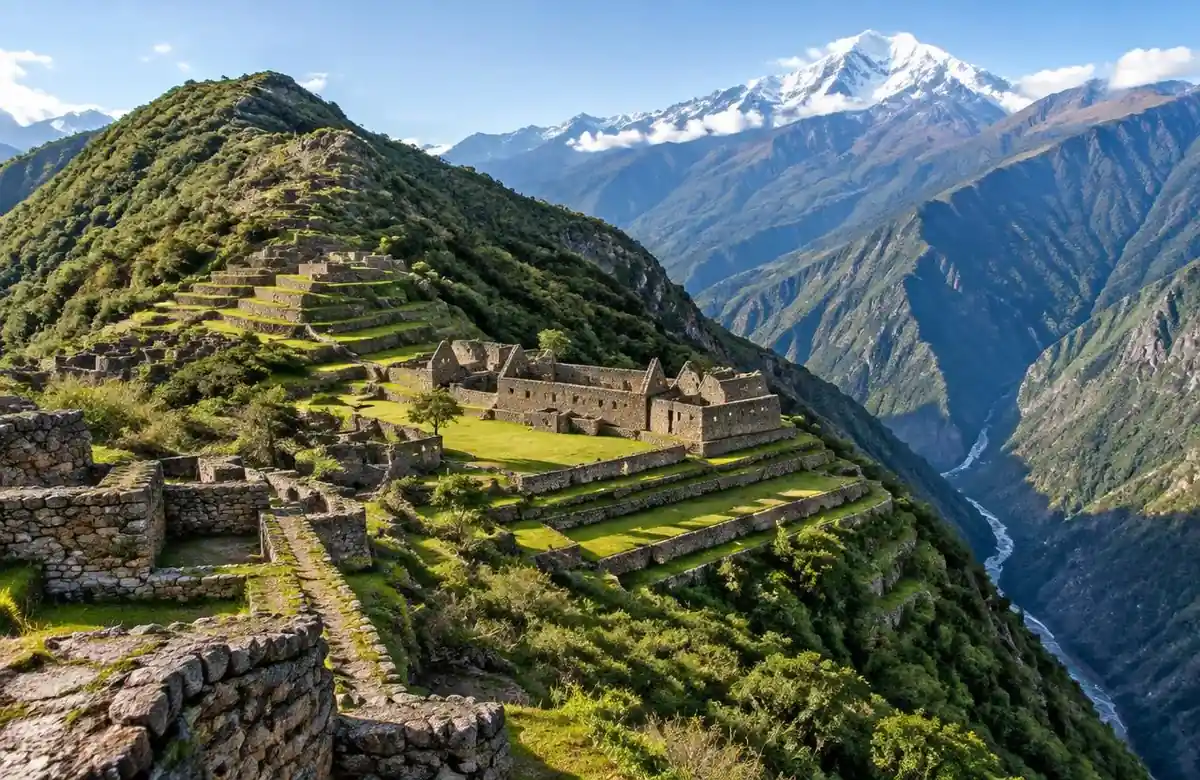
Choose Choquequirao for an almost empty Inca site earned on a hard trek; choose Machu Picchu for the iconic, fully restored city that anyone can reach by train.
| Choquequirao | Machu Picchu | |
|---|---|---|
| Elevation | 3,050 m | 2,430 m |
| Access | Only on foot, 2 days each way | Train and bus, or Inca Trail |
| Visitors per day | Usually a few dozen | Thousands |
| Restoration | Partly cleared | Mostly restored |
| Ticket | Easy to get, no limit | Daily limit, books out |
Choquequirao to Machu Picchu Trek
The longer Choquequirao to Machu Picchu trek continues past the ruins over high passes near Victoria and Yanama, joining the Santa Teresa side to reach Machu Picchu after 7 to 9 days and about 100 km.
It is one of the hardest treks in Peru, with passes over 4,000 m. Our 4-day trek returns to Cusco; if you want Machu Picchu too, the simplest option is to add a Machu Picchu day trip after you return.
Is There a Cable Car to Choquequirao?
No. A cable car to Choquequirao has been planned by the Peruvian government for years, but it has not been built, and there is no confirmed opening date. For now, hiking is the only way in, which is why the site stays so quiet.
Choquequirao Trek with a Guide or Without
You can hike Choquequirao without a guide: the trail is clear and campsites sell water and food. A guided trek takes care of transport, mules, meals and the history of the site.
| Guided | Independent | |
|---|---|---|
| Gear | Mules carry tents and food | Carry your own or hire a mule in Cachora |
| Ruins visit | Guide explains each sector | Self-guided |
| Transport | Private, door to door | Bus and taxi |
| Meals | Cooked by our team | Buy from campsite families |
Choquequirao Trek Packing List
- Trekking poles for the long descents
- Light, breathable clothes for the hot canyon
- Fleece and warm layer for cool nights
- Rain jacket
- Sun hat, sunglasses, SPF 50 sunscreen
- Strong insect repellent (sandflies near the river)
- Broken-in hiking boots
- 2 liters of water capacity and purification tablets
- Headlamp
- Cash in small soles for showers, snacks and tips
Choquequirao Trek, 4 Days Reviews
“This is not an easy trek, but that is exactly what made it memorable. The long climbs, mountain valleys and final visit to the Choquequirao archaeological site gave us a real sense of achievement.”
Verified Traveler
“My partner and I chose Choquequirao because we wanted a quieter alternative to the more famous Peru trekking routes. We loved the remote landscapes, the camping experience and having so much space around the ruins.”
Verified Traveler
“Our guide was excellent throughout the guided Choquequirao Trek. He helped us understand the Inca history, encouraged us on the difficult sections and made sure everyone in the group was comfortable with the pace.”
Verified Traveler
“Anyone looking for an off-the-beaten-path trek in Peru should consider Choquequirao. Four days gave us enough time to experience the mountains, valleys and ruins without making the trip feel like a simple sightseeing stop.”
Verified Traveler
“We compared several multi-day treks from Cusco before choosing this one. The Choquequirao hiking tour stood out because it felt less commercial and much more adventurous. The scenery alone would have made the trip worthwhile.”
Verified Traveler
“Seeing the ruins after hiking through such dramatic terrain was an incredible feeling. The Choquequirao 4 day tour combined history, nature and a serious physical challenge in a way that no other part of our Peru trip did.”
Verified Traveler
“I was looking for a Machu Picchu alternative with fewer tourists, and Choquequirao was exactly what I hoped for. It still has that impressive Inca history, but the remote setting made the whole experience feel much more personal.”
Verified Traveler
“The trail definitely tested us, especially on the steeper sections, but the support team was fantastic. Food, camps and logistics were well managed, and we always felt looked after during the four-day trek.”
Verified Traveler
“This was one of those trips where the journey mattered as much as the destination. Hiking through the Andes to reach Choquequirao made the archaeological site feel incredibly rewarding. I would recommend it to experienced travelers who enjoy challenging treks.”
Verified Traveler
Choquequirao Trek, 4 Days: FAQs
Where is Choquequirao?
Choquequirao is in the Vilcabamba mountains of southern Peru, above the Apurimac river on the border of the Cusco and Apurimac regions, about 4 hours by road and 2 days on foot from Cusco.
How long is the Choquequirao trek?
The classic route is about 60 km round trip and takes 4 days. Some people do it in 3 days or take 5 for more time at the ruins.
How hard is the Choquequirao trek?
It is challenging: about 1,500 m of steep descent and climb each way in strong heat. The altitude is moderate, with a top of 3,050 m.
What is the altitude of Choquequirao?
The ruins are at 3,050 m (10,000 ft), about 600 m higher than Machu Picchu.
Do you need a permit for the Choquequirao trek?
No permit is needed. You only need an entrance ticket to the archaeological park, which is included in our price.
Can you hike Choquequirao without a guide?
Yes. The trail is well defined and campsites sell water and meals, so many people go independently.
Is there a cable car to Choquequirao?
No. It has been planned for years but has not been built.
Is Choquequirao worth it?
Yes, if you are fit and want an Inca site with almost no crowds. If you only have time for one site, Machu Picchu is easier to reach.
When is the best time to visit Choquequirao?
April to October, the dry season. The rainy season from November to March makes the steep trail slippery.
Can you go from Choquequirao to Machu Picchu?
Yes, on a separate 7 to 9 day trek of about 100 km. Our 4-day trek returns to Cusco.
What does Choquequirao mean?
It is usually translated from Quechua as cradle of gold.
How many people visit Choquequirao?
Usually only a few dozen per day, compared with thousands at Machu Picchu.
Can I ride a mule on the Choquequirao trek?
Mules carry the group gear, and you can arrange a riding mule for parts of the climbs if needed.