
Ollantaytambo: The Inca Fortress Town of the Sacred Valley Explained
By the Goo Machu Picchu team · Checked against official sources (editorial policy) · Updated October 2026 · 6 min read
Ollantaytambo is a small Inca town and archaeological site in Peru's Sacred Valley, about 45 miles (72 km) northwest of Cusco at roughly 9,160 feet (2,792 m). It is famous for its terraced Temple Hill ruins, its original Inca street grid, and the train station most travelers use to reach Machu Picchu.
- Location
- Urubamba Province, Cusco Region, Peru
- Elevation
- About 9,160 ft (2,792 m)
- From Cusco
- About 1.5 to 2 hours by road
- To Aguas Calientes
- About 1.5 to 2 hours by train
- Ruins entry
- Cusco Tourist Ticket (Boleto Turístico)
- Population
- About 3,050 (2017 census)
Where Is Ollantaytambo and How High Is It?
Ollantaytambo sits at the western end of the Sacred Valley, where the Patakancha River meets the Urubamba River, in Peru's Cusco Region. The town lies at about 9,160 feet (2,792 m), around 2,000 feet lower than Cusco, which makes it a gentle place to spend your first nights at altitude.
Ollantaytambo is roughly halfway by rail between Cusco and Machu Picchu. Its lower elevation is why many itineraries start here; our Cusco altitude guide explains the Sacred Valley first approach.
| Place | Elevation | Distance from Ollantaytambo |
|---|---|---|
| Ollantaytambo | About 9,160 ft | - |
| Cusco | About 11,150 ft | About 45 miles by road |
| Urubamba | About 9,420 ft | About 12 miles by road |
| Aguas Calientes | About 6,700 ft | About 27 miles by rail |
| Machu Picchu | About 7,970 ft | About 27 miles plus bus |
Distances and elevations are rounded and vary slightly by source.
What Is the History of Ollantaytambo?
Ollantaytambo became a royal estate of the Inca emperor Pachacuti in the 15th century, who rebuilt the town and built ceremonial structures on the hill above it. During the Spanish conquest it served as a stronghold for the Inca rebel Manco Inca, who defeated a Spanish force near here in 1537.
At the Battle of Ollantaytambo, Manco Inca's forces held the terraces and reportedly flooded the plain below to stop Spanish cavalry led by Hernando Pizarro. Manco later withdrew to Vilcabamba, and the Spanish took the town.
The name is often linked to Ollantay, a legendary general in a Quechua drama, though the origin is debated. Tambo means a waystation or inn. For the wider story, see our Machu Picchu history guide.
What Can You See at the Ollantaytambo Ruins?
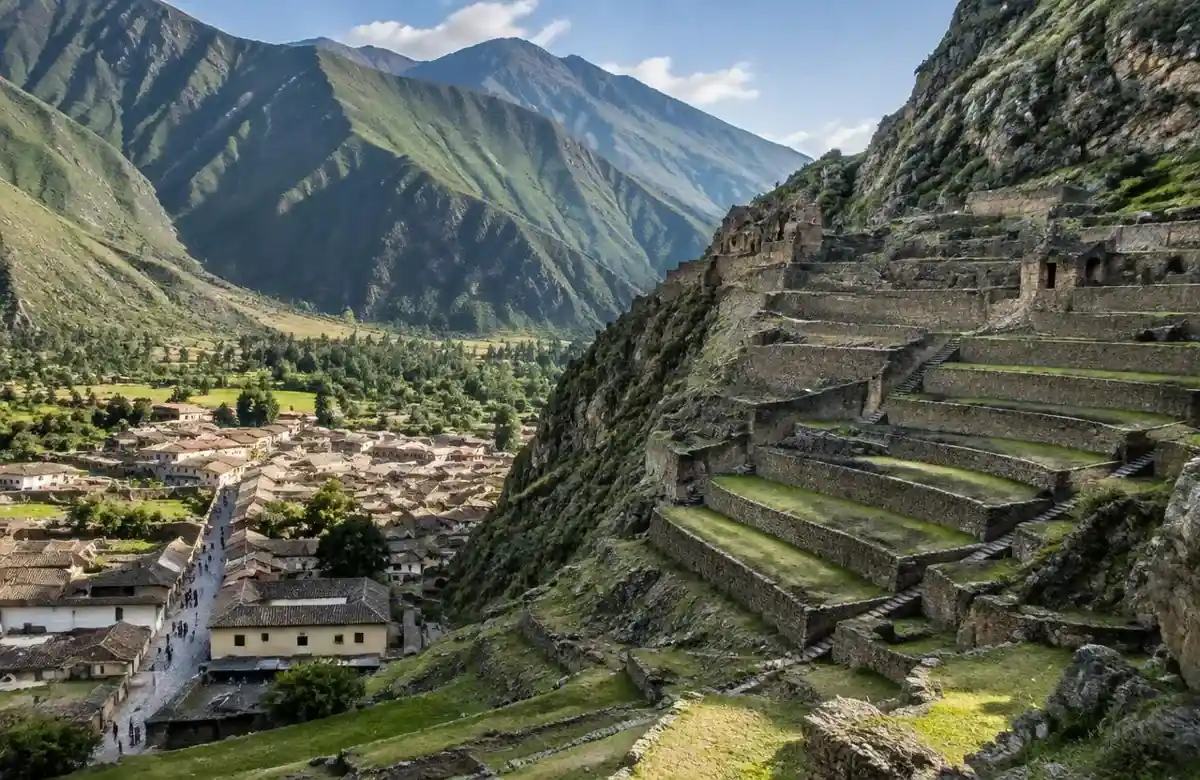
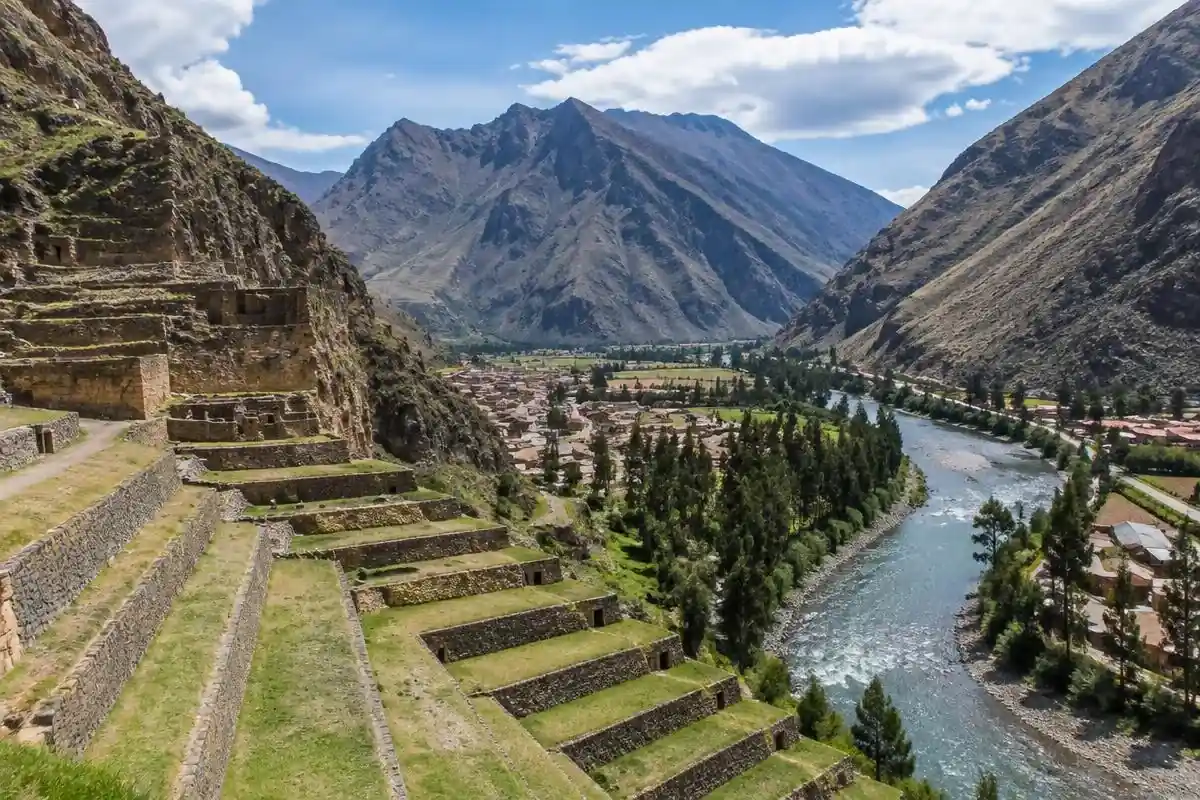
The Ollantaytambo ruins climb a steep hill called Cerro Bandolista above the town. Highlights include the giant agricultural terraces, the unfinished Temple of the Sun with its Wall of the Six Monoliths, carved fountains such as the Baño de la Ñusta, and wide views over the valley. Allow about 1.5 to 2 hours.
- Pumatallis terraces: steep stepped platforms leading up the hill.
- Wall of the Six Monoliths: huge pink rhyolite blocks fitted tightly together.
- Temple Hill: unfinished ceremonial complex with fine stonework.
- Baño de la Ñusta: carved stone fountain fed by Inca channels.
- Templo de Agua: water shrine with flowing channels.
- Kachiqhata quarries: visible across the river, source of the stones.
The pink stones were hauled about 3 miles from the Kachiqhata quarries across the Urubamba River, and some abandoned blocks, called tired stones, still lie along the route.
Why Is Ollantaytambo Called a Living Inca Town?
Ollantaytambo is called a living Inca town because families still live in houses built on Inca foundations, laid out in the original grid of narrow stone streets. The old quarter, known as Qosqo Ayllu, keeps Inca water channels running beside the lanes. It is one of the best preserved Inca town plans in Peru.
Walk the blocks north of the Plaza de Armas to see courtyard doorways, trapezoid entrances and canals. Be respectful: these are private homes, so ask before photographing people or entering courtyards.
Which Other Things to Do in Ollantaytambo Are Worth Your Time?
Beyond the main ruins, the best things to do in Ollantaytambo are hiking up to the Pinkuylluna storehouses on the mountain facing the fortress, wandering the Inca streets, eating around the Plaza de Armas, and visiting nearby sites like Moray and the Maras salt mines on a valley day trip.
Travelers planning this often read our Pisac ruins guide next.
| Activity | Time needed | Cost |
|---|---|---|
| Ollantaytambo ruins | 1.5 to 2 hours | Tourist ticket |
| Pinkuylluna storehouses hike | 1 to 1.5 hours | Reported free |
| Qosqo Ayllu walk | 30 to 60 minutes | Free |
| Plaza de Armas cafes | Flexible | Varies |
| Moray and Maras trip | Half day | Transport plus entry fees |
Pinkuylluna is a steep, stepped trail with drop-offs, so skip it in heavy rain. Our Sacred Valley tour links Ollantaytambo with Pisac in one day.
Both nearby sites have their own guides: the Moray circular terraces and the Maras salt pools.
How Much Does It Cost to Enter the Ollantaytambo Ruins?
The Ollantaytambo ruins do not sell a single-site ticket for most visitors. Entry is through the Cusco Tourist Ticket, the Boleto Turístico, reported at about S/130 for the full 10-day pass or about S/70 for a partial pass covering the Sacred Valley sites. Prices can change, so check the official ticket office.
The partial Sacred Valley pass also covers Pisac, Moray and Chinchero, so plan those visits within its validity. The Maras salt mines are not included and charge a separate fee.
How Do You Use Ollantaytambo Train Station for Machu Picchu?
Ollantaytambo train station is the main departure point for trains to Machu Picchu, run by PeruRail and Inca Rail, with the journey to Aguas Calientes taking about 1.5 to 2 hours. The station sits about a 15-minute walk downhill from the plaza. Arrive at least 30 minutes before departure with your passport.
- Book your train after securing your Machu Picchu ticket.
- Arrive in Ollantaytambo with time to spare from Cusco.
- Walk or take a mototaxi down Avenida Ferrocarril to the station.
- Show your ticket and passport at the gate.
- Keep luggage within the train limit, about 5 kg per person.
- Board and sit on the left side for river views toward Aguas Calientes.
Classes, fares and schedules are compared in our Machu Picchu train guide, and the two rail companies in PeruRail vs Inca Rail.
How Do You Get From Cusco to Ollantaytambo?
You can get from Cusco to Ollantaytambo by shared van, called a colectivo, by private taxi or transfer, by a Sacred Valley tour, or by train from Poroy or San Pedro stations. The road trip takes about 1.5 to 2 hours. Colectivos are cheapest, while a private transfer lets you stop at viewpoints.
This fits into the wider planning covered in our day trips from Cusco guide.
| Option | Time | Best for |
|---|---|---|
| Colectivo shared van | About 1.5 to 2 hours | Budget travelers |
| Private taxi or transfer | About 1.5 hours | Families, luggage |
| Sacred Valley tour | Full day with stops | Sightseeing on the way |
| Train from Cusco area | About 2 hours | Rail lovers, connections |
Full journey planning is in our guide on how to get to Machu Picchu.
How Long Should You Stay in Ollantaytambo?
One night in Ollantaytambo is enough for most travelers to see the ruins and catch a morning train to Machu Picchu. Two nights suit those who want Pinkuylluna, a Moray and Maras trip, and slower acclimatization. Staying overnight also lets you visit the ruins early or late, when tour groups thin out.
Ollantaytambo hotels are mostly small guesthouses and boutique lodges; compare them with town and gate options in our Machu Picchu hotels guide.
Prefer a guided option? See our Lares trek.
Frequently asked questions
Is Ollantaytambo worth visiting?
Ollantaytambo is worth visiting for its dramatic terraced ruins, its rare intact Inca street grid and its relaxed small-town feel. Many travelers rate it a highlight of the Sacred Valley. Since most Machu Picchu trains leave from here, adding a night costs little extra travel time.
Is Ollantaytambo better than Cusco to stay?
Ollantaytambo is better than Cusco for a quiet night before an early Machu Picchu train and for easier altitude. Cusco is better for museums, nightlife and restaurant choice. Many itineraries stay in Ollantaytambo before Machu Picchu and in Cusco afterward.
Can you walk from Ollantaytambo to Machu Picchu?
You cannot simply walk from Ollantaytambo to Machu Picchu on a road, but the classic Inca Trail starts near Km 82, close to Ollantaytambo, and requires a permit and licensed guide. See our [Inca Trail permits guide](/guides/inca-trail-permits) for how permits work.
Do you need a guide at the Ollantaytambo ruins?
You do not strictly need a guide at the Ollantaytambo ruins, unlike Machu Picchu, but a licensed guide explains the stonework and history that signs barely cover. Guides usually wait near the entrance. Agree on price and length before starting.
Is Ollantaytambo safe for tourists?
Ollantaytambo is generally considered safe for tourists, with a calm atmosphere and busy streets around the plaza and station. Normal precautions apply: watch your bags in crowds, use official taxis at night, and take care on steep, uneven steps at the ruins.
What can you see in Ollantaytambo besides the main ruins?
Besides the Temple Hill ruins, you can climb to the Pinkuylluna storehouses on the opposite slope, walk the original Inca street grid with its stone water channels, browse the market near the main plaza, or hike to the quieter Pumamarca ruins above town. Most of these need no ticket, only time and good shoes.
Want Ollantaytambo built into your trip?
Tell us your dates and we will plan a night in Ollantaytambo, the ruins and your train to Machu Picchu. Prefer to read first? Get the free Machu Picchu trip guide.
Sources checked October 3, 2026
Recommended tours
Day Tours · 1 day
Sacred Valley Full Day Tour
Chinchero, Moray, Maras salt mines, Ollantaytambo and Pisac in one full day from Cusco, with buffet lunch.
from $49
View tour →
Machu Picchu · 1 day
Machu Picchu Day Trip from Cusco
Train, bus, entry ticket and guided tour of Machu Picchu in one easy day from Cusco.
from $379
View tour →Keep planning
- Aguas Calientes Hotels: Where to Stay in Machu Picchu Town and How to Choose
- Aguas Calientes Hot Springs: A Practical Guide to the Thermal Baths Below Machu Picchu
- Sacsayhuamán: The Megalithic Inca Fortress Above Cusco Explained
- Qorikancha: The Golden Inca Temple of the Sun in Cusco
- Maras Salt Mines: How the Salineras de Maras Work and How to Visit
- Moray Ruins: The Inca Circular Terraces of the Sacred Valley Explained
- Pisac Ruins: The Inca Citadel and Market Town of the Sacred Valley
- Things to Do in Cusco: The Best Sights, Day Trips and Local Food