
Peru Itinerary: Day-by-Day Routes for 7, 10 and 14 Days
By the Goo Machu Picchu team · Checked against official sources (editorial policy) · Updated October 2026 · 11 min read
A Peru itinerary is a day-by-day travel plan that links Lima, Cusco, the Sacred Valley and Machu Picchu, then adds Lake Titicaca, Arequipa or the desert coast when time allows. Most first-time US visitors need 7 to 10 days. The best routes start low in the Sacred Valley and climb to Cusco later, so the body adjusts to altitude gradually.
This guide follows the order travelers plan in: how many days to give Peru, which route order protects you from altitude, three tested day-by-day plans, where to sleep, travel times between stops, what to book first and the planning mistakes that cost the most days.
- Ideal first trip
- 7 to 10 days
- Core route
- Lima, Sacred Valley, Machu Picchu, Cusco
- Lima to Cusco flight
- About 1 hour 20 minutes
- Cusco altitude
- 3,399 m (11,152 ft)
- Sacred Valley altitude
- About 2,800 to 2,900 m (9,200 to 9,500 ft)
- Book first
- Inca Trail permits or Machu Picchu tickets
How Many Days Do You Need for a Peru Itinerary?
A Peru itinerary needs at least 7 days to see Cusco, the Sacred Valley and Machu Picchu without rushing, because one day goes to the flight from Lima and one more to adjusting to altitude. Ten days adds Lake Titicaca or the Amazon. Two weeks covers the southern circuit, including Arequipa or the coast.
Peru looks compact on a map, but the Andes turn short distances into long travel days. A 380 km road from Cusco to Puno takes about 7 hours by bus, so every extra region costs at least one full day of transit.
Five days is the true minimum for Machu Picchu alone, and it leaves no buffer for a delayed flight or a slow first day at altitude.
| Trip length | What fits comfortably | What to skip |
|---|---|---|
| 5 days | Cusco, Sacred Valley, Machu Picchu | Lima sightseeing, any second region |
| 7 days | Lima (1 night), Sacred Valley, Machu Picchu, Cusco | Lake Titicaca, Amazon |
| 10 days | Core route plus Lake Titicaca or the Amazon or a multi-day trek | Arequipa, the coast |
| 14 days | Core route, Lake Titicaca, Arequipa and Colca Canyon or Paracas | Northern Peru |
| 3 weeks | Southern circuit plus Huaraz or the northern ruins | Very little |
What Is the Best Route Order for a Peru Itinerary and Why Does Altitude Decide It?
The best Peru itinerary route goes Lima, then straight to the Sacred Valley, then Machu Picchu, and finally Cusco. The Sacred Valley sits about 500 m lower than Cusco, so sleeping there first eases altitude sickness. Machu Picchu is lower still, which means the highest city comes last, once your body has adjusted.
Most planes from Lima land in Cusco, but you do not have to sleep there. A transfer of about 1.5 hours takes you down to Urubamba or Ollantaytambo the same afternoon.
Read the full Cusco altitude guide for symptoms and prevention, and the Machu Picchu elevation guide for how the citadel compares.
| Stop | Elevation | Where it fits in the route |
|---|---|---|
| Lima | Sea level | Arrival and departure city |
| Aguas Calientes | 2,040 m (6,693 ft) | Night before or after Machu Picchu |
| Machu Picchu | 2,430 m (7,972 ft) | Day 3 or 4 of a first trip |
| Ollantaytambo / Urubamba | About 2,800 to 2,870 m (9,200 to 9,420 ft) | First nights in the Andes |
| Cusco | 3,399 m (11,152 ft) | After Machu Picchu |
| Puno / Lake Titicaca | About 3,830 m (12,560 ft) | Only after Cusco, never first |
The same logic applies to longer trips. Arequipa, at about 2,335 m, works as a gentle stepping stone before Colca Canyon and Puno, which is why many two-week routes enter the Andes from the south.
7 Day Peru Itinerary: Lima, Sacred Valley, Machu Picchu and Cusco
A 7 day Peru itinerary covers the classic first-trip highlights: one night in Lima, two nights in the Sacred Valley, one night near Machu Picchu and two nights in Cusco. This plan keeps the highest city for last, gives a full morning at the citadel and leaves one flexible day for weather or delays.
- Day 1: Land in Lima, sleep in Miraflores or Barranco and walk the clifftop Malecon.
- Day 2: Fly to Cusco in the morning and transfer down to Urubamba or Ollantaytambo.
- Day 3: Visit Pisac ruins and market, then the salt pans at Maras and the terraces of Moray.
- Day 4: Explore Ollantaytambo fortress, then take the afternoon train to Aguas Calientes.
- Day 5: Ride the first buses up to Machu Picchu, tour the citadel, return by train to Cusco.
- Day 6: See Qorikancha, the Cathedral, San Blas and the walls of Sacsayhuaman in Cusco.
- Day 7: Fly Cusco to Lima and connect to your international flight home.
If you want to hike, swap days 3 and 4 for the classic 4 day Inca Trail, which ends at Machu Picchu on day 5 with the same return to Cusco.
For the Machu Picchu days alone, including how long the visit lasts and how to match trains to your entry hour, read how many days you need for Machu Picchu.
10 Day Peru Itinerary: Adding Lake Titicaca or the Amazon
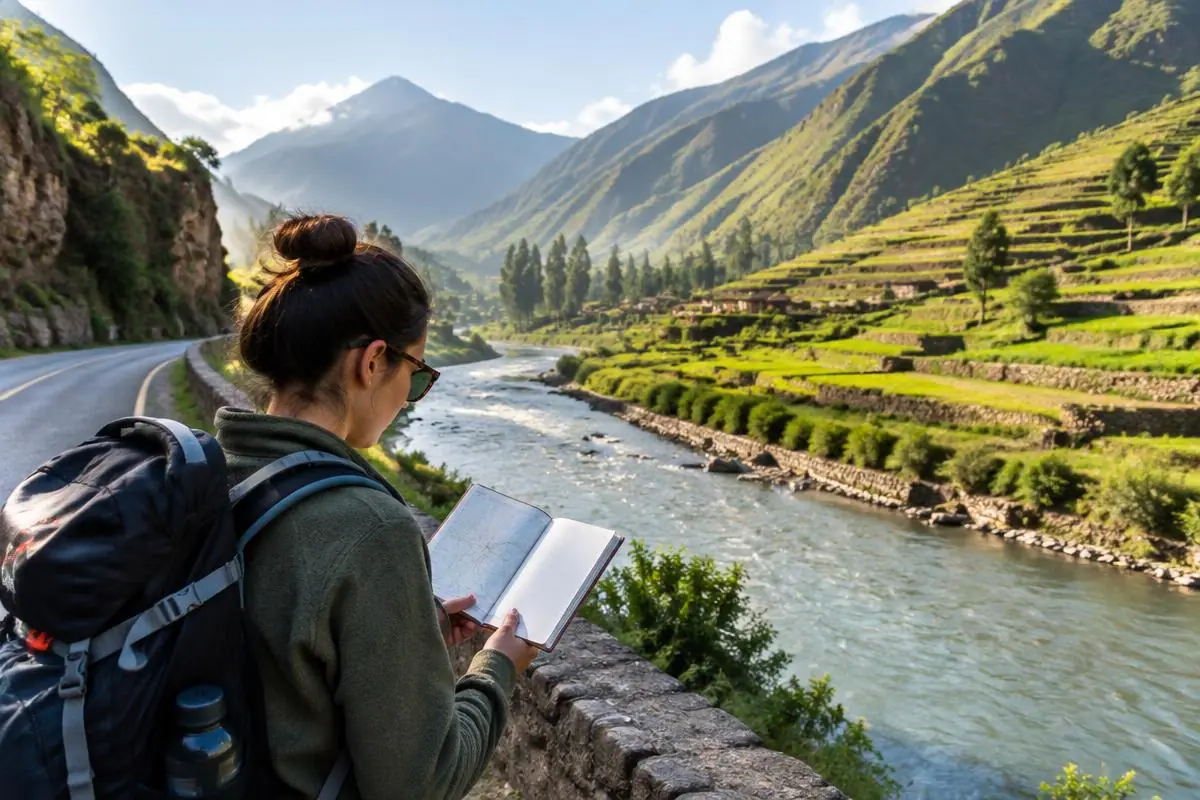
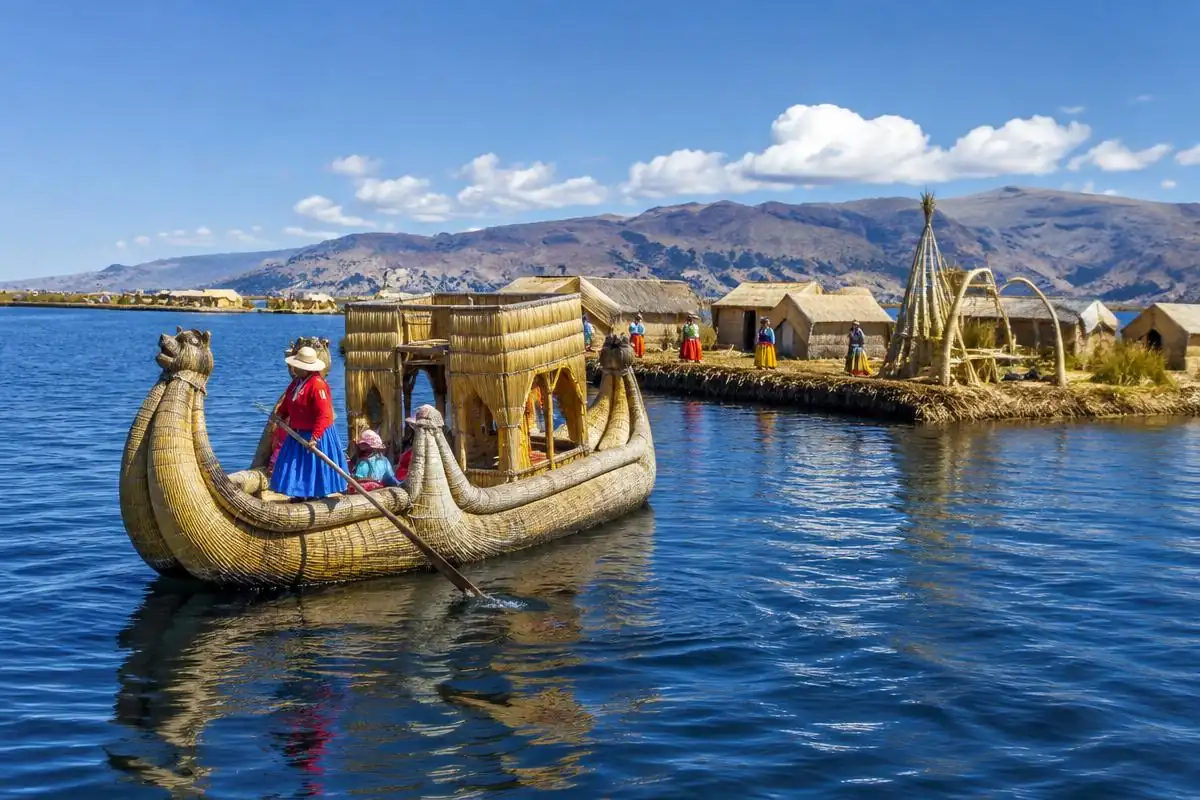
A 10 day Peru itinerary keeps the 7 day core and adds three days for one more region. Lake Titicaca suits travelers interested in culture and the floating Uros islands. The Amazon suits wildlife lovers. Choose one, because trying to fit both into ten days turns the trip into a string of airport transfers.
Option A: Lake Titicaca After Cusco
Lake Titicaca fits after Cusco because Puno is higher still, at about 3,830 m. Travel there on day 7 by day bus with stops, by the scenic Cusco to Puno train or by a short flight to Juliaca, then spend day 8 on the lake before flying home.
- Days 1 to 6: Follow the 7 day route above.
- Day 7: Travel Cusco to Puno, about 7 hours by tourist bus or about 10 hours by train.
- Day 8: Boat to the Uros floating islands and Taquile Island.
- Day 9: Fly from Juliaca to Lima.
- Day 10: Spend a last day in Lima and fly home.
Option B: The Amazon Before the Andes
The Amazon works best at the start, right after Lima, because Puerto Maldonado sits near sea level and keeps the altitude climb in one direction. Fly Lima to Puerto Maldonado, spend three nights in a rainforest lodge, then fly to Cusco and continue with the Sacred Valley.
- Puerto Maldonado is about a 1.5 hour flight from Lima or a short hop from Cusco.
- Most lodges run 3 day, 2 night or 4 day, 3 night programs.
- Pack long sleeves and insect repellent; check vaccine advice with a travel clinic.
- The dry months, May to October, make jungle trails easier to walk.
2 Weeks in Peru: The Southern Circuit Itinerary
Two weeks in Peru allows the full southern circuit: the desert coast at Paracas and Huacachina, the white city of Arequipa, Colca Canyon, Lake Titicaca and finally Cusco and Machu Picchu. This order climbs slowly from sea level to Puno, so you reach the highest stop already acclimatized and finish at the lower Machu Picchu.
| Days | Base | Highlights |
|---|---|---|
| 1 to 2 | Lima | Miraflores, Barranco, the historic center, food |
| 3 to 4 | Paracas and Huacachina | Ballestas Islands, desert dunes, optional Nazca Lines flight |
| 5 to 6 | Arequipa | Santa Catalina Monastery, volcano views |
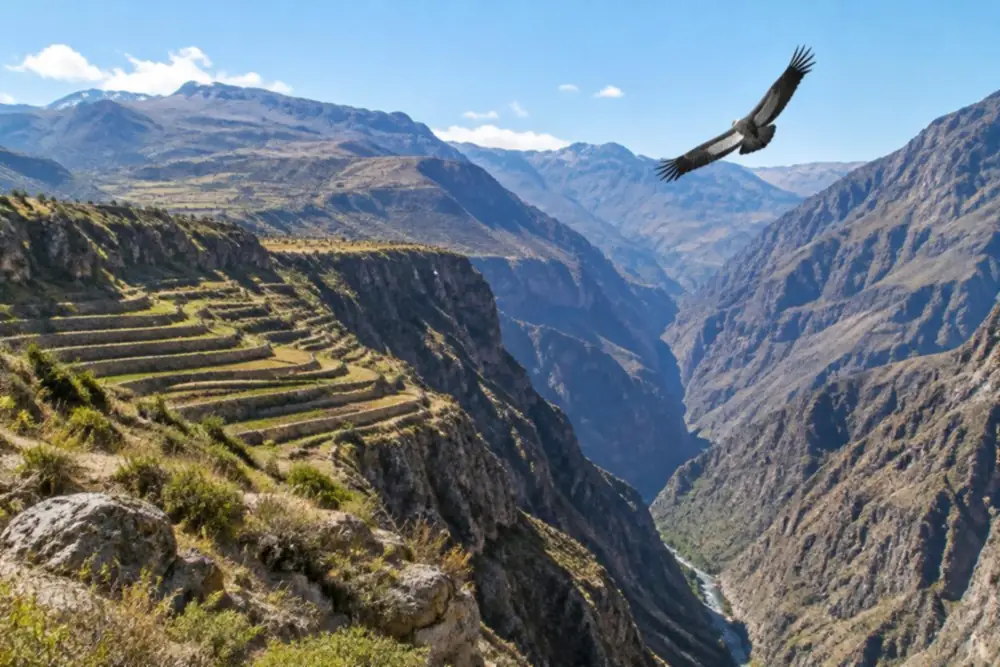
| 7 to 8 | Colca Canyon (Chivay) | Condor viewpoint, hot springs, terraces |
| 9 | Puno | Uros and Taquile islands on Lake Titicaca |
| 10 | Puno to Cusco | Full travel day by bus or train |
| 11 to 12 | Sacred Valley | Pisac, Maras, Moray, Ollantaytambo |
| 13 | Aguas Calientes / Machu Picchu | Citadel visit, train back to Cusco |
| 14 | Cusco to Lima | Morning in Cusco, flight home |
Coming from sea level, Puno would be too high for day one. On this route you arrive there on day 9 after nights at 2,335 m and 3,635 m, which is a far gentler climb.
3 Weeks in Peru: Adding the North or the Mountains
Three weeks in Peru lets you add a less-visited region after the southern circuit. Huaraz offers glacier lakes and treks in the Cordillera Blanca, while Chachapoyas has the cloud-forest fortress of Kuelap and Gocta waterfall. Both start with a flight or long bus from Lima, so give each at least 4 to 5 days.
- Huaraz: about 8 hours by bus from Lima; base for Laguna 69 and the Santa Cruz trek.
- Chachapoyas: reached via flights to Jaen or Tarapoto plus a road transfer.
- Huaraz sits at about 3,050 m, so it also fits as an acclimatization step before high treks.
- Northern Peru has fewer crowds than Cusco even in July and August.
Where Should You Stay Each Night of a Peru Itinerary?
Where you sleep matters more in Peru than in most countries, because base towns shape both altitude and travel time. Stay in Miraflores or Barranco in Lima, Urubamba or Ollantaytambo in the Sacred Valley, Aguas Calientes the night before Machu Picchu and the historic center or San Blas in Cusco.
- Lima: Miraflores is walkable and safe; Barranco is artsier and close to the best restaurants.
- Sacred Valley: Ollantaytambo puts you at the train station; Urubamba has more resort hotels.
- Aguas Calientes: one night lets you catch the earliest buses; see Aguas Calientes hotels.
- Cusco: the historic center and San Blas are walkable, but San Blas has steep streets.
- Puno: lakeside hotels are quieter; town hotels are close to the port.
- Arequipa: stay near the Plaza de Armas to walk everywhere.
How Do You Get Between Stops on a Peru Itinerary?
Getting around Peru combines short domestic flights for long distances, trains for the Machu Picchu valley and tourist buses for scenic Andean roads. Flights save a full day between Lima and Cusco, the train is the only rail access to Aguas Calientes, and day buses between Cusco and Puno include sightseeing stops along the way.
| Leg | Best option | Approximate time |
|---|---|---|
| Lima to Cusco | Domestic flight | About 1 hour 20 minutes |
| Cusco to Sacred Valley | Private transfer or shared van | 1 to 1.5 hours |
| Ollantaytambo to Aguas Calientes | PeruRail or Inca Rail train | About 1.5 to 2 hours |
| Aguas Calientes to Machu Picchu | Consettur bus | About 25 minutes |
| Cusco to Puno | Tourist bus or train | 7 to 10 hours |
| Lima to Paracas | Coach bus | About 3.5 to 4 hours |
| Arequipa to Colca Canyon | Tour van | About 3 to 4 hours |
Overland from Lima to Cusco takes more than 20 hours by bus, which is why the Lima to Cusco guide recommends flying. For the valley rail leg, compare services in the train to Machu Picchu guide.
What Should You Book First When Planning a Trip to Peru?
Book the parts of a Peru itinerary that sell out first: Inca Trail permits, then Machu Picchu tickets, then the train and finally hotels. Inca Trail permits for May to August often sell out 4 to 6 months ahead, and Machu Picchu tickets for June to August can go 2 to 4 months before.
- Fix your Machu Picchu date, then build every other day around it.
- Secure Inca Trail permits if you plan to hike; they cannot change dates.
- Buy timed Machu Picchu tickets for your entry hour and circuit.
- Reserve the Ollantaytambo or Cusco train to match that entry time.
- Book the Lima to Cusco flight, ideally a morning departure.
- Reserve hotels, starting with Aguas Calientes, which has the fewest rooms.
- Add flexible extras, such as day trips and restaurants, last.
Keep the order flexible around the season. The best time to visit Machu Picchu guide explains which months sell out fastest, and the Inca Trail closes every February for maintenance.
How Should You Adjust a Peru Itinerary for Trekkers, Families or Older Travelers?
A Peru itinerary should change with the traveler. Trekkers add 4 or 5 days for the Inca Trail or Salkantay and need permits early. Families with children need shorter transfer days and lower first nights. Older travelers benefit from an extra rest day, the train instead of hiking and hotels with few stairs.
| Traveler | Key change to the route | Helpful guide |
|---|---|---|
| Hikers and trekkers | Add 4 to 5 days; hike only after 2 nights in the Andes | Inca Trail difficulty |
| Families with kids | Keep travel legs under 4 hours; plan rest afternoons | Machu Picchu with kids |
| Solo travelers | Use group day tours to meet people and cut costs | Machu Picchu solo travel |
| Older travelers | Add a rest day; take the train and bus, skip the mountain hikes | Machu Picchu circuits |
| Short on time | Fly in and out of Cusco; skip Lima sightseeing | Day trips from Cusco |
What Practical Basics Should Every Peru Itinerary Include?
Every Peru itinerary should cover a few basics before departure: carry Peruvian soles for small purchases, learn simple Spanish phrases, drink bottled or filtered water, and plan altitude rest time. US travelers need no visa for tourism, and Peru uses 220-volt power, so check that chargers accept it.
- Money: soles are used everywhere; see the Peru currency guide for cards, ATMs and tipping cash.
- Language: Spanish is the main language, with Quechua widely spoken around Cusco.
- Safety: tourist areas are generally safe with normal precautions; read is Peru safe for travelers.
- Health: avoid tap water and ease into the first day at altitude.
- Food: Lima is the food capital, and Cusco adds Andean dishes; see what to eat in Cusco.
- Time zone: Peru matches US Eastern Standard Time and does not use daylight saving.
Everyday know-how such as water, bathrooms, phrases and etiquette is collected in our Peru travel tips guide.
Which Peru Itinerary Mistakes Cost Travelers the Most Time?
The costliest Peru itinerary mistakes are sleeping in Cusco on night one, scheduling Machu Picchu the day after arrival from Lima, underestimating Andean road times and trying to see too many regions. Each mistake either costs a lost day to altitude sickness or turns sightseeing days into back-to-back transfers.
- Booking Machu Picchu for your first morning in the Andes, with no buffer for delays.
- Flying Lima to Puno or going there first, at about 3,830 m, with no acclimatization.
- Planning a tight same-day connection from Cusco to an international flight in Lima.
- Adding the Amazon, Titicaca and the coast to a 10 day trip.
- Leaving Machu Picchu tickets until arrival in June, July or August.
- Skipping travel insurance on a trip with trains, treks and domestic flights.
Frequently asked questions
Is 10 days enough for Peru?
Ten days is enough for a satisfying first trip to Peru. It covers Lima, the Sacred Valley, Machu Picchu and Cusco at an unhurried pace, plus one extra region such as Lake Titicaca or the Amazon. It is not enough for the full southern circuit, which needs about two weeks.
Can you see Machu Picchu and Lake Titicaca in one week?
Seeing Machu Picchu and Lake Titicaca in one week is possible but tiring. You would spend roughly two full days in transit and arrive at Puno, about 3,830 m, with little time to adjust. Most travelers who want both regions plan at least 9 or 10 days.
Should I start my Peru itinerary in Cusco or the Sacred Valley?
Start in the Sacred Valley when possible. You still land in Cusco, but a transfer of about 1.5 hours takes you down to roughly 2,800 m, about 500 m lower than Cusco. Sleeping lower for the first two nights reduces headaches and makes the later Cusco days more comfortable.
Do I need a tour company to follow a Peru itinerary?
You can follow a Peru itinerary independently, since flights, trains, Machu Picchu tickets and hotels are all sold online. An operator becomes required only for the Inca Trail, where permits are sold exclusively through licensed agencies. Many travelers book independently and add guided day tours locally.
How much does a 10 day Peru itinerary cost?
A 10 day Peru itinerary costs very different amounts depending on hotels, train class and guides, so use the line items rather than one total. The main fixed costs are the Lima to Cusco flights, the Machu Picchu ticket, the train and the bus. Our [Machu Picchu cost guide](/guides/machu-picchu-cost) breaks each one down.
What is the best month to follow a Peru itinerary?
May and September are often the best months for a Peru itinerary. Both fall in the Andean dry season, with clear days for Machu Picchu and treks, but crowds are lighter than in June to August. December to March brings rain in the Andes and is the best time for the coast.
Is it worth spending time in Lima on a Peru itinerary?
Lima is worth at least one night on a Peru itinerary, mainly for its food scene, the clifftop Miraflores Malecon and the colonial historic center. One night also breaks up the long flight from the US and protects you if an international arrival runs late before the Cusco connection.
Do US citizens need a visa for a Peru trip?
US citizens do not need a visa for a tourist trip to Peru of up to 183 days. You need a passport valid for your whole stay and proof of onward travel. The [Peru visa guide for US citizens](/guides/peru-visa-requirements-us-citizens) covers the entry rules.
Want this Peru itinerary planned around your dates?
Tell us your travel dates, group size and the regions you want to see, and we will suggest a day-by-day route with the trains, tickets and hotels matched. Prefer to read first? Get the free Machu Picchu trip guide.
Sources checked October 4, 2026
Recommended tours
Packages · 7 days
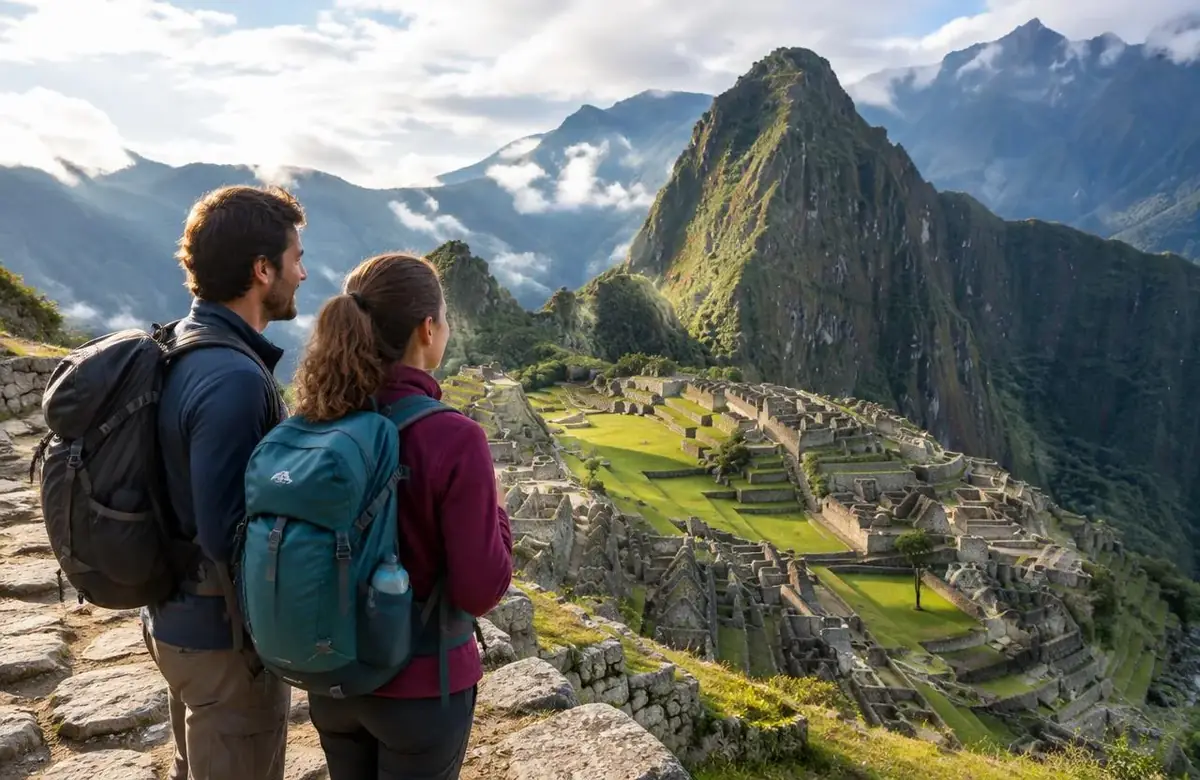
Machu Picchu Vacation Packages, 3, 5 and 7 Days
3, 5 or 7 days from Cusco with hotels, trains, Machu Picchu tickets and guides arranged. From $479.
from $1290
View tour →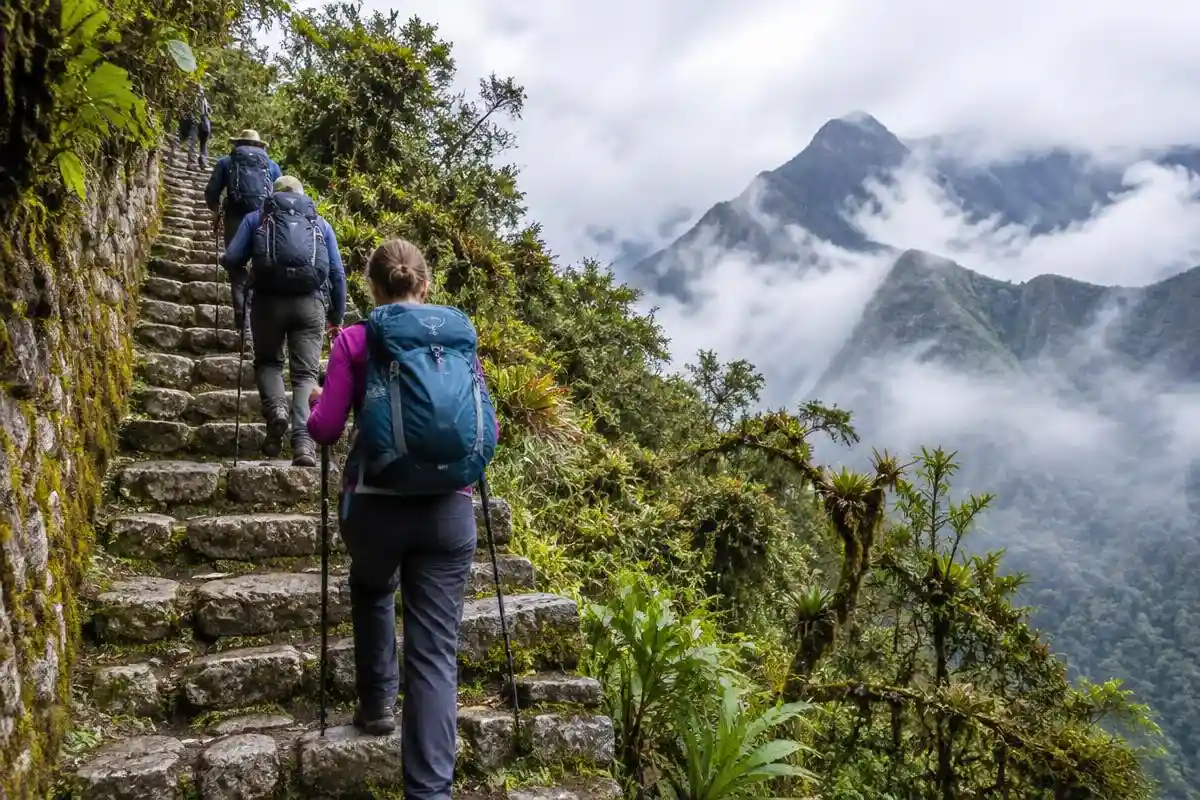
Inca Trail · 4 days
Classic Inca Trail to Machu Picchu, 4 Days
The world-famous 43 km trek on original Inca stone paths, ending at the Sun Gate.
from $827
View tour →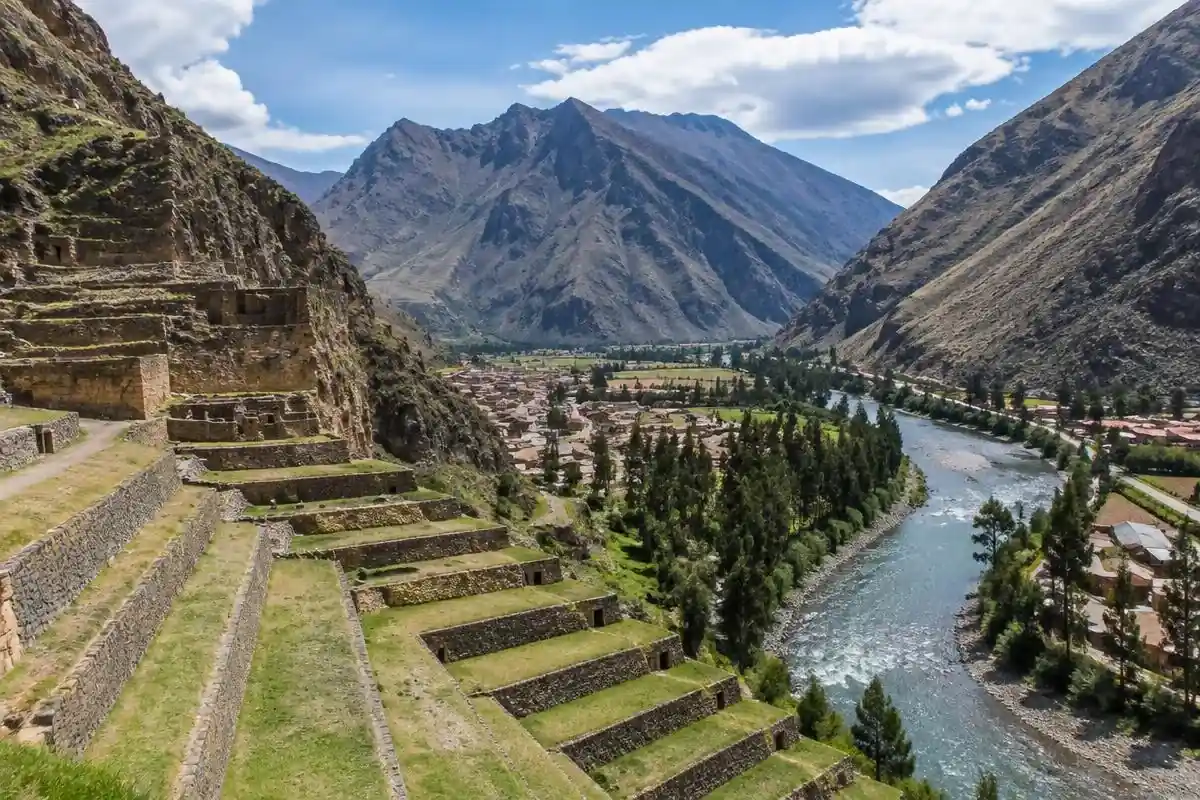
Day Tours · 1 day
Sacred Valley Full Day Tour
Chinchero, Moray, Maras salt mines, Ollantaytambo and Pisac in one full day from Cusco, with buffet lunch.
from $49
View tour →Keep planning
- Machu Picchu Tickets 2026: Prices, Ticket Types and How to Buy
- Best Time to Visit Machu Picchu: Best Months, Seasons and Time of Day
- How to Get to Machu Picchu: Every Route From Cusco Compared
- Machu Picchu Hotels: Best Places to Stay Near the Citadel by Area and Budget
- Machu Picchu Map: Where It Is in Peru and How the Ruins Are Laid Out
- Machu Picchu Cost Breakdown: How Much It Costs to Go in 2026
- Machu Picchu Rules and Regulations: The Complete 2026 Visitor Code
- Machu Picchu in December: Is a Rainy-Season Holiday Visit Worth It?