
Machu Picchu Mountain: Hike Guide to the Tallest Peak Above the Citadel
By the Goo Machu Picchu team · Checked against official sources (editorial policy) · Updated October 2026 · 7 min read
Machu Picchu Mountain is the tallest peak beside the Inca citadel, rising to about 10,111 feet (3,082 m). The hike climbs roughly 1,600 Inca stone steps and 2,130 feet in about 3 to 4 hours round trip. Hikers need a Route 1A ticket, and the reward is a sweeping view over the ruins.
- Summit elevation
- About 10,111 ft (3,082 m)
- Elevation gain
- About 2,130 ft (650 m)
- Round trip
- About 2.4 miles (4 km), 3 to 4 hours
- Steps
- Roughly 1,600 Inca stone steps
- Ticket
- Route 1A, Circuit 1 (mountain ticket)
- Entry shifts
- Two morning shifts, about 7 and 9 am (reported)
What Is Machu Picchu Mountain?
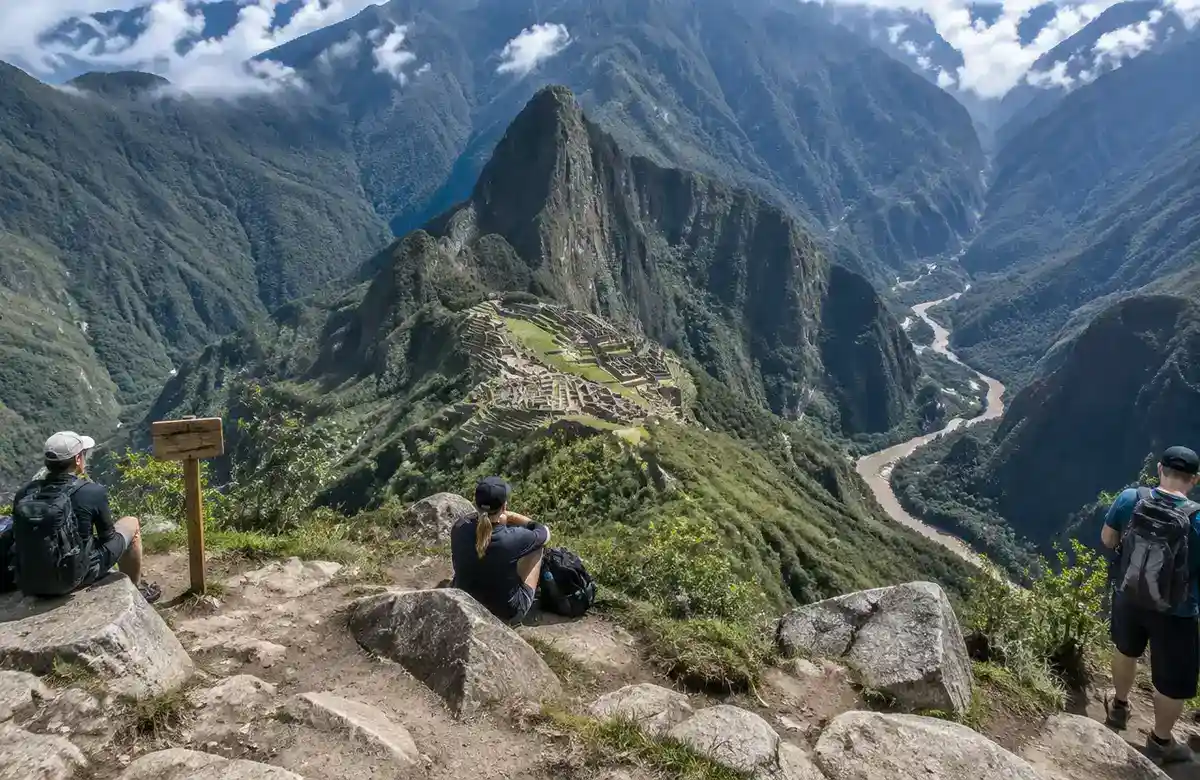
Machu Picchu Mountain, called Montaña Machu Picchu in Spanish, is the large peak on the south side of the Inca citadel. Its Quechua name means old mountain, and it gave the whole site its name. The summit sits about 1,300 feet above the ruins, opposite Huayna Picchu, the peak seen in the classic photo.
Many visitors confuse the mountain with the citadel itself. The ruins sit on a saddle between two peaks: Machu Picchu Mountain to the south and the smaller, steeper Huayna Picchu to the north.
The Incas built a stone path and small terraces up the mountain, and the summit likely served as a lookout. Today the trail is open only to hikers with the matching ticket.
How High Is Machu Picchu Mountain in Feet?
Machu Picchu Mountain reaches about 10,111 feet (3,082 m) above sea level, making it the highest point visitors can hike inside the sanctuary. The citadel lies near 7,970 feet, so the climb gains roughly 2,130 feet. The summit is still lower than Cusco, which sits at about 11,150 feet above sea level.
Because the summit is below Cusco, travelers who spent two or three days in Cusco or the Sacred Valley rarely feel strong altitude effects on this hike. The challenge is the steady climb, not thin air. Our guide to the elevation of Machu Picchu explains acclimatization in more detail.
| Place | Elevation | Compared with the summit |
|---|---|---|
| Machu Picchu Mountain summit | About 10,111 ft | Highest point |
| Huayna Picchu summit | About 8,835 ft | About 1,280 ft lower |
| Machu Picchu citadel | About 7,970 ft | About 2,140 ft lower |
| Aguas Calientes town | About 6,690 ft | About 3,420 ft lower |
| Cusco | About 11,150 ft | About 1,040 ft higher |
What Is the Machu Picchu Mountain Trail Like, Stage by Stage?
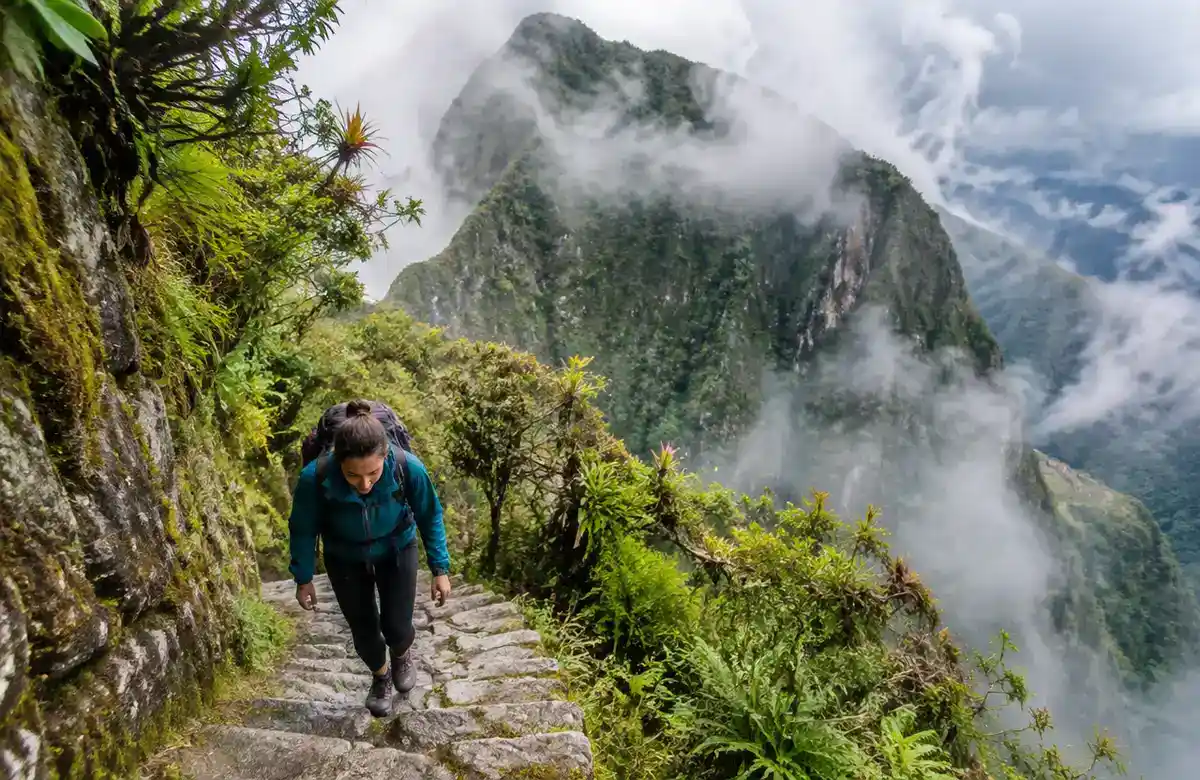
The Machu Picchu Mountain trail is a wide but steep Inca stone staircase that zigzags up the forested south face. It starts at a checkpoint above the upper terraces, climbs steadily with few flat sections, and ends on a small rocky summit. Most hikers need about 2 hours up and 1 to 1.5 hours down.
| Stage | What to expect | Approximate time |
|---|---|---|
| Main gate to trail checkpoint | Short uphill walk past the upper terraces | 10 to 15 minutes |
| Lower trail | Shaded cloud forest, steady stone steps | 40 to 50 minutes |
| Middle trail | Open switchbacks, first big views of the citadel | 40 to 50 minutes |
| Final section to summit | Steeper, narrower steps near the top | 20 to 30 minutes |
| Descent to the terraces | Same path down, hard on knees | 1 to 1.5 hours |
Times are typical estimates from hikers and local guides; fit walkers can be faster and many visitors take longer with photo stops.
How Hard Is the Machu Picchu Mountain Hike?
The Machu Picchu Mountain hike is moderate to hard. It is long and relentless, with around 1,600 uneven steps, but the path is wide and has few exposed drops. Reasonably fit adults who walk regularly can finish it. Hikers with knee problems usually find the descent harder than the climb.
Think of it as climbing the stairs of a 200-story building on uneven stone, with rest stops. Trekking poles with rubber tips help on the way down, and the trail gets slippery after rain.
- Good fit: regular walkers, hikers, travelers who want a big view without narrow ledges.
- Think twice: anyone with knee or heart problems, or who struggles on long staircases.
- Skip it: travelers with very limited time, since the hike uses most of your visit.
- Kids: older children who hike often can manage; check age rules when booking.
Is Machu Picchu Mountain Scary if You Fear Heights?
Machu Picchu Mountain is usually manageable for people with a mild fear of heights, because most of the trail is wide with forest on the downhill side. A few upper sections have open drops, and the summit area is small. Visitors with strong vertigo can stop at a lower viewpoint and still enjoy great views.
The trail feels much less exposed than Huayna Picchu, where narrow ledges and cables are part of the route. If heights are your main worry, Machu Picchu Mountain is generally the calmer of the two big hikes.
Machu Picchu Mountain or Huayna Picchu: Which Hike Should You Choose?
Machu Picchu Mountain suits hikers who want the highest view and a wider, less scary trail, while Huayna Picchu suits hikers who want a shorter, steeper climb with exposed sections. Machu Picchu Mountain takes longer, about 3 to 4 hours, while Huayna Picchu takes about 2 to 3 hours and sells out faster.
| Feature | Machu Picchu Mountain | Huayna Picchu |
|---|---|---|
| Summit height | About 10,111 ft | About 8,835 ft |
| Round-trip time | About 3 to 4 hours | About 2 to 3 hours |
| Exposure | Low to moderate | High, narrow ledges |
| View of citadel | From far above, whole valley | Close, from behind the ruins |
| Ticket | Route 1A | Route 3A |
For the steeper option, read the full Huayna Picchu hike guide.
What Ticket Do You Need for Machu Picchu Mountain?
Machu Picchu Mountain requires a Route 1A ticket, part of Circuit 1, which combines the mountain hike with a short visit to the upper terraces and classic viewpoint. The official foreign adult price from May 2026 is S/211. The ticket does not include the lower temples, so many visitors add a second citadel ticket.
Tickets are tied to your passport and sold with a fixed morning entry shift. Prices, discounts and the official sales site are covered in our guide to Machu Picchu entry tickets, and what Route 1A shows compared with the other nine routes is explained in Machu Picchu circuits explained.
When Should You Start the Machu Picchu Mountain Hike?
Machu Picchu Mountain tickets are sold in two morning shifts, reported at about 7 am and 9 am, with a short window to start the trail after entering. The early shift is cooler and quieter, while the later shift often has clearer summit views once morning cloud lifts. Sleeping in Aguas Calientes makes either shift easier.
Check the exact check-in window printed on your ticket, since times have changed between seasons. Staying the night in Aguas Calientes below Machu Picchu avoids a very early train from Cusco.
- Take one of the first shuttle buses up, described in our how to get to Machu Picchu, so you reach the gate early in your shift.
- Walk straight to the Machu Picchu Mountain checkpoint and sign in with your passport.
- Set a turnaround time, about 2 hours after starting, even if you have not reached the top.
- Rest at viewpoints rather than stopping on narrow steps.
- Leave time on the way down for the upper terrace viewpoint included in Route 1A.
What Is the Best Season to Hike Machu Picchu Mountain?
The best season to hike Machu Picchu Mountain is the dry season, roughly May to September, when skies are clearer and the steps are drier. The rainy months from about November to March bring slippery stone and frequent cloud that can hide the summit view. April and October are good shoulder months with fewer visitors.
Even in the dry season, mornings often start in cloud. For month by month conditions see the Machu Picchu weather by month, and for crowds and holidays the best months to visit.
What Should You Bring on the Machu Picchu Mountain Hike?
Bring water, sun protection, a light rain jacket and shoes with good grip for the Machu Picchu Mountain hike. There is no water or food on the trail, and the summit is exposed to strong sun. Pack light, because large backpacks are not allowed inside Machu Picchu and storage is at the entrance.
- At least 1 liter (about 34 oz) of water per person
- Sunscreen, hat and sunglasses
- Light rain jacket or poncho
- Hiking shoes with good tread
- Trekking poles with rubber tips, if you use them
- Insect repellent for the lower forest section
- Your original passport and printed or digital ticket
Frequently asked questions
Is the Machu Picchu Mountain hike worth it?
The Machu Picchu Mountain hike is worth it for travelers who enjoy hiking and want the widest view of the citadel and the Urubamba canyon. It is less worth it on a rushed [full-day Machu Picchu trip](/tours/machu-picchu-day-trip-from-cusco) or a cloudy rainy-season morning, when the summit may be fogged in. Hikers report the views as the highlight of their visit.
How many people can hike Machu Picchu Mountain each day?
Machu Picchu Mountain has a small daily limit, reported at roughly a few hundred hikers split between the two morning shifts. Because spaces are limited, tickets for the dry season and holidays can sell out weeks or months ahead. Check availability on the official site as soon as your travel dates are fixed.
Has anyone died on Machu Picchu Mountain?
Serious accidents on Machu Picchu Mountain are rare, and the trail is considered safer than Huayna Picchu because it is wider. Most problems come from slips on wet steps or hikers pushing beyond their fitness. Staying on the path, using the handrails where available and turning back in heavy rain keeps the risk low.
Can you hike Machu Picchu Mountain without a guide?
Hikers usually climb Machu Picchu Mountain at their own pace, because guides rarely walk the full trail with visitors. You still enter the site under the normal rules, which may require an official guide for the citadel part of your visit. Confirm the current guide rule when buying your ticket.
Are there restrooms on Machu Picchu Mountain?
There are no restrooms on Machu Picchu Mountain or anywhere inside the archaeological site. The only restrooms are just outside the main entrance, and they charge a small fee in soles. Use them before entering, because once you start the Route 1A path you cannot easily return to the gate.
Can I do Machu Picchu Mountain and visit the main temples on the same day?
You can see the main temples on the same day as Machu Picchu Mountain only by buying a second ticket, usually Route 2A or 2B, with a later entry time. Route 1A itself covers the mountain and upper terraces, not the Temple of the Sun area or Sacred Plaza.
Is Machu Picchu Mountain open in the rainy season?
Machu Picchu Mountain is normally open all year, including the rainy season from about November to March. Heavy rain can make the steps slippery, and staff may pause access in storms. Wear shoes with strong grip, pack a rain jacket and expect the summit to be in cloud on many rainy-season mornings.
What plants and animals can you see on Machu Picchu Mountain?
The trail climbs through cloud forest full of orchids, bromeliads, mosses and ferns, with hundreds of orchid species recorded in the wider sanctuary. Hummingbirds and other mountain birds are common, and lucky hikers sometimes spot viscachas on the rocks. Early starts give the best chance of seeing wildlife before the trail gets busy.
Want to hike Machu Picchu Mountain?
Tell us your dates and we will check Route 1A availability, match your train and suggest whether to add a second citadel ticket. Prefer to read first? Get the free Machu Picchu trip guide.
Sources checked October 3, 2026
Recommended tours
Machu Picchu · 1 day
Machu Picchu Day Trip from Cusco
Train, bus, entry ticket and guided tour of Machu Picchu in one easy day from Cusco.
from $379
View tour →
Packages · 7 days
Machu Picchu Vacation Packages, 3, 5 and 7 Days
3, 5 or 7 days from Cusco with hotels, trains, Machu Picchu tickets and guides arranged. From $479.
from $1290
View tour →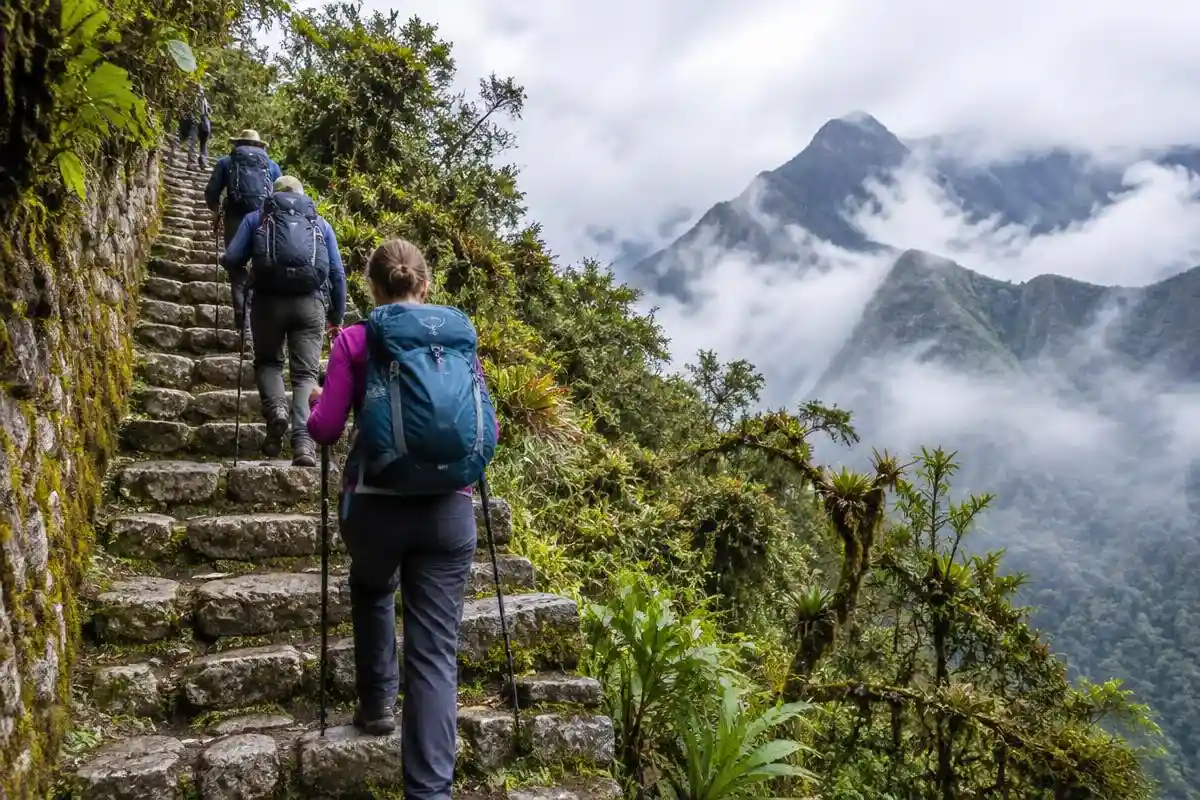
Inca Trail · 4 days
Classic Inca Trail to Machu Picchu, 4 Days
The world-famous 43 km trek on original Inca stone paths, ending at the Sun Gate.
from $827
View tour →Keep planning
- Huayna Picchu: Hike Guide to the Peak Behind Machu Picchu
- Machu Picchu Circuits Explained: Circuit 1, 2 and 3 and All 10 Routes
- Temple of the Sun at Machu Picchu: The Inca Solstice Tower Explained
- Sun Gate Machu Picchu: How to Hike to Inti Punku and What You Will See
- Intihuatana Stone at Machu Picchu: Meaning, Purpose and How to See It
- Inca Bridge Machu Picchu: The Cliffside Trail and Secret Log Crossing
- Temple of the Moon at Machu Picchu: The Hidden Cave Shrine on Huayna Picchu
- Machu Picchu Tickets 2026: Prices, Ticket Types and How to Buy