
Machu Picchu History: From Inca Royal Estate to World Wonder
By the Goo Machu Picchu team · Checked against official sources (editorial policy) · Updated October 2026 · 5 min read
Machu Picchu was built by the Incas in the mid-1400s, most likely as a royal estate for the emperor Pachacuti. It was occupied for under a century, abandoned around the time of the Spanish conquest, and never found by the Spanish. Hiram Bingham brought it to world attention in 1911, and it became a UNESCO site in 1983.
- Built by
- The Incas, for emperor Pachacuti
- Occupied from
- About 1420 to the 1500s
- Abandoned
- Around the Spanish conquest, after 1532
- Rediscovered
- 1911, Hiram Bingham with local guides
- Artifacts returned
- Yale returned items to Peru from 2011
- UNESCO listing
- 1983
Who Built Machu Picchu?
Machu Picchu was built by the Incas, under the emperor Pachacuti Inca Yupanqui, who ruled from about 1438 and turned Cusco's kingdom into an empire. Thousands of laborers working under the Inca mit'a system of rotating labor service cut and fitted the stone, built the terraces and engineered drainage on the steep ridge.
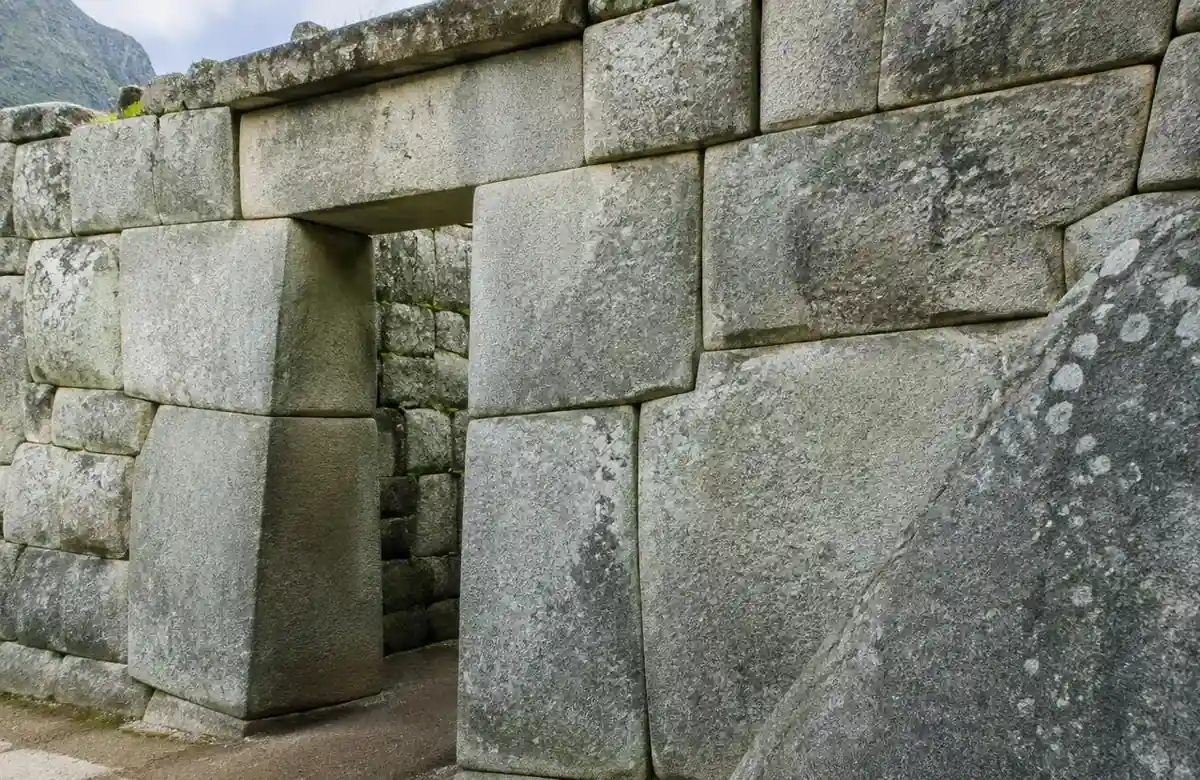
Skilled stonemasons shaped granite quarried on site. The finest ashlar walls, with no mortar, mark royal and religious buildings, while rougher fieldstone was used for homes and storage. Surprising details of this engineering are in our list of Machu Picchu facts.
When Was Machu Picchu Built?
Machu Picchu was built in the mid-15th century. Historians long dated construction to about 1450, based on Spanish colonial records of Inca reigns. Radiocarbon dating of human remains, published in 2021, showed people were living there by about 1420, suggesting the site is roughly two decades older than once thought.
| Date | Event |
|---|---|
| About 1420 | Earliest occupation shown by radiocarbon dating |
| About 1438 to 1471 | Reign of Pachacuti; main construction |
| 1532 | Spanish arrive in Peru; Inca empire collapses |
| Mid to late 1500s | Site abandoned |
| 1902 | Agustin Lizarraga and others leave inscriptions at the site |
| 1911 | Hiram Bingham's expedition reaches Machu Picchu |
| 1913 | National Geographic publishes a special issue |
| 1983 | UNESCO World Heritage listing |
| 2007 | Named one of the New Seven Wonders |
Radiocarbon dates come from Burger and colleagues (2021); earlier dates come from colonial chronicles and are approximate.
Why Did the Incas Build Machu Picchu?
The Incas most likely built Machu Picchu as a country palace and religious sanctuary for Pachacuti and his royal lineage, similar to other royal estates around the Sacred Valley. It combined comfortable residences, sacred temples aligned with the sun and mountains, and farming terraces, in a setting that reinforced the emperor's divine power.
Earlier theories called it a fortress, a convent for chosen women or the last Inca refuge, but archaeological evidence and a 1568 land document studied by historians support the royal estate explanation.
Who Lived at Machu Picchu?
Machu Picchu was home to the royal family and nobles during visits, plus a permanent community of perhaps 750 people at most, many of them servants and craftspeople. DNA studies published in 2023 found that residents came from across the Inca empire and beyond, rather than from one local group.
Burials studied in the area point to a diverse workforce of retainers, called yanacona, brought from distant regions to serve the estate.
Why Was Machu Picchu Abandoned?
Machu Picchu was abandoned in the 1500s, most likely because the Inca royal system that supported it collapsed after the Spanish conquest began in 1532. Civil war between Inca princes, epidemics such as smallpox, and the loss of the labor and supplies that kept a royal estate running all likely played a part.
There is no evidence the Spanish attacked or looted the site. Without its royal owners, Machu Picchu slowly emptied, and cloud forest grew over the buildings. The Inca road network that served it survives today as the Inca Trail; see the Inca Trail permits guide.
Did the Spanish Find Machu Picchu?
The Spanish never found Machu Picchu, which is a key reason it survived intact. Colonial records mention a place called Picchu, but conquerors did not reach the remote ridge to loot or destroy it. Many other Inca temples, such as Cusco's Coricancha, were dismantled or built over by Spanish churches.
Visitors can still compare the two in one trip: Coricancha in Cusco and Machu Picchu itself. A guided Machu Picchu day trip from Cusco includes a licensed guide who explains this history on site.
How Was Machu Picchu Rediscovered?
Machu Picchu was rediscovered for the outside world on July 24, 1911, when Yale lecturer Hiram Bingham was guided to the ruins by local farmer Melchor Arteaga and a Peruvian police sergeant. Families were farming the terraces at the time. Bingham's later excavations and photographs made the site famous internationally.
Bingham was searching for Vilcabamba, the last Inca refuge, and believed Machu Picchu was it; Vilcabamba was later identified elsewhere, at Espiritu Pampa. Thousands of artifacts he took to Yale became a long dispute, and Yale began returning them to Peru in 2011. Bingham first approached along the Urubamba Valley, roughly the route of today's railway described in our guide to train to Machu Picchu classes and schedules.
Why Is It Called the Lost City of the Incas?
Machu Picchu is called the Lost City of the Incas because of Hiram Bingham's 1948 book of that name, which presented it as a forgotten city. In reality it was never lost to local Quechua communities, and it was a royal estate rather than a city. The phrase remains a popular nickname.
Today the Ministry of Culture protects the site, and visitors walk its circuits on timed tickets. To see this history in person, start with our what Machu Picchu is guide and the guide to the Machu Picchu circuits.
Prefer a guided option? See our Choquequirao trek.
Inca record keeping explains how such projects were organized; our guide to the Inca quipu shows how knotted cords tracked labor. Pack animals mattered too, as our llama vs alpaca guide explains.
Frequently asked questions
How long did it take to build Machu Picchu?
No record states exactly how long Machu Picchu took to build, but historians estimate construction lasted several decades in the mid-1400s. Some areas were still unfinished when the site was abandoned. Foundations and drainage hidden underground represent a large share of the total work.
How did the Incas move the stones?
The Incas moved the stones mainly by hand, using ramps, levers, ropes and large teams of workers, since they did not use wheels or iron tools for construction. Most granite was quarried on the ridge itself. Stones were shaped with harder hammerstones and fitted by trial and error.
What was Machu Picchu used for?
Machu Picchu was used as a royal retreat for the Inca emperor and his family, and as a sacred site for ceremonies honoring the sun, mountains and water. It also had farming terraces and workshops that supported its residents. It was not primarily a military fortress.
Was Hiram Bingham the first to find Machu Picchu?
Hiram Bingham was not the first outsider at Machu Picchu. Local families lived and farmed there, and Agustin Lizarraga left a charcoal inscription in 1902. Bingham's role was scientific documentation and worldwide publicity, which is why he is often wrongly credited as the discoverer.
What happened to the people of Machu Picchu?
The people of Machu Picchu most likely left in the 1500s as the Inca state broke down after the Spanish conquest. Royal support ended, and diseases spread through the Andes. Survivors probably moved to other communities in the region rather than disappearing mysteriously.
Did Machu Picchu have a different name?
Machu Picchu may have had a different name. A 2021 study of colonial documents by historians Donato Amado Gonzales and Brian Bauer argued the Incas called the site Huayna Picchu or simply Picchu. Machu Picchu, meaning Old Peak, became standard after Bingham's maps.
Want a guide who brings this history to life?
Tell us your dates, and we will pair your Machu Picchu visit with a licensed guide who knows the Inca story in depth. Prefer to read first? Get the free Machu Picchu trip guide.
Sources checked October 3, 2026
Recommended tours
Machu Picchu · 1 day
Machu Picchu Day Trip from Cusco
Train, bus, entry ticket and guided tour of Machu Picchu in one easy day from Cusco.
from $379
View tour →
Inca Trail · 4 days
Classic Inca Trail to Machu Picchu, 4 Days
The world-famous 43 km trek on original Inca stone paths, ending at the Sun Gate.
from $827
View tour →Keep planning
- What Is Machu Picchu? The Inca Citadel in Peru Explained
- Machu Picchu Facts: Engineering, Nature and Numbers Behind the Inca Wonder
- Machu Picchu Tickets 2026: Prices, Ticket Types and How to Buy
- Best Time to Visit Machu Picchu: Best Months, Seasons and Time of Day
- How to Get to Machu Picchu: Every Route From Cusco Compared
- Machu Picchu Bus: How the Shuttle From Aguas Calientes Works
- Machu Picchu Hotels: Best Places to Stay Near the Citadel by Area and Budget
- Machu Picchu Map: Where It Is in Peru and How the Ruins Are Laid Out