
Train to Machu Picchu: Complete Guide to Classes, Stations and Tickets
By the Goo Machu Picchu team · Checked against official sources (editorial policy) · Updated October 2026 · 12 min read
The train to Machu Picchu runs from Cusco (Poroy station) or Ollantaytambo in the Sacred Valley to Aguas Calientes, the town below the ruins. Two companies, PeruRail and Inca Rail, share one track along the Urubamba River. The ride takes about 1 hour 45 minutes from Ollantaytambo and about 3 hours 30 minutes from Poroy.
This guide explains every train class, station and route in the order you plan them, shows what fares usually look like, and ends with the booking order that keeps your entry ticket, train and bus in sync.
- Train companies
- PeruRail and Inca Rail (plus Belmond Hiram Bingham)
- Main departure stations
- Ollantaytambo and Poroy (Cusco)
- Arrival station
- Aguas Calientes (Machu Picchu Pueblo)
- Ride time
- About 1h45 from Ollantaytambo, 3h30 from Poroy
- Luggage
- One carry-on, about 5 kg (11 lb)
- Last stop to the ruins
- Bus up the mountain, about 25 minutes
Can You Take a Train to Machu Picchu? How the Route Works
Yes. A train is the most common way to reach Machu Picchu, but it stops in Aguas Calientes, not at the ruins. From the Aguas Calientes station, travelers walk a few minutes to the bus stop and ride about 25 minutes up to the entrance, or hike the stairs for about 1.5 hours.
No road connects Cusco directly to Aguas Calientes, so the railway along the Urubamba River is the only motorized way into town. That is why train tickets often sell out before Machu Picchu entry tickets in busy months.
Every route to the citadel, including treks and the budget Hidroeléctrica path, is compared in our guide on how to get to Machu Picchu. This page focuses only on the rail journey.
Which Companies Run the Machu Picchu Train?
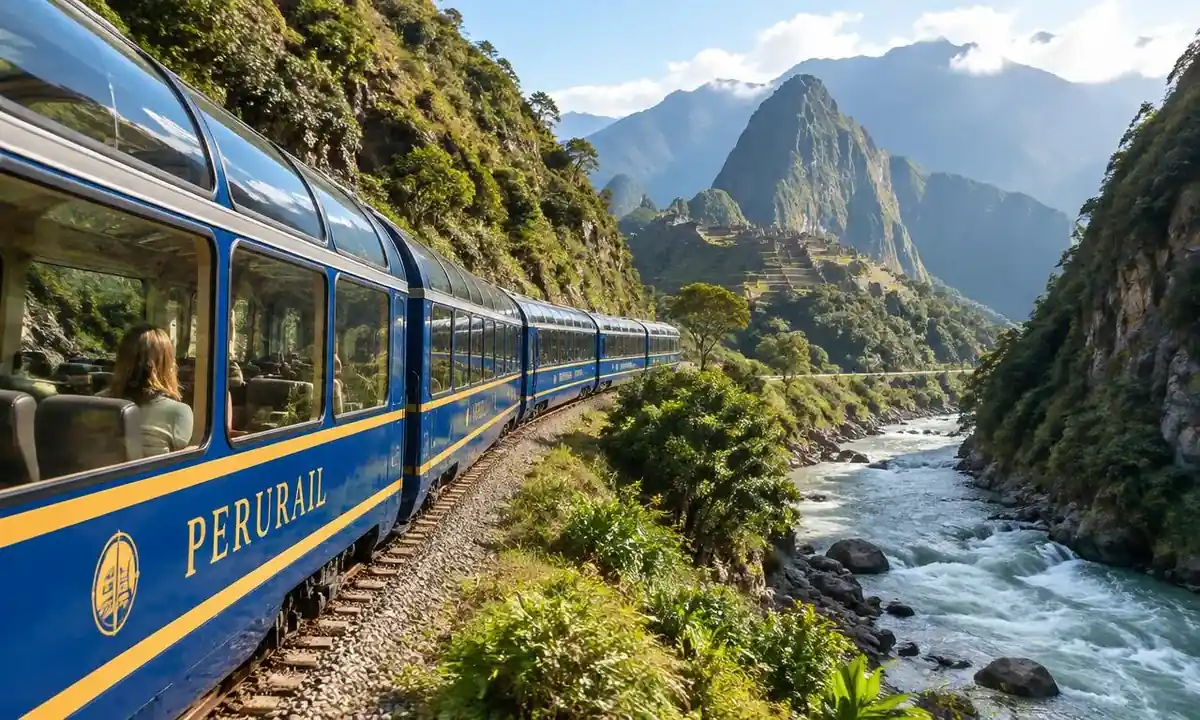
Two operators run the Machu Picchu train: PeruRail, the larger company with departures from Poroy, Ollantaytambo and Urubamba, and Inca Rail, which runs mainly from Ollantaytambo with bus connections from Cusco. Belmond operates the luxury Hiram Bingham train on PeruRail's tracks. All trains finish at Aguas Calientes.
- PeruRail: Expedition, Vistadome, Vistadome Observatory and the Belmond Hiram Bingham.
- Inca Rail: The Voyager, The 360°, First Class and private carriages.
- Both companies use the same single track, so the scenery and travel time are almost identical.
- Each company sells tickets on its own website, and travel agencies can book either one.
Choosing between the two brands is mostly about departure times and fares on your date. A short side-by-side follows in the class table below.
What Train Classes Are There? Expedition, Vistadome, 360 and More
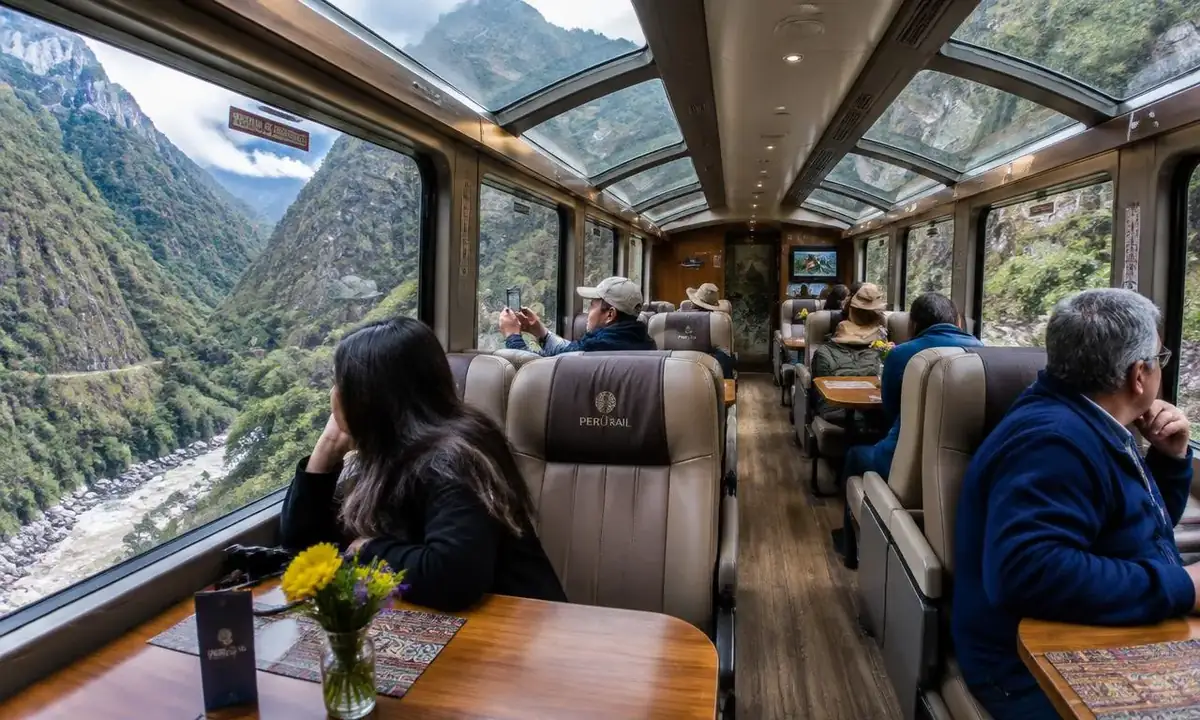
Machu Picchu train classes fall into three levels: standard (PeruRail Expedition, Inca Rail Voyager), panoramic with extra windows and light snacks (Vistadome, Vistadome Observatory, Inca Rail 360°), and luxury with full meals (Inca Rail First Class, Belmond Hiram Bingham). All classes take the same route; comfort, windows and service change.
| Train class | Operator | What you get | Best for |
|---|---|---|---|
| Expedition | PeruRail | Large windows, snack for purchase | Budget travelers, day trips |
| The Voyager | Inca Rail | Standard seats, light snack | Budget travelers who prefer Inca Rail times |
| Vistadome | PeruRail | Roof windows, snack, onboard show on return | First-time visitors who want views |
| Vistadome Observatory | PeruRail | Open-air observatory car, roof windows | Photographers, scenery lovers |
| The 360° | Inca Rail | Panoramic windows, open-air balcony car | Views and fresh air |
| First Class | Inca Rail | Lounge, multi-course meal, bar car | Couples, special trips |
| Hiram Bingham | Belmond | Fine dining, live music, cocktails | Luxury and celebrations |
Service details change by season, so confirm what is included on the operator's site before paying. The Hiram Bingham is a full luxury experience explained in our Hiram Bingham train guide; for a fully arranged high-end trip see our Machu Picchu luxury tour.
Which Train Is Best for You? A Quick Decision Guide
The best Machu Picchu train depends on your budget and trip style. Expedition or Voyager suits travelers who want the lowest fare. Vistadome or 360° is the sweet spot for first-time visitors who want views. First Class or Hiram Bingham fits couples and celebrations. On a one-day trip, pick by departure time, not class.
- Tight budget: Expedition or The Voyager, and spend the savings on a guide or a Huayna Picchu climb.
- First visit, normal budget: Vistadome or The 360° on the way in, standard class on the way back in the dark.
- Traveling with kids: any morning departure from Ollantaytambo keeps the ride under 2 hours.
- Photographers: Vistadome Observatory or The 360° for the open-air car.
- Honeymoon or milestone birthday: Inca Rail First Class or the Belmond Hiram Bingham.
- Day trip from Cusco: the earliest departure you can get, whatever the class.
Evening return trains run after dark for most of the year, so paying extra for big windows on the way back adds little.
Where Does the Train Leave From? Machu Picchu Train Stations
Machu Picchu trains leave from three stations: Poroy, about 20 to 30 minutes by car from central Cusco; Ollantaytambo, about 1.5 to 2 hours from Cusco in the Sacred Valley; and Urubamba, with limited departures. Some services start in Cusco city as a bus plus train combination. Every train arrives at Aguas Calientes station.
If you plan a night before the train, our Ollantaytambo town and ruins guide covers what to see there.
Poroy Station (Cusco)
Poroy station sits on the edge of Cusco, about 13 km from the main square, and is served only by PeruRail. It saves the drive to Ollantaytambo but makes the train ride almost twice as long, about 3 hours 30 minutes. Fares from Poroy are usually higher than from Ollantaytambo.
Ollantaytambo Station (Sacred Valley)
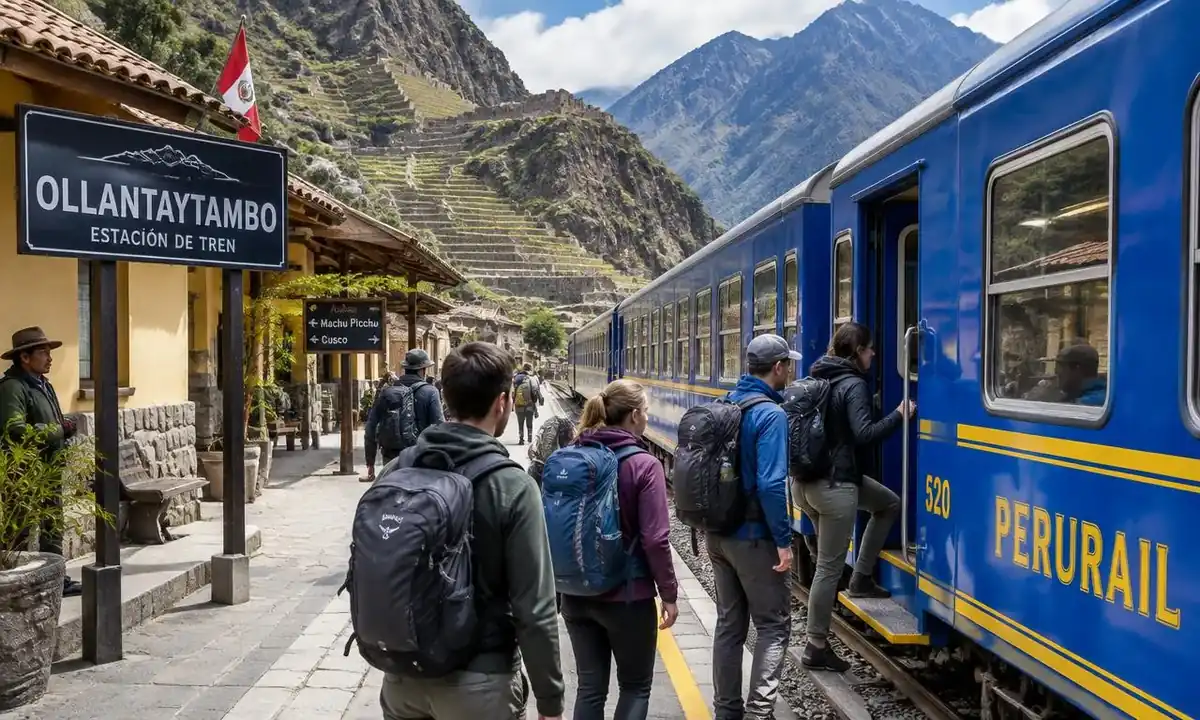
Ollantaytambo is the busiest Machu Picchu train station, served by PeruRail and Inca Rail with the most departures. The ride from here to Aguas Calientes takes about 1 hour 45 minutes. Travelers reach Ollantaytambo from Cusco by shared van, taxi or private transfer in about 1.5 to 2 hours.
Urubamba Station
Urubamba station serves travelers staying at hotels in the middle of the Sacred Valley. It has very few departures, often one round trip a day, and the ride takes a little longer than from Ollantaytambo. It only makes sense when its single schedule matches your plan.
Bus Plus Train From Cusco City (Bimodal Service)
A bimodal service is a bus from Cusco city (Wanchaq or San Pedro area) to Ollantaytambo, followed by the train to Aguas Calientes, sold as one ticket. PeruRail's own schedules show total trips of about 3 hours 40 minutes to 4 hours 20 minutes. Rainy-season changes make this the default from Cusco in some months.
Aguas Calientes Station (Machu Picchu Pueblo)
Aguas Calientes station, officially Machu Picchu Pueblo, is the end of the line for every train. The station exits through a craft market into town, and the bus stop to the ruins is a short walk along the river. Allow about 10 minutes on foot. The town itself is covered in our Aguas Calientes guide.
How Long Is the Train to Machu Picchu From Cusco?
The train from Cusco's Poroy station to Machu Picchu takes about 3 hours 30 minutes, according to PeruRail. From Ollantaytambo, the ride takes about 1 hour 45 minutes. Add the 1.5 to 2 hour drive from Cusco to Ollantaytambo and the 25 minute bus up, and door to gate is usually 4 to 5 hours.
| Route | Train time | Total from Cusco hotel to gate | Distance (approx.) |
|---|---|---|---|
| Poroy to Aguas Calientes | About 3h30 | About 4.5 to 5 hours | About 85 km (53 mi) by rail |
| Ollantaytambo to Aguas Calientes | About 1h45 | About 4 to 4.5 hours incl. drive | About 43 km (27 mi) by rail |
| Cusco bus + train (bimodal) | About 3h40 to 4h20 total | About 4.5 to 5 hours | Bus plus rail |
| Urubamba to Aguas Calientes | About 2h to 2h30 | Depends on hotel location | About 60 km (37 mi) by rail |
| Aguas Calientes back to Ollantaytambo | About 1h45 to 2h | About 3.5 to 4 hours to Cusco | About 43 km (27 mi) by rail |
Times and distances are approximate and vary by departure. The track drops more than 1,000 m between Poroy and Aguas Calientes, which is why the trip suits people adjusting to altitude; see the Machu Picchu elevation guide for details.
How Much Is the Train to Machu Picchu?
A train to Machu Picchu usually costs about $60 to $100 one way in standard class, a bit more in panoramic classes, and several hundred dollars in Inca Rail First Class. The Belmond Hiram Bingham costs much more. Fares change by date, time and demand, so early morning and holiday seats cost the most.
- One way vs round trip: many sites quote round-trip prices, so a $134 fare can mean two legs, not one.
- Time of day: the earliest and most convenient departures sell first and cost more.
- Season: June to August and holidays push prices up; rainy months are often cheaper.
- Station: trips from Poroy usually cost more than from Ollantaytambo.
- Children: both operators list child fares; confirm age rules when booking.
These ranges come from published operator fares and current travel guides, which disagree with each other. Always check the live fare on PeruRail or Inca Rail for your date. Entry ticket prices are separate and listed in our Machu Picchu tickets guide.
How to Book Machu Picchu Train Tickets, Step by Step
Book Machu Picchu train tickets online on the PeruRail or Inca Rail website, or through a travel agency, after securing your Machu Picchu entry ticket. Choose your station and date, pick a departure that lands you in Aguas Calientes at least 90 minutes before your entry time, enter passport details exactly, and save the e-ticket.
- Buy your Machu Picchu entry ticket first, because entry times are the scarcer item.
- Pick your station: Ollantaytambo for the most options, Poroy to avoid the drive.
- Choose an outbound train arriving at least 90 minutes before your entry time.
- Choose a return train at least 2 hours after your expected exit from the ruins.
- Enter each name and passport number exactly as printed in the passport.
- Pay by card and download the e-ticket for every passenger.
- Book the bus up to the ruins, or plan to walk the stairs.
In June to August, book trains as soon as your entry ticket is confirmed. If you want one team to line up the entry ticket, train and bus, our Machu Picchu day trip from Cusco includes all three.
What Are the Machu Picchu Train Schedules?
Machu Picchu trains run from early morning to evening. Outbound trains from Ollantaytambo usually start before 6 am and continue every 30 to 90 minutes until early afternoon, while return trains from Aguas Calientes leave from late morning until about 9 pm. Poroy has fewer departures. Exact times change by season and operator.
- Day trip: take a departure around 5 to 7 am and return in the late afternoon or evening.
- Overnight stay: a midday train in, then visit the ruins early the next morning.
- Last train back: book it only with a clear time buffer, because missing it means an unplanned night in Aguas Calientes.
- Rainy season (roughly January to April): Poroy trains are often replaced by bus plus train via Ollantaytambo.
Check the current timetable on the operator site when you book, since schedules shift every season. Weather by month is covered in our Machu Picchu weather guide. The busiest and quietest months for trains are explained in our best time to visit Machu Picchu guide.
What Luggage Can You Take on the Machu Picchu Train?
Each passenger on the Machu Picchu train can bring one carry-on bag of about 5 kg (11 lb), plus a small personal item. Bags must fit above or beside your seat. Large suitcases are not allowed in the carriage, so most travelers leave them at their Cusco or Sacred Valley hotel for free.
- Pack a daypack with one night of clothes, rain jacket, passport and medicine.
- Store your big suitcase at your hotel before leaving Cusco.
- Hiram Bingham and First Class passengers often get a larger allowance; confirm when booking.
- Extra luggage rules and fees vary by operator, so check before you travel.
Tips for Riding the Train to Machu Picchu
To ride the Machu Picchu train smoothly, arrive at the station at least 30 minutes early (Inca Rail's guidance), carry your original passport, and sit on the left side heading to Aguas Calientes for more river views. Bring a jacket, because carriages can be cool in the morning, and keep snacks for long Poroy rides.
- Bring the same passport used for your ticket; staff check it before boarding.
- Left side outbound tends to face the river for more of the ride.
- Use the station restroom before boarding on short standard-class rides.
- Keep your train ticket handy for the return, and know your exact departure time.
- Altitude drops as you ride, so most people feel better in Aguas Calientes than in Cusco.
Can You Get to Machu Picchu Without the Train?
Yes, but only on foot or by a long road-and-walk combination. Hikers reach Machu Picchu on the Inca Trail or treks like Salkantay, and budget travelers ride a van to Hidroeléctrica and walk about 11 km to Aguas Calientes. Even trekkers usually take the train back to Ollantaytambo or Cusco.
The classic hiking route needs a permit, explained in our Inca Trail permits guide. Permit-free treks such as Salkantay and Lares still end with the train home, so trekkers need a return ticket from Aguas Calientes.
PeruRail or Inca Rail? Short Comparison
PeruRail and Inca Rail run the same track with similar times and comfort, so the better choice is usually whichever has the right departure on your date at a good fare. PeruRail offers more departures and stations, including Poroy near Cusco. Inca Rail is often praised for smaller carriages and its open-air 360° car.
If you already know your hotel area, pick the operator with the most convenient station and time. Mixing operators, for example PeruRail out and Inca Rail back, is common and works fine.
For a class-by-class breakdown, read our full PeruRail vs Inca Rail comparison.
Frequently asked questions
Do Machu Picchu trains sell out?
Yes. Popular morning trains sell out weeks ahead from June to August and on holidays, and they can sell out faster than entry tickets for some time slots. Book the train as soon as your Machu Picchu ticket is confirmed, especially if you are doing a day trip from Cusco.
Do you need a passport to take the train to Machu Picchu?
Yes. Train staff check your original passport against the name and number on your ticket before boarding. A photo on your phone is usually not accepted. Carry the same passport you will use to enter Machu Picchu, since the citadel checks it too.
Is the train ride to Machu Picchu scenic?
Yes. The train to Machu Picchu follows the Urubamba River through the Sacred Valley into a deep cloud forest canyon, with snowy peaks, Inca terraces and rushing rapids along the way. The second half, after Ollantaytambo, is the most dramatic part of the ride.
Can I take a train from Lima to Machu Picchu?
No. No train runs from Lima to Machu Picchu. Travelers fly from Lima to Cusco in about 1 hour 20 minutes, then take the train from Poroy or Ollantaytambo. The full route is explained in our [Lima to Machu Picchu guide](/guides/lima-to-machu-picchu).
What happens if I miss my train back from Aguas Calientes?
If you miss your return train, you usually need to buy a new ticket for a later departure, if seats remain, or stay overnight in Aguas Calientes. Rules on changes differ by operator and fare. Leave at least 2 hours between your expected exit and the train.
Can you change or cancel a Machu Picchu train ticket?
PeruRail and Inca Rail allow changes or refunds only within their own fare rules, often with a fee and a deadline before departure. Promotional fares can be stricter. Read the conditions on the operator's site before paying, and keep your booking reference.
Can kids ride the Machu Picchu train?
Yes. Children ride the Machu Picchu train with a ticket of their own, and both PeruRail and Inca Rail list child fares for younger passengers. Age limits and discounts differ by operator, so check the rules when booking. Each child also needs a passport on board and at the Machu Picchu entrance.
Is the Machu Picchu train safe?
The Machu Picchu train is considered a safe way to reach Aguas Calientes, running slowly on a fixed track with staff in every carriage. The main risks are delays from landslides or protests in the rainy season. Travel insurance and a flexible return time protect you if a service is cancelled.
Can I bring a backpack on the Machu Picchu train?
Yes. A small backpack or daypack is the ideal bag for the Machu Picchu train, as long as it stays within the roughly 5 kg (11 lb) carry-on limit. Hiking backpacks for treks may need to be sent ahead or stored, so ask your trek operator before the trip.
Do I need to print my Machu Picchu train ticket?
Most travelers show the e-ticket on a phone together with their original passport, which operators generally accept. Printing a copy is a cheap backup in case your phone battery dies or signal fails at the station. Check the instructions in your booking email before you travel.
Do children get a discount on the Machu Picchu train?
Yes, PeruRail and Inca Rail both sell lower child fares, usually for ages 3 to 11, and very young children under about 3 can often travel on a parent's lap. Age limits and prices differ by operator and class, so check the child fare when you book and carry each child's passport.
Want your train, ticket and bus matched to the right times?
Send your dates with the form and we will suggest the train that fits your Machu Picchu entry time, or quote the full day with transfers included. You can also ask for our free Machu Picchu planning guide.
Sources checked October 3, 2026
Recommended tours
Machu Picchu · 1 day
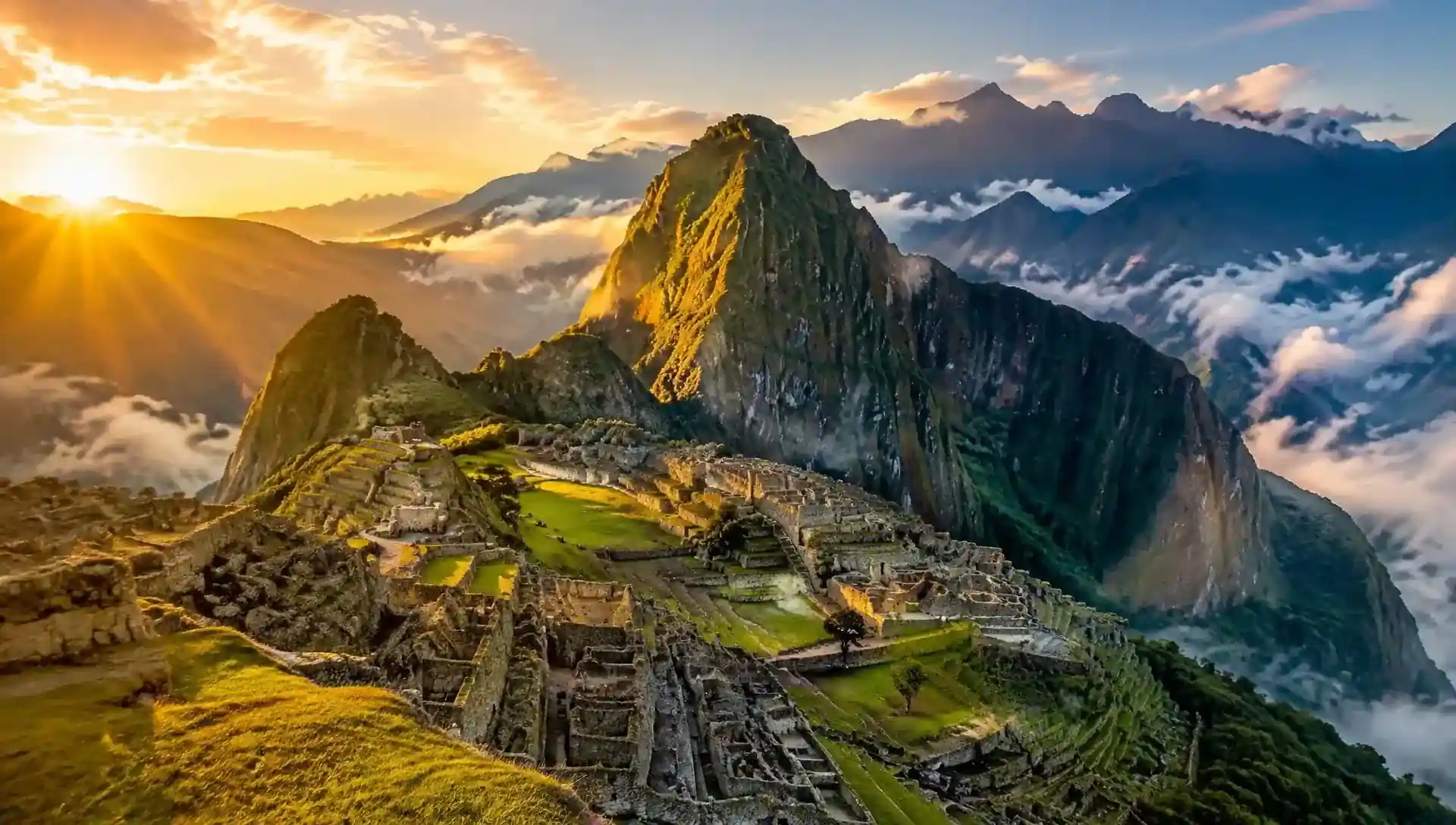
Machu Picchu Day Trip from Cusco
Train, bus, entry ticket and guided tour of Machu Picchu in one easy day from Cusco.
from $379
View tour →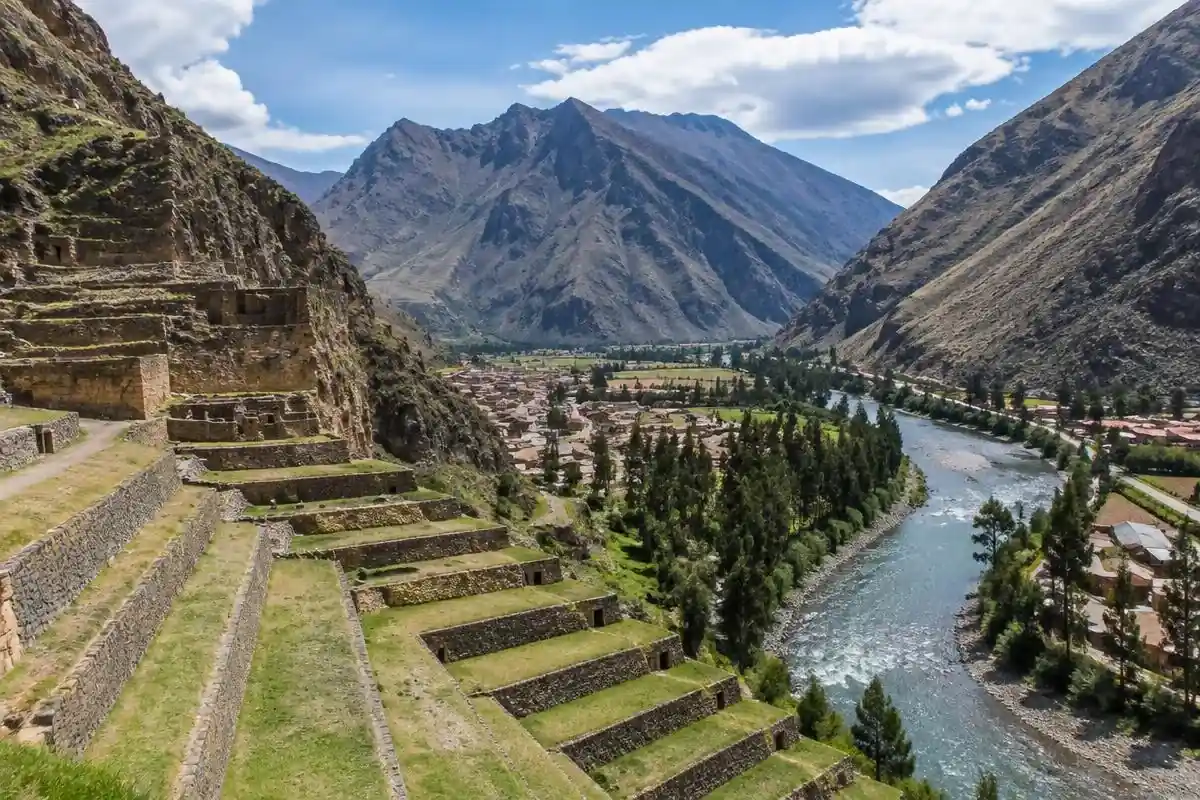
Day Tours · 1 day
Sacred Valley Full Day Tour
Chinchero, Moray, Maras salt mines, Ollantaytambo and Pisac in one full day from Cusco, with buffet lunch.
from $49
View tour →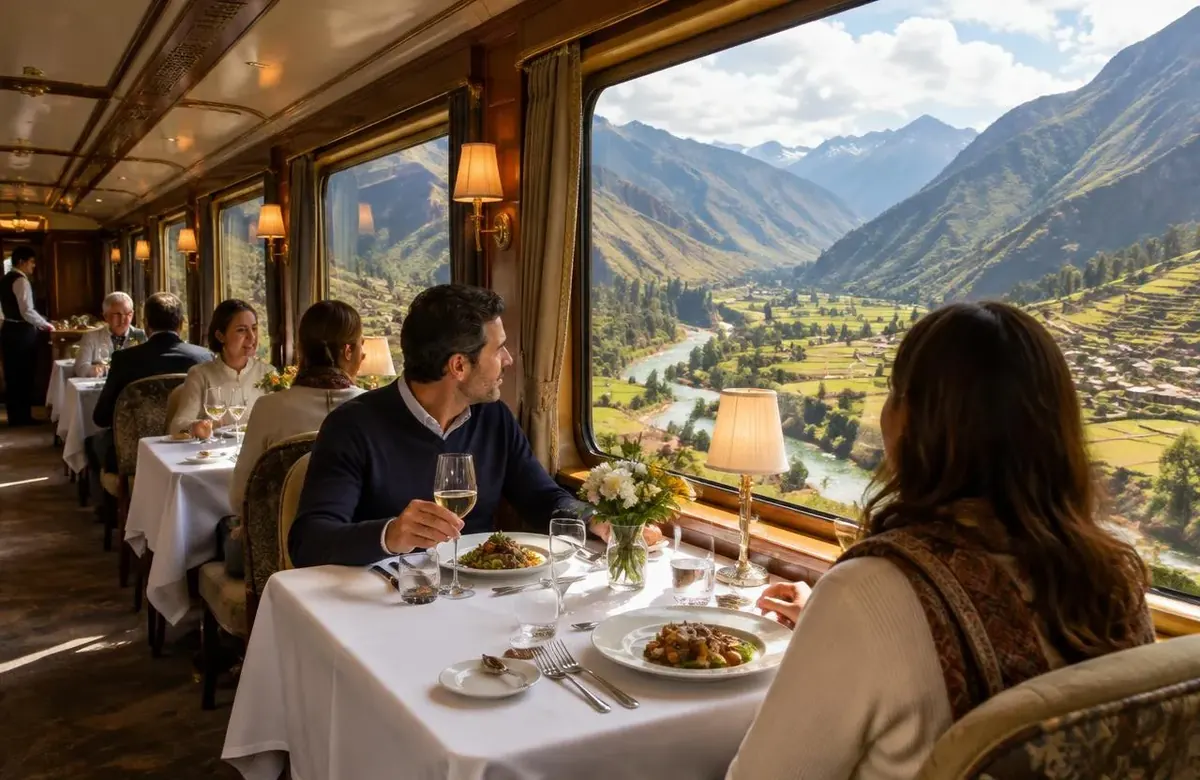
Packages · 4 days
Luxury Machu Picchu Tour, 4 Days
Private guide, luxury hotels and the Vistadome or Hiram Bingham luxury train.
from $1289
View tour →Keep planning
- Machu Picchu Bus: How the Shuttle From Aguas Calientes Works
- Aguas Calientes Peru Guide: The Town Below Machu Picchu
- Lima to Machu Picchu: How to Get There, Distance and Travel Time
- Lima to Cusco: How to Get There by Plane, Bus or Car
- Hiram Bingham Train: What the Belmond Luxury Journey to Machu Picchu Is Like
- Peru Rail vs Inca Rail: Machu Picchu Train Companies Compared Class by Class
- Machu Picchu Tickets 2026: Prices, Ticket Types and How to Buy
- Best Time to Visit Machu Picchu: Best Months, Seasons and Time of Day