- Duration
- 5 days
- Difficulty
- Challenging
- Max altitude
- 4,630 m
- From
- $490 pp
Quick answer
The Salkantay Trek is a 5-day, about 74 km (46 mile) hike from Soraypampa near Cusco to Machu Picchu. It crosses the 4,630 m (15,190 ft) Salkantay Pass under a 6,271 m glacier, visits Humantay Lake, then drops into cloud forest and coffee country before ending with a guided visit of Machu Picchu. It is rated challenging, needs no permit, and our guided Salkantay trek costs from $490 per person.
| Length | 5 days / 4 nights |
|---|---|
| Distance | About 74 km / 46 miles |
| Highest point | Salkantay Pass, 4,630 m / 15,190 ft |
| Start | Cusco hotel pickup, drive to Soraypampa |
| Finish | Machu Picchu, train back to Cusco |
| Difficulty | Challenging (one very hard day) |
| Permit needed | No, unlike the Inca Trail |
| Price | From $490 per person |
Salkantay Trek Highlights
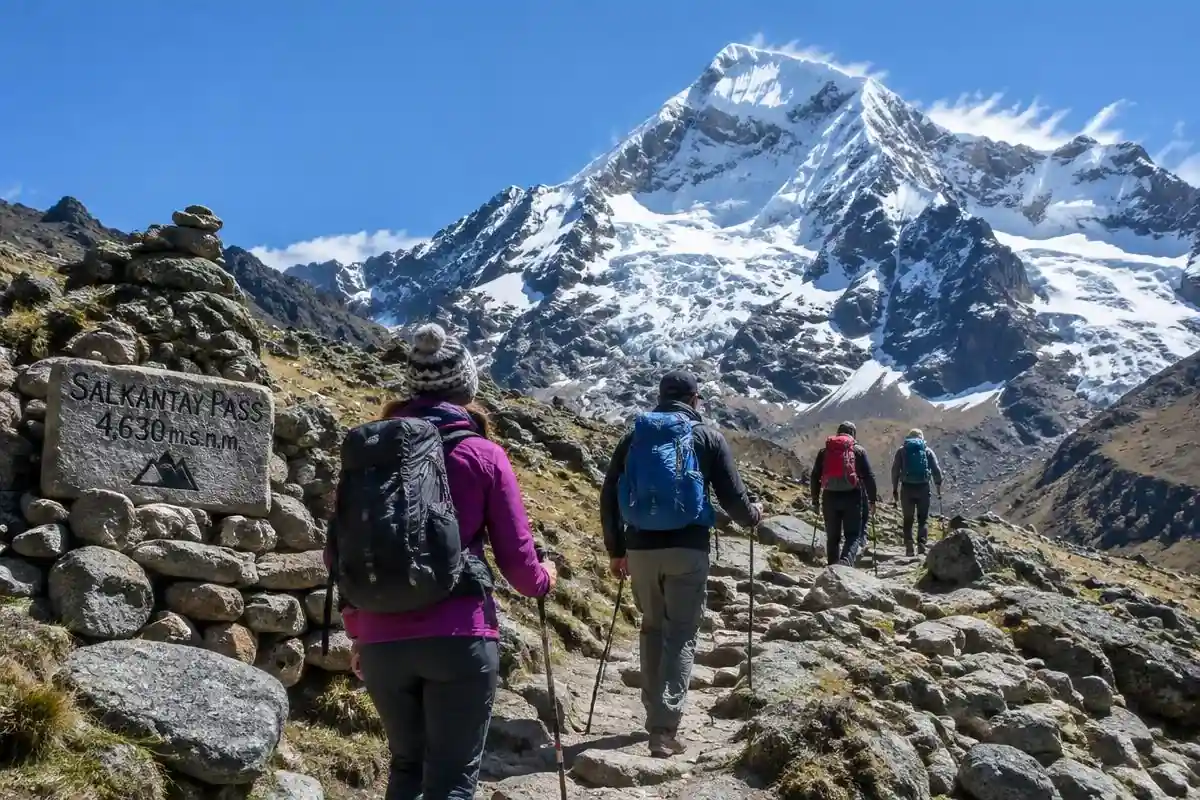
The Salkantay trek is the most scenic hiking route to Machu Picchu, passing glaciers, a turquoise lake and cloud forest in five days.
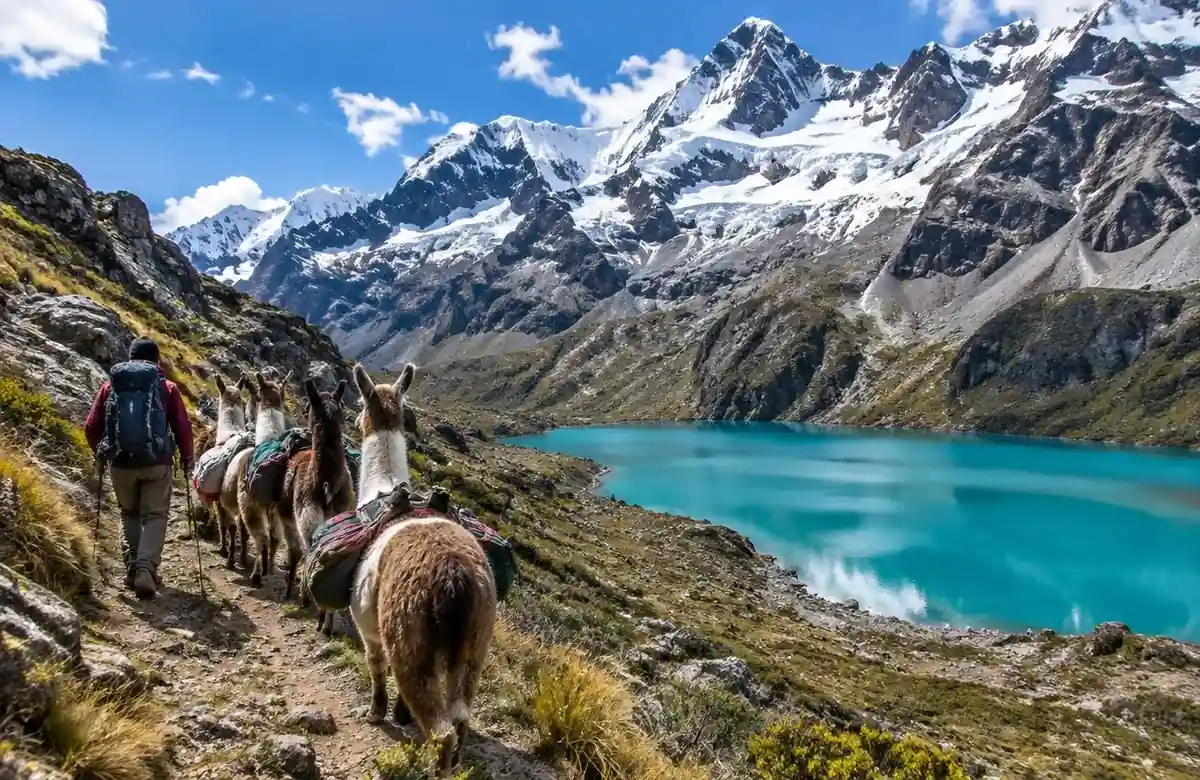
Most people choose the Salkantay trail for the views. In one week you walk from snow and rock at 4,630 m down to banana and coffee farms below 2,000 m, then finish at the most famous ruins in South America.
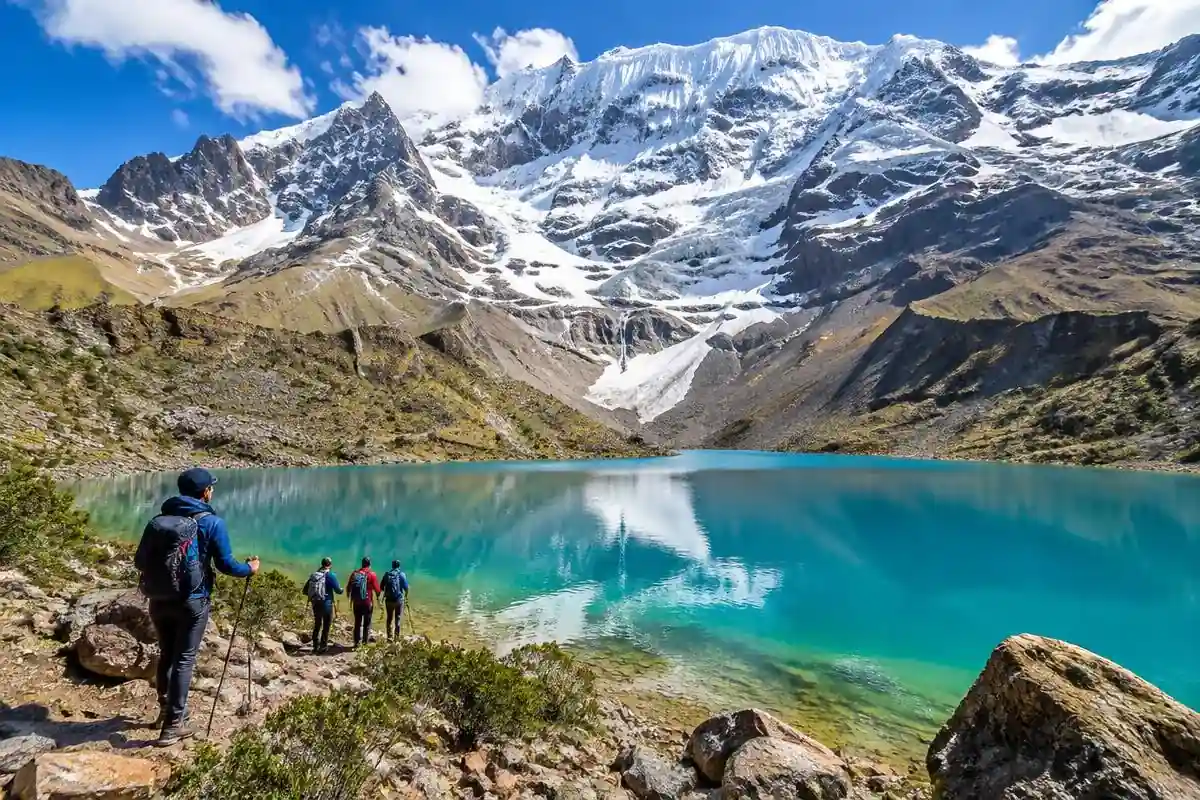
- Humantay Lake, a glacier lake at about 4,200 m
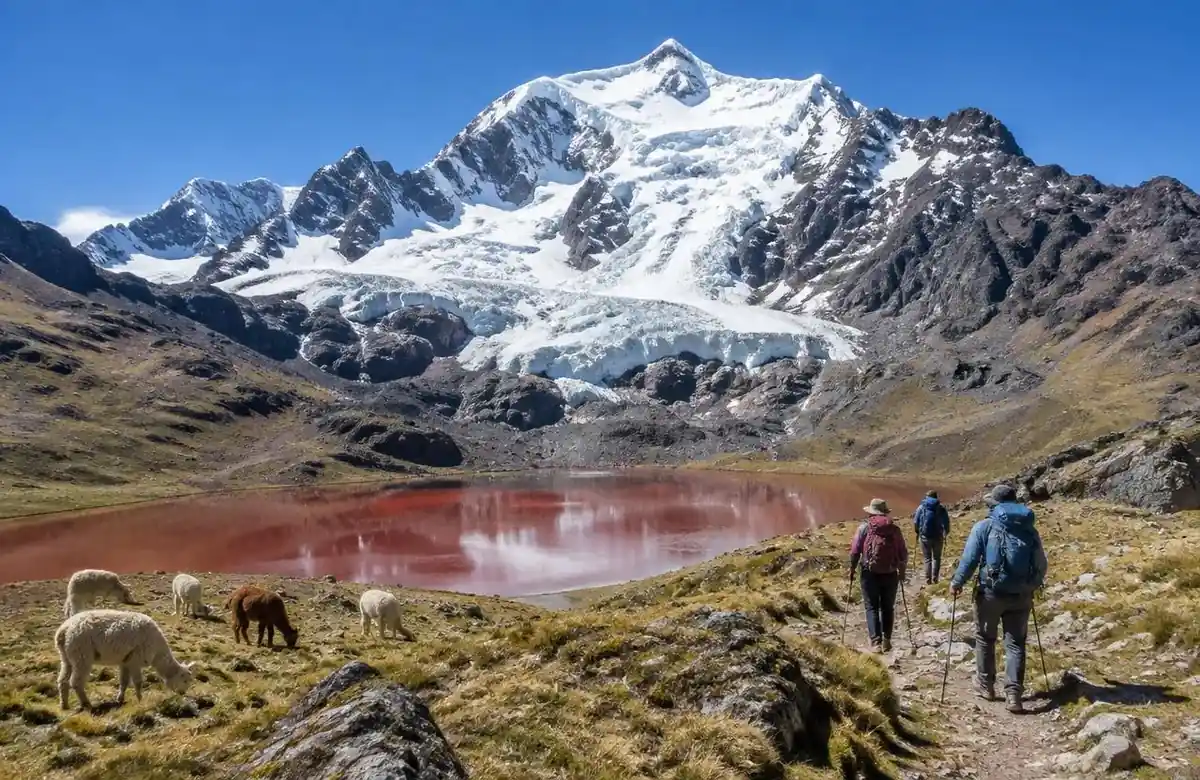
- The Salkantay Pass at 4,630 m, right beside the Salkantay glacier
- Cloud forest, waterfalls and hot springs near Santa Teresa
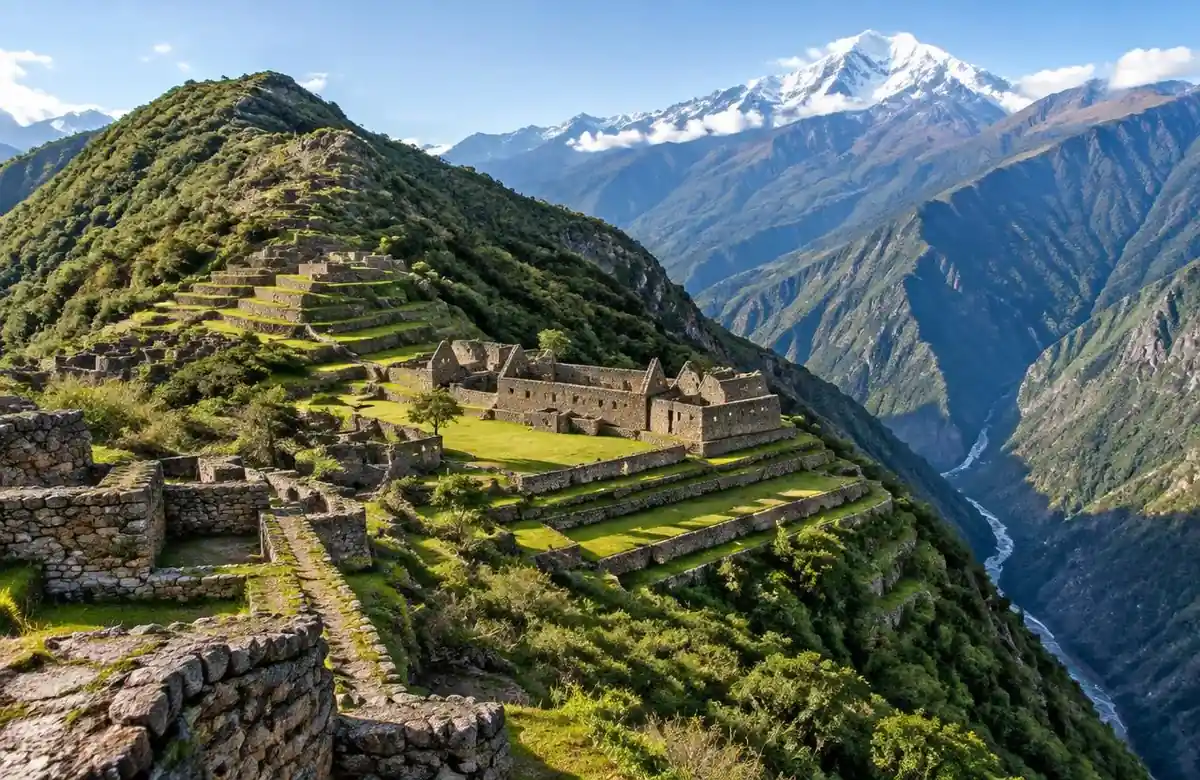
- Coffee farms and the Llactapata ruins with a distant view of Machu Picchu
- A guided tour of Machu Picchu on the last morning
What Is the Salkantay Trek?
The Salkantay trek is a multi-day hike that links the Andes near Cusco with Machu Picchu along an old mule trail named after Salkantay mountain.
Salkantay (also spelled Salcantay) is the second-highest mountain in the Cusco region at 6,271 m. In Quechua the name means "savage mountain". The trek circles its southern face, then follows river valleys north to Aguas Calientes, the town below Machu Picchu.
Because the route is not inside the protected Inca Trail network, there are no government permits and no daily limit. That is why many travelers pick Salkantay when Inca Trail permits are sold out.
Who Salkantay Trekking Is Best For
The Salkantay trek suits fit travelers who want big mountain scenery and are happy to sleep at camp for a few nights.
- Hikers who missed Inca Trail permits or book less than six months ahead
- People who enjoy high mountains, glaciers and lakes more than ruins along the way
- Travelers with 2 to 3 days to acclimatize in Cusco before starting
- Not ideal for anyone with heart or breathing problems, or who cannot walk 6 to 8 hours a day
Salkantay Trek Itinerary: 5 Days Day by Day
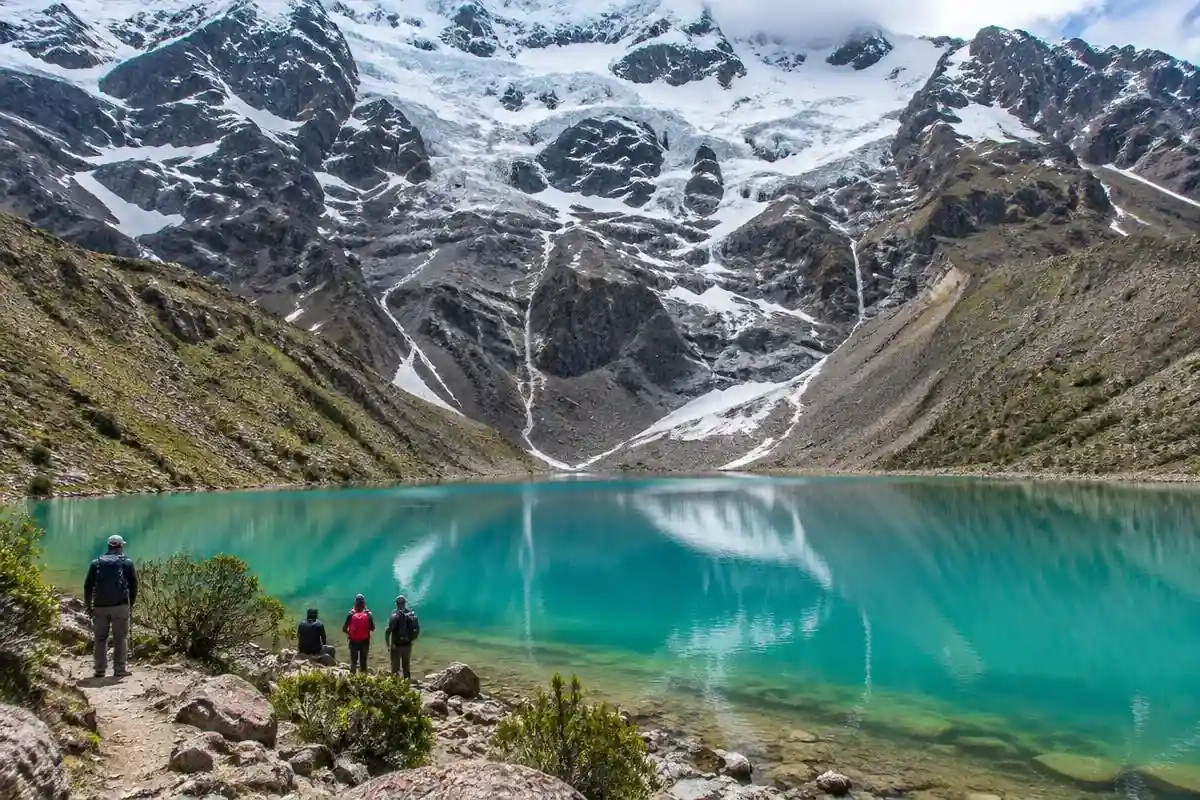
The classic Salkantay trek itinerary takes five days, with the hardest climb on day two.
Day 1: Cusco to Soraypampa and Humantay Lake
Early pickup in Cusco (around 4:30 am) and a 3-hour drive through Mollepata to Soraypampa (about 3,900 m). After breakfast you hike about 1.5 hours up to Humantay Lake (about 4,200 m), then return to camp at Soraypampa. Walking: about 7 km.
Day 2: Over the Salkantay Pass to Chaullay
The big day. A steady climb of about 3 to 4 hours takes you to the Salkantay Pass at 4,630 m, next to the glacier. After a break you descend for several hours into the green valley of Huayracmachay and on to camp near Chaullay (about 2,900 m). Walking: about 22 km, 9 to 10 hours.
Day 3: Cloud forest to La Playa
An easier day along the Santa Teresa river through cloud forest, waterfalls, and fruit and coffee farms to La Playa (about 2,100 m). In the afternoon you can visit the Cocalmayo hot springs (entry not included). Walking: about 16 km.
Day 4: Llactapata ruins to Aguas Calientes
Climb an original Inca path to the Llactapata ruins for your first, distant view of Machu Picchu, then descend to Hidroeléctrica and walk along the railway to Aguas Calientes. Hot shower and a hotel bed for the night. Walking: about 18 km.
Day 5: Machu Picchu and back to Cusco
Take the bus (optional) or hike up early to Machu Picchu for a 2 to 3 hour guided tour. In the afternoon you take the train to Ollantaytambo and transfer back to your Cusco hotel, arriving in the evening.
Salkantay Trek Route, Salkantay Pass, Distance and Elevation
The Salkantay route covers about 74 km and climbs from 3,900 m to 4,630 m before dropping to Machu Picchu at 2,430 m.
| Day | Route | Distance | Highest point | Sleep |
|---|---|---|---|---|
| 1 | Soraypampa, Humantay Lake | 7 km / 4 mi | 4,200 m / 13,780 ft | Soraypampa, 3,900 m |
| 2 | Salkantay Pass to Chaullay | 22 km / 14 mi | 4,630 m / 15,190 ft | Chaullay, 2,900 m |
| 3 | Chaullay to La Playa | 16 km / 10 mi | 2,900 m / 9,510 ft | La Playa, 2,100 m |
| 4 | Llactapata to Aguas Calientes | 18 km / 11 mi | 2,700 m / 8,860 ft | Hotel, 2,040 m |
| 5 | Machu Picchu | Walk inside site | 2,430 m / 7,972 ft | Back in Cusco |
What's Included in Our Salkantay Trek Tour (and What's Not)
Our guided Salkantay trek tour includes transport, camping, meals, the Machu Picchu ticket and the train back, so you only carry a daypack.
Included in the Salkantay trek
Cusco hotel pickup, professional bilingual guide, camping equipment (tents, dining tent, sleeping mats), chef and all meals on the trail, horses or porters for group gear, boiled drinking water from day 2, first-aid kit and emergency oxygen, 1 night hotel in Aguas Calientes, Machu Picchu entry ticket, guided tour of Machu Picchu, and train back to Ollantaytambo with transfer to Cusco.
Not included
Sleeping bag (rent or bring your own), bus up or down Machu Picchu, Cocalmayo hot springs entry, travel insurance, and tips for the trek team.
How Hard Is the Salkantay Trek?
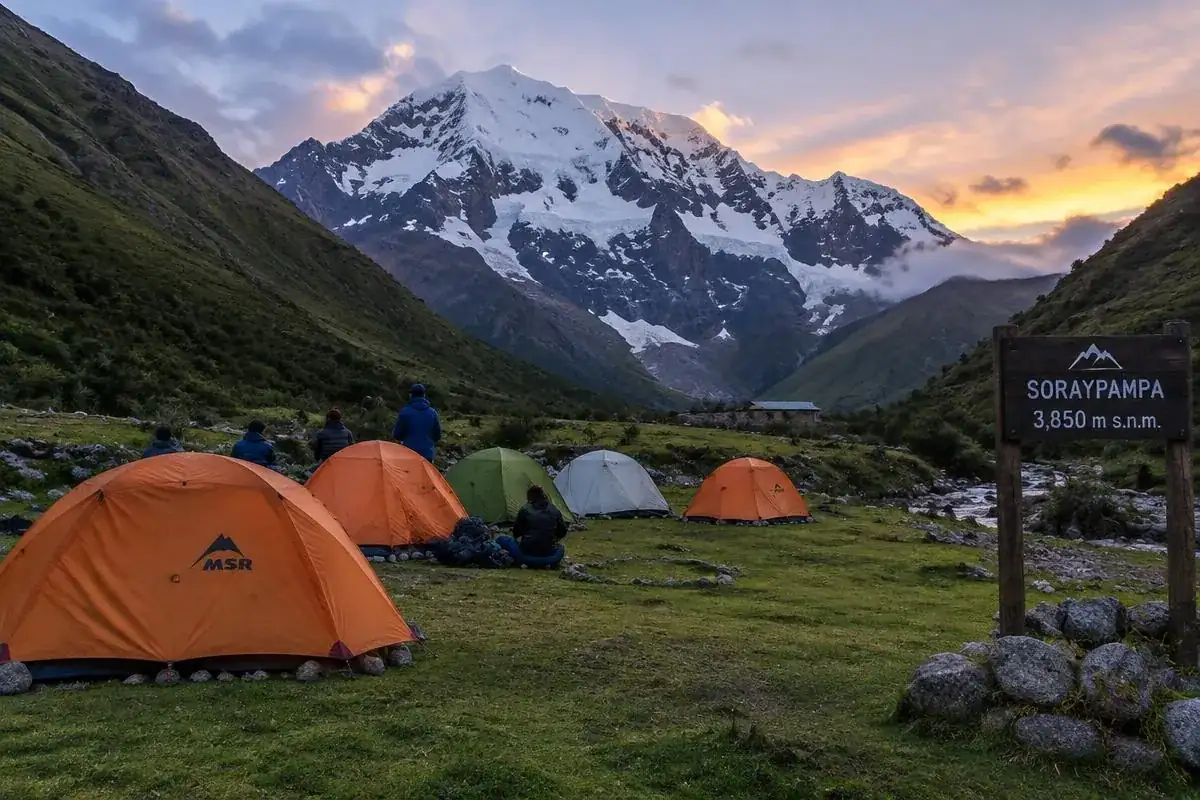
The Salkantay trek is hard because of altitude, not technical climbing: day two climbs to 4,630 m and lasts 9 to 10 hours.
There are no ropes, ladders or exposed ledges. The trail is a wide path of dirt and stone. What makes it tough is the thin air above 4,000 m, cold nights on the first two camps, and long downhill sections that tire the knees.
If you can hike 6 to 8 hours with a light pack and you rest 2 to 3 days in Cusco first, you can finish the Salkantay trek. A horse can be arranged for the pass if you need help on the day.
Is the Salkantay trek harder than the Inca Trail?
Yes, a little. The Salkantay Pass (4,630 m) is higher than Dead Woman's Pass on the Inca Trail (4,215 m), and the distance is longer. The Inca Trail has more steep stone steps; the Salkantay trail has more altitude and colder nights.
How to get ready for this 5-day Salkantay tour
Start 6 to 8 weeks before with long walks on hills or stairs, carrying a small pack. Build up to two back-to-back days of 5 to 6 hours. Break in your boots before the trip.
Altitude and Acclimatization for the Salkantay Trail
Spend at least two nights in Cusco (3,400 m) before starting the Salkantay trail so your body can adjust to the altitude.
Headaches and shortness of breath are common on the first days. Walk slowly, drink 3 to 4 liters of water a day, avoid alcohol before the trek, and tell your guide early if you feel unwell. Your guide carries oxygen and a first-aid kit. The Sacred Valley (2,800 m) is a good place for an easy first day.
Salkantay Trek vs Inca Trail
The Salkantay trek is wilder and needs no permit; the Inca Trail has more ruins and enters Machu Picchu through the Sun Gate.
| Salkantay vs Inca Trail | Salkantay Trek | Classic Inca Trail |
|---|---|---|
| Days | 5 | 4 |
| Distance | About 74 km | About 42 km |
| Highest point | 4,630 m | 4,215 m |
| Permit | Not needed | Required, sells out months ahead |
| Scenery | Glaciers, lake, cloud forest | Inca ruins, cloud forest |
| Arrival at Machu Picchu | From Aguas Calientes | Through the Sun Gate |
| Crowds | Fewer hikers | Up to 500 people a day including staff |
Best Time to Do the Salkantay Trek
The best time for the Salkantay trek is the dry season from May to September, with clear skies over the pass.
June to August is the coldest period at night, often below 0 °C at Soraypampa. April and October are good shoulder months with fewer hikers. From November to March the rainy season brings muddy trails and clouds on the pass, though the trek stays open all year, unlike the Inca Trail, which closes in February.
Salkantay Trek Packing List
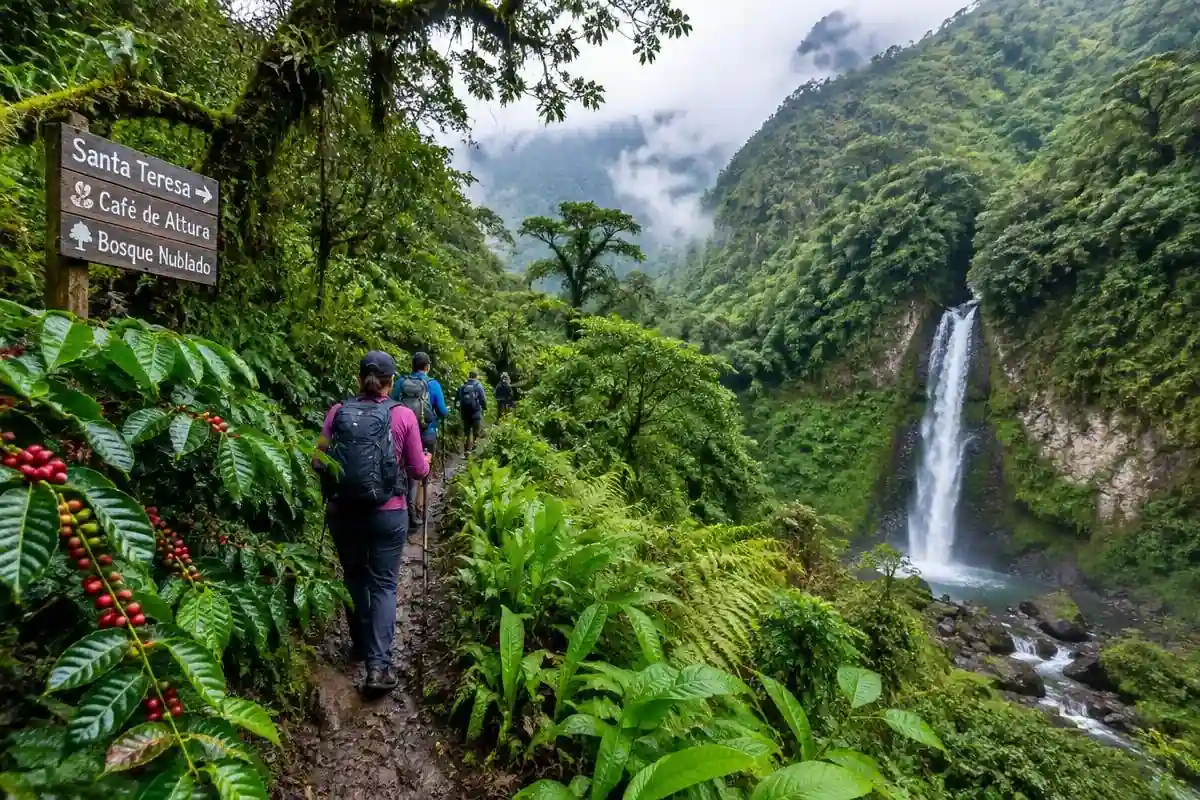
Pack in layers for the Salkantay trek: you go from freezing nights to hot, humid jungle in two days.
- Broken-in hiking boots and 2 pairs of comfortable socks per day
- Warm sleeping bag rated to about -5 °C (rent from us if needed)
- Down or fleece jacket, thermal base layer, hat and gloves
- Rain jacket or poncho and a cover for your daypack
- Sunscreen, sunglasses and a sun hat
- Insect repellent for days 3 and 4
- Refillable water bottle, snacks and personal medicines
- Passport (needed for the Machu Picchu ticket and train)
- A 25 to 35 liter daypack; your main bag (up to 7 kg) is carried by horses
Camps, Meals and Water on the Trek
On our Salkantay trek you sleep three nights in tents and the last night in a hotel in Aguas Calientes.
Our crew sets up the tents and a dining tent before you arrive at each camp. A trail chef cooks breakfast, lunch and dinner, with vegetarian and other diets available if you tell us when booking. Boiled water is provided from day 2 to refill your bottle.
Camps have basic shared toilets. Showers at the first two camps are cold or unavailable, so wet wipes help; from La Playa onward you will usually find warm showers.
Can You Do the Salkantay Trek Without a Guide?
Yes, you can hike the Salkantay trek on your own, but you must arrange transport, camping, food and the Machu Picchu entry yourself.
The path is clear in good weather, but fog on the pass, altitude sickness and finding camps make a guided Salkantay trek safer, especially for first-time high-altitude hikers. Machu Picchu itself can only be entered with a licensed guide.
Why We Walk the Full 5 Days
The 5-day Salkantay trek is the full route on foot; the 4-day version saves a day by using transport after La Playa.
On the 4-day Salkantay trek you skip the Llactapata climb and ride from La Playa or Santa Teresa toward Hidroeléctrica, then sleep in Aguas Calientes on night three. Choose 5 days if you want the Llactapata view of Machu Picchu and a gentler pace; choose 4 days if your time in Peru is short. Ask us for a quote on either version.
Salkantay Trek Price and How to Book
Our 5-day Salkantay trek to Machu Picchu costs from $490 per person, including camping, meals, Machu Picchu ticket and train.
There is no permit, so you can often book a few weeks ahead, but Machu Picchu tickets for July and August sell fast. Send your date, number of hikers and passport names through the form or WhatsApp and we will reply with a free, itemized quote, including the payment and change terms.
Salkantay Trek to Machu Picchu, 5 Days Reviews
“I almost booked the Classic Inca Trail, but the Salkantay route looked more adventurous—and I’m glad I chose it. Five days of mountains, changing landscapes and the final arrival at Machu Picchu made this one of the most memorable trips I’ve ever taken.”
Verified Traveler
“The scenery on this trek changes constantly. One day you’re surrounded by snow-capped mountains, then you’re walking through greener valleys. Our 5 day Salkantay Trek to Machu Picchu felt like a complete adventure rather than just a way to reach the ruins.”
Verified Traveler
“What I liked most about the Salkantay Trek was that the journey itself was just as impressive as Machu Picchu. Our guide kept a comfortable pace, explained the region really well and made the challenging sections much easier to manage.”
Verified Traveler
“For travelers who enjoy hiking, I would recommend this over simply taking the train. The Salkantay to Machu Picchu trekking route gave us incredible mountain views, remote landscapes and a real sense of achievement when we finally arrived.”
Verified Traveler
“We booked a 5-day Machu Picchu trek from Cusco and wanted something scenic but different from the traditional Inca Trail. Salkantay was exactly that. It was physically demanding in places, but the organization and support from the team were excellent.”
Verified Traveler
“Five days sounded long before we started, but the itinerary was paced surprisingly well. There was enough time to enjoy the views and recover between harder sections. The Salkantay hiking tour turned into the highlight of our entire Peru vacation.”
Verified Traveler
“My favorite part wasn’t actually Machu Picchu—it was crossing the high mountain areas on the Salkantay route. The landscapes were unbelievable. Of course, finishing the trek with a guided Machu Picchu visit made the experience even better.”
Verified Traveler
“We wanted an alternative to the Inca Trail and found this Salkantay Trek from Cusco. It was a great choice for us because it combined challenging hiking, beautiful scenery and the final Machu Picchu experience without feeling like a typical sightseeing tour.”
Verified Traveler
“This trek pushed me outside my comfort zone, especially at the higher elevations, but the guides were patient and supportive. By the time we reached Machu Picchu, completing the 5 day Salkantay route felt like a huge accomplishment.”
Verified Traveler
Salkantay Trek to Machu Picchu, 5 Days: FAQs
Where do I leave my luggage during the Salkantay trek?
Leave your main luggage at your Cusco hotel during the Salkantay trek, since most Cusco hotels store guest bags free of charge. Pack the small duffel the horses carry with clothes and sleeping layers, and keep a daypack with water, snacks, rain gear and your passport for the trail each day.
How long is the Salkantay trek?
The classic Salkantay trek takes 5 days and 4 nights and covers about 74 km (46 miles). Shorter 4-day versions take the train or a car for part of day 4.
Is the Salkantay trek good for beginners?
Yes, if you walk regularly and arrive in Cusco 2 to 3 days early. You need no climbing skills, and a horse can carry you over the hardest part if needed.
Is the Salkantay trek worth it?
Yes, if you like mountain scenery. You see a glacier, Humantay Lake, cloud forest and Machu Picchu in one trip, without needing an Inca Trail permit.
How high is the Salkantay trek?
The highest point is the Salkantay Pass at 4,630 m (15,190 ft). Camps sit between 3,900 m and 2,100 m.
How much does the Salkantay trek cost?
Our guided Salkantay trek to Machu Picchu costs from $490 per person for 5 days, including camping, meals, Machu Picchu entry and the train back to Cusco.
Do you need to book the Salkantay trek in advance?
No permit is needed, so a few weeks ahead is often enough. For June to August, book 1 to 2 months ahead so Machu Picchu tickets and trains are still available.
Is there phone signal or Wi-Fi on the Salkantay trek?
Signal is weak or missing on days 1 and 2 near the pass. Some camps from La Playa onward sell Wi-Fi, and Aguas Calientes has good coverage.
How cold is the Salkantay trek?
Nights at Soraypampa and near the pass can drop below 0 °C (32 °F), especially from June to August. Days 3 and 4 in the cloud forest are warm and humid.
How does our team keep you safe on this Salkantay tour?
Our guides watch for altitude sickness, the main risk for healthy hikers who acclimatize, and they carry oxygen and a first-aid kit, and a horse can be arranged for the pass.
What size backpack for the Salkantay trek?
A 25 to 35 liter daypack is enough. Horses carry up to 7 kg of your personal gear between camps.
How much should I tip on the Salkantay trek?
Tips are optional. Many hikers give the crew (guide, chef and horsemen) a shared amount at the end of the trek, based on the service.
What is the best month for the Salkantay trek?
May to September is the dry season with the clearest views of the pass. April and October are quieter with mostly good weather.
Plan your trip
- Salkantay Trek Difficulty: How Hard It Is, Day by Day, and How to Prepare
- Inca Trail vs Salkantay Trek: Which Should You Choose?
- Machu Picchu Elevation: How High It Is and How the Altitude Feels
- Machu Picchu Weather: Climate, Temperatures and Rainfall by Month
- Machu Picchu Packing List: What to Pack and What to Wear for Your Visit