
Inca Trail Difficulty: How Hard Is the Inca Trail, Really?
By the Goo Machu Picchu team · Checked against official sources (editorial policy) · Updated October 2026 · 7 min read
The Classic Inca Trail is a moderate to challenging hike: about 26 miles (42 km) over 4 days, with three high passes and a top elevation near 13,800 feet at Dead Woman's Pass. Distance is manageable for most active adults; the altitude and thousands of uneven stone steps are what make it hard.
This guide rates the difficulty honestly, explains how long the trail takes, breaks down each day, and gives a simple training plan so you can decide if the trek is right for you.
- Difficulty
- Moderate to challenging
- Distance
- About 26 miles (42 km)
- Duration
- 4 days, 3 nights (classic route)
- Highest point
- Dead Woman's Pass, about 13,800 ft
- Hardest day
- Day 2
- Shorter option
- 2-day Short Inca Trail, about 7.5 miles
How Hard Is the Inca Trail?
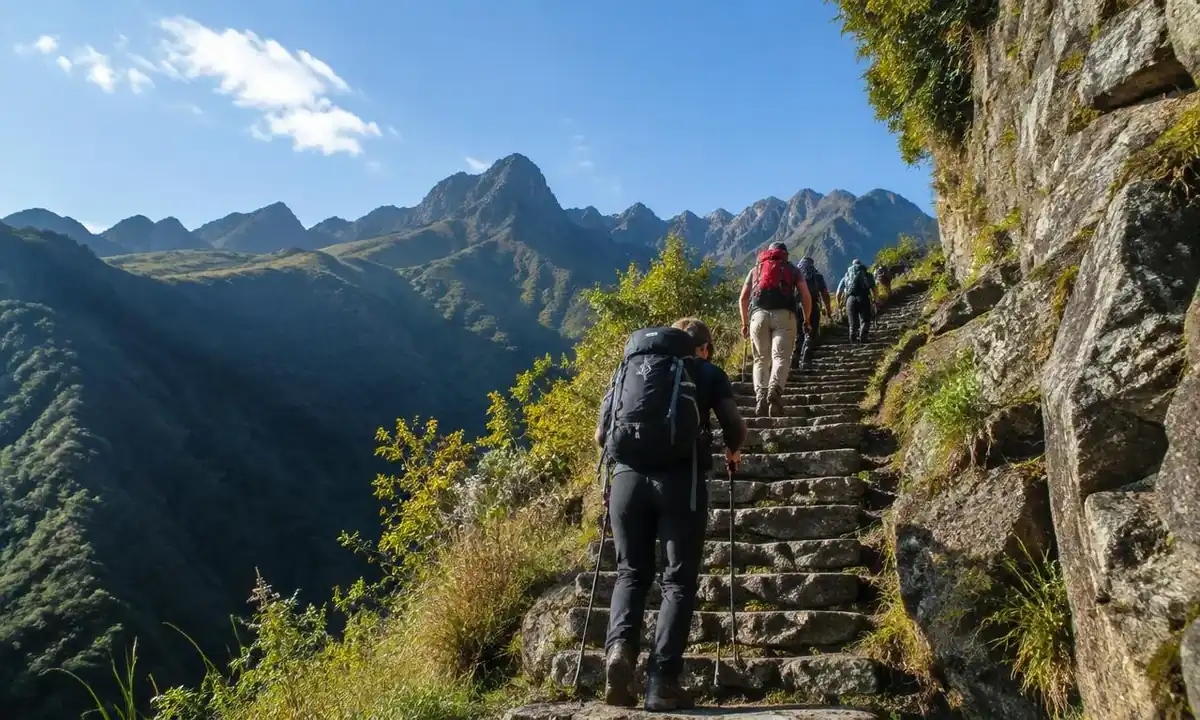
The Inca Trail is moderately hard. Most reasonably fit adults finish it, but expect long climbs on steep stone steps at altitudes between about 8,500 and 13,800 feet. Hikers often say the descents hurt more than the climbs, and the thin air slows everyone down, regardless of fitness at sea level.
On a 1 to 10 scale, many guides and returning hikers place the Classic Inca Trail around 6 or 7. It is harder than a typical US state park day hike because you repeat long uphill efforts for several days in a row, yet easier than technical mountaineering: there is no climbing, ropes or glacier travel.
Porters carry tents, food and cooking gear, so your own pack usually holds only water, layers, snacks and a camera. That support is a big reason first-time trekkers succeed.
Picture each climb on our Inca Trail map with elevations, and plan gear with the Machu Picchu packing list and Machu Picchu weather by month.
What Makes the Inca Trail Difficult?
Four factors make the Inca Trail difficult: altitude above 12,000 feet on the passes, steep uneven stone steps, several consecutive days of hiking, and variable mountain weather. Each is manageable with preparation, but together they turn a moderate distance into a real challenge.
- Altitude: the passes sit far above where most Americans live, so breathing is harder and pace drops. See our Cusco altitude guide for how to acclimatize before you start.
- Stone steps: original Inca stairways are irregular in height, so knees and calves work hard, especially going down.
- Back-to-back days: fatigue builds; day 2 starts tired legs on the biggest climb.
- Weather: cold nights near freezing at high camps, strong sun at midday and rain at any time of year.
- Basic camping: tents, shared toilets at campsites and early starts make rest less comfortable than a hotel.
How Long Is the Inca Trail?
The Classic Inca Trail is about 26 miles (42 km) long and takes 4 days and 3 nights, starting at Km 82 near Ollantaytambo and finishing at Machu Picchu through the Sun Gate. The Short Inca Trail is about 7.5 miles (12 km) and is hiked in one day, with the Machu Picchu visit the next day.
Daily distances are uneven, which matters more than the total. Expect roughly 6 to 7 hours of walking on the longest days, with breaks.
| Route | Distance | Days | Highest point |
|---|---|---|---|
| Classic Inca Trail | About 26 mi (42 km) | 4 days, 3 nights | About 13,800 ft |
| Short Inca Trail | About 7.5 mi (12 km) | 2 days, 1 night (1 day hiking) | About 8,900 ft |
| 5-day Inca Trail (slower pace) | About 26 mi (42 km) | 5 days, 4 nights | About 13,800 ft |
Distances and elevations are rounded figures commonly published by operators and vary slightly by source and campsite. You can see the full route on our Inca Trail map.
Inca Trail Difficulty Day by Day
Day 1 is easy to moderate, Day 2 is the hardest with the climb to Dead Woman's Pass, Day 3 is the longest with two more passes and a long descent, and Day 4 is a short early walk to the Sun Gate and Machu Picchu.
| Day | Approx. distance | Difficulty | What to expect |
|---|---|---|---|
| Day 1 | About 7 mi (11 km) | Easy to moderate | Gentle valley walking, first ruins, gradual climb |
| Day 2 | About 7.5 mi (12 km) | Hard | Steep climb of about 3,900 ft to Dead Woman's Pass, steep descent to camp |
| Day 3 | About 10 mi (16 km) | Moderate to hard | Two smaller passes, many ruins, long knee-heavy descent |
| Day 4 | About 3.5 mi (6 km) | Easy | Pre-dawn start, Sun Gate, arrival at Machu Picchu |
Campsite choices shift these distances; your operator assigns camps when the permit is issued. Learn more about the final stretch in our Sun Gate guide.
Is the Inca Trail Dangerous?
The Inca Trail is not considered dangerous for most hikers when walked with a licensed guide, which Peru requires. The main risks are altitude sickness, slips on wet stone steps, and a few narrow exposed sections. Serious incidents are rare, and guides carry first aid and usually oxygen.
Reduce risk by acclimatizing in Cusco or the Sacred Valley for at least two days, using trekking poles on descents, and telling your guide early if you get a headache, nausea or unusual breathlessness. If you have heart or lung conditions, talk to your doctor before booking; the CDC altitude guidance is a good starting point.
How Fit Do You Need to Be for the Inca Trail?
You need to be able to hike 5 to 7 hours a day with breaks, several days in a row, including long uphill stair sections. If you can comfortably walk 8 to 10 miles with hills, or climb stairs for 45 minutes, you have a solid base for the Inca Trail.
Age matters less than consistent activity. People in their 60s and 70s complete the trail regularly, while very fit young travelers can still struggle with altitude. Pace is not a race; groups move at the speed that keeps everyone safe.
How to Train for the Inca Trail
Train for the Inca Trail by building up to long hikes with elevation gain over 8 to 12 weeks, adding stair or step workouts for climbing and descending, and practicing with the boots and daypack you will use. Two to three sessions a week are enough for most people.
- Weeks 1 to 4: walk or hike 3 times a week, 45 to 60 minutes, adding hills.
- Weeks 5 to 8: one longer weekend hike of 6 to 8 miles with real elevation gain; add a weekly stair session of 30 to 45 minutes.
- Weeks 9 to 12: back-to-back weekend hikes to mimic consecutive days; carry your loaded daypack.
- Add leg strength twice a week: squats, lunges and step-downs protect knees on descents.
- Break in boots for at least 30 miles before the trip, and practice with trekking poles.
- Arrive in Cusco 2 or more days early to acclimatize; training cannot replace this.
Easier Alternatives if the Classic Trail Feels Too Hard
If the 4-day trek feels like too much, the Short Inca Trail gives you the final section, Wiñay Wayna and the Sun Gate in one day of hiking at lower altitude. You can also choose a 5-day pace, or skip trekking and take the train for a Machu Picchu day trip.
The short route also uses permits, so check Inca Trail permit availability early. Non-trekkers can read how to get to Machu Picchu by train and bus.
Not sure which fits your fitness? Compare the Classic Inca Trail 4 days with the Short Inca Trail 2 days, or send us your dates and we will suggest the right option.
If you are weighing a harder, higher route instead, our Salkantay trek difficulty breakdown explains the 15,090 ft pass and the effort on each day.
If you want this organized for you, our Choquequirao trek is built for it.
Related reading: our Aguas Calientes hot springs guide.
Frequently asked questions
Can a beginner hike the Inca Trail?
Yes, many first-time trekkers finish the Inca Trail. Beginners should train for 8 to 12 weeks, acclimatize in Cusco for at least two days and use trekking poles. If you have never hiked multi-day, the Short Inca Trail is a gentler introduction.
What is the hardest part of the Inca Trail?
The climb to Dead Woman's Pass (Warmiwañusqa) on day 2 is the hardest part of the Inca Trail, gaining roughly 3,900 feet to about 13,800 feet over several hours of stone steps. The steep descent afterward to the Pacaymayo campsite is also tough on knees, so trekking poles help a lot on this stretch.
How many steps are on the Inca Trail?
There is no official count of Inca Trail steps. Operators often describe thousands of original stone stairs across the 26-mile route, with the steepest flights on the day 2 climb and the long staircase hikers nickname the Gringo Killer near Wiñay Wayna on day 3. Training on real stairs prepares your legs best.
Is the Inca Trail harder than Salkantay?
Salkantay is generally harder than the Inca Trail. Salkantay is about 15 to 20 miles longer and its high pass sits roughly 1,400 feet above Dead Woman's Pass, so altitude hits harder. The Inca Trail has more stone steps, though. Our [Inca Trail vs Salkantay comparison](/guides/inca-trail-vs-salkantay) covers every difference side by side.
Can I hike the Inca Trail with no guide?
No. Peru requires every Inca Trail hiker to walk with a licensed tour operator and an official guide, and permits are only sold through those operators. Independent hiking has not been allowed since rules were tightened in the early 2000s. Even a private trek for two people is arranged through a licensed company that holds the permit.
How much weight do I carry on the Inca Trail?
On a full-service Inca Trail trek, you usually carry only a daypack of about 10 to 15 pounds with water, layers, snacks and a camera. Porters carry tents, food and cooking gear. Many operators also let you hire a personal porter for your sleeping bag and clothes, within a weight limit the operator sets.
Not sure if you are ready for the Inca Trail?
Tell us your fitness level and dates and we will recommend the classic, 5-day or short route. Prefer to read first? Get the free Machu Picchu trip guide.
Sources checked October 3, 2026
Recommended tours
Inca Trail · 4 days
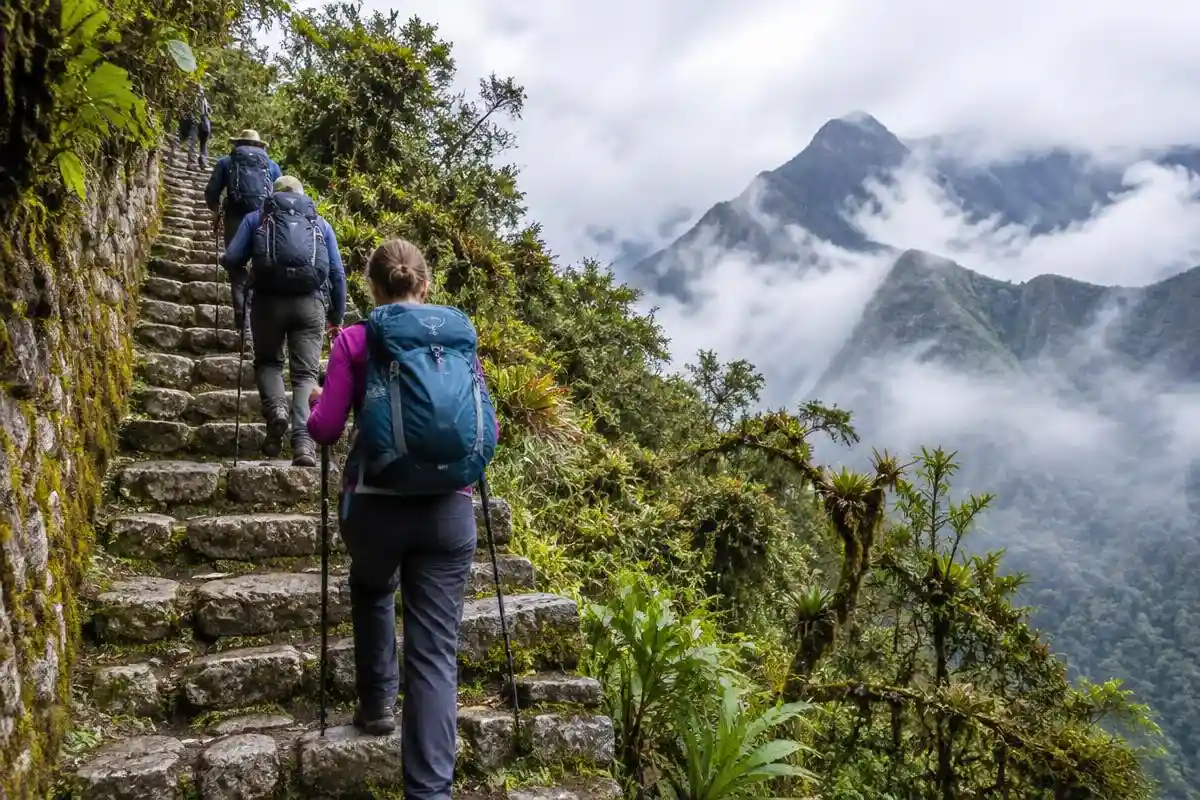
Classic Inca Trail to Machu Picchu, 4 Days
The world-famous 43 km trek on original Inca stone paths, ending at the Sun Gate.
from $827
View tour →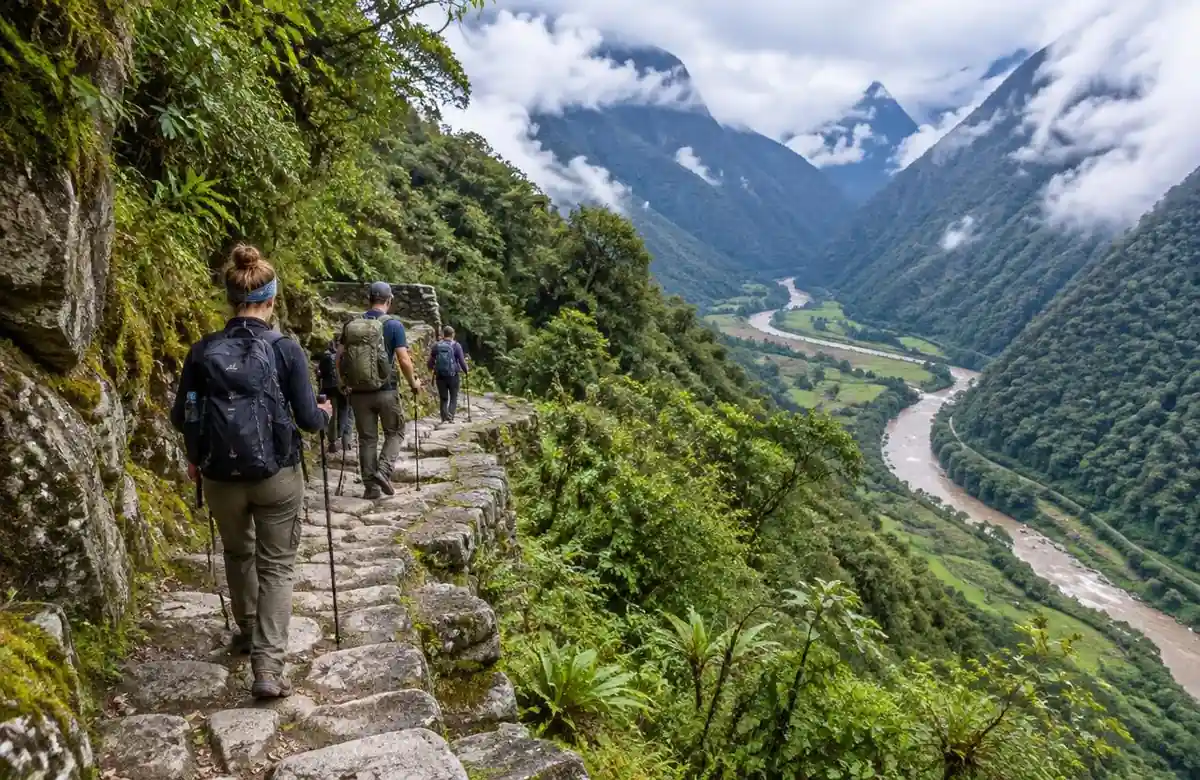
Inca Trail · 2 days
Short Inca Trail to Machu Picchu, 2 Days
The final 12 km of the Inca Trail, Sun Gate arrival and a night in Aguas Calientes.
from $489
View tour →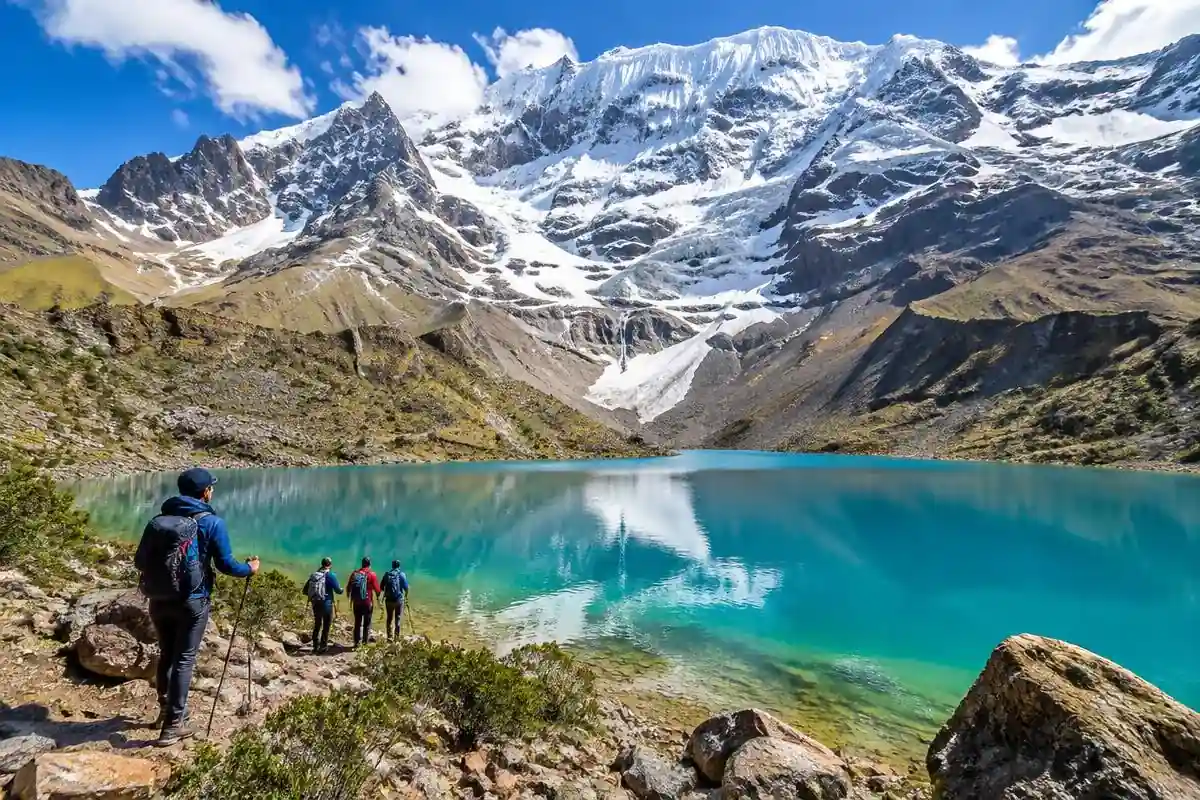
Treks · 5 days
Salkantay Trek to Machu Picchu, 5 Days
The best alternative to the Inca Trail: Humantay Lake, a 4,630 m pass and cloud forest.
from $490
View tour →Keep planning
- Inca Trail Permits: How to Get One, Daily Limits and Availability
- Inca Trail Map: Route, Campsites and Elevation Profile
- Inca Trail vs Salkantay Trek: Which Should You Choose?
- Machu Picchu Tickets 2026: Prices, Ticket Types and How to Buy
- Best Time to Visit Machu Picchu: Best Months, Seasons and Time of Day
- How to Get to Machu Picchu: Every Route From Cusco Compared
- Machu Picchu Bus: How the Shuttle From Aguas Calientes Works
- Machu Picchu Hotels: Best Places to Stay Near the Citadel by Area and Budget