
Aguas Calientes Hot Springs: A Practical Guide to the Thermal Baths Below Machu Picchu
By the Goo Machu Picchu team · Checked against official sources (editorial policy) · Updated October 2026 · 5 min read
The Aguas Calientes hot springs, called Baños Termales, are municipal thermal pools at the top of Avenida Pachacutec, about a 10 to 15 minute uphill walk from the main plaza. Entry is reported at roughly S/20 to S/25 for foreign adults, and the warm pools work best early morning or after dark.
- Local name
- Baños Termales de Machu Picchu Pueblo
- Location
- Top of Avenida Pachacutec, Aguas Calientes
- Walk from plaza
- About 10 to 15 minutes uphill
- Entry (reported)
- About S/20 to S/25 foreign adult, cash
- Hours (reported)
- About 5 am to 8 pm or later
- Water
- Roughly 95°F to 113°F, varies by pool
What Are the Aguas Calientes Hot Springs Like?
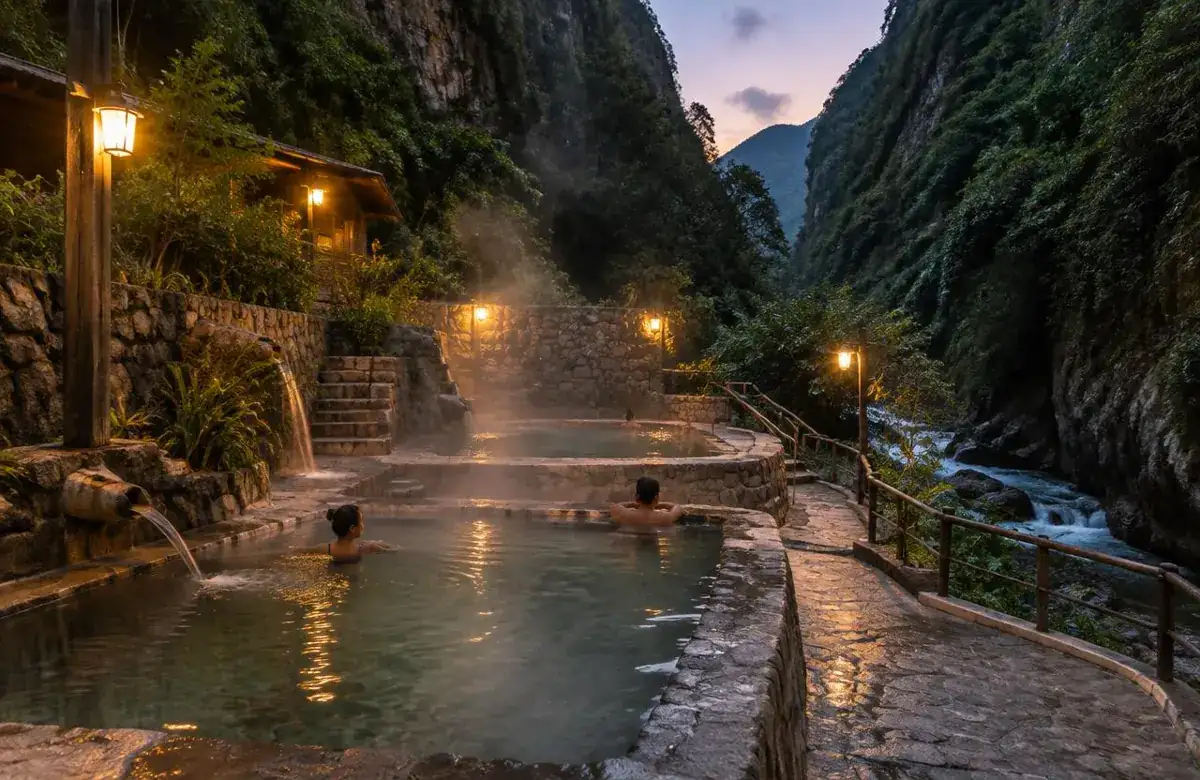
The Aguas Calientes hot springs are a handful of concrete soaking pools fed by natural geothermal water, set in a forested gorge beneath steep green cliffs. They are a simple municipal facility, not a spa. The water is warm, slightly sulfurous and cloudy yellow from minerals, and the pools are for soaking rather than swimming.
Several pools sit at different temperatures, so you can move from a warm pool to a hotter one. Changing rooms, showers, lockers and a small bar or snack stand sit near the entrance, and some visitors order a drink to the poolside.
How Much Do the Aguas Calientes Hot Springs Cost?
Entry to the Aguas Calientes hot springs is reported at about S/20 to S/25 for foreign adults, roughly $5 to $7, with lower rates for Peruvian nationals and locals. Older published tariffs list S/20 for foreign adults. Fees are set by the local municipality and can change, so carry small bills in soles.
Pay only at the official ticket booth near the entrance. Street sellers offering discounted entry are not needed, and the booth may not give change for a S/100 note. Towel and swimsuit rental, lockers and drinks cost extra.
| Item | Reported cost | Note |
|---|---|---|
| Entry, foreign adult | About S/20 to S/25 | Cash in soles |
| Entry, Peruvian adult | Lower national rate | ID required |
| Towel or swimsuit rental | Small extra fee | Bring your own if possible |
| Locker | Small fee or deposit | Bring a padlock |
| Drinks and snacks | Varies | Poolside service may be offered |
When Are the Hot Springs Open, and When Is the Best Time to Go?
The Aguas Calientes hot springs are reported open daily from about 5 am until 8 pm, with some sources citing closing near 9:30 pm. The best time to go is right at opening or in the evening after day-trippers leave on afternoon trains. Late morning to mid-afternoon is busiest, especially on weekends and Sundays.
Pools are drained and cleaned periodically, and the morning water after cleaning tends to look clearest. Confirm current hours with your hotel the day you arrive.
| Time | Crowds | Who it suits |
|---|---|---|
| 5 to 7 am | Light | Afternoon Machu Picchu entry |
| 11 am to 4 pm | Heaviest | Avoid if possible |
| After about 6 pm | Moderate | Overnight guests after the ruins |
| Last hour before closing | Light to moderate | Travelers with late dinner plans |
How Do You Fit the Hot Springs Into a Machu Picchu Trip?
The hot springs fit best into a Machu Picchu trip when you stay overnight in Aguas Calientes. Soak the evening you arrive or after your visit to the ruins, then shower and eat. Day-trippers on a tight train schedule rarely have time, because the walk, changing and soaking take about 1.5 to 2 hours.
- Check your train time and Machu Picchu entry slot first.
- Leave luggage at your hotel before walking uphill.
- Walk up Avenida Pachacutec to the ticket booth.
- Pay in soles, change and lock your belongings.
- Shower before entering the pools.
- Soak for 30 to 60 minutes, drinking water as you go.
- Walk back downhill with time to spare for your train.
Overnight planning is covered in our Aguas Calientes town guide, and choosing a room near the springs is in our guide to Aguas Calientes hotels by area.
What Should You Bring to the Aguas Calientes Hot Springs?
Bring a swimsuit, quick-dry towel, sandals or flip-flops, a small padlock, cash in soles, and a bottle of water to the Aguas Calientes hot springs. Rentals and basic items are sold at the entrance, but quality varies. Leave valuables and your passport at the hotel if you do not need them.
- Swimsuit and quick-dry towel.
- Sandals for wet floors and the walk.
- Small padlock for the locker.
- Small bills in soles.
- Water, since hot pools dehydrate you.
- Insect repellent for the walk at dusk.
Pack these alongside your day gear using our Machu Picchu packing list.
Are the Aguas Calientes Hot Springs Clean?
The Aguas Calientes hot springs are clean enough for most visitors, but expectations matter. The cloudy yellow color comes from minerals, not dirt, and pools are drained for cleaning. Still, heavy use at peak hours lowers water quality, and reviews are mixed. Going early morning gives the clearest water and fewest people.
Showers are required before entry. Avoid putting your head under the water, and skip the pools if you have open cuts.
Who Should Avoid Soaking in the Hot Springs?
Pregnant travelers, people with heart conditions or high blood pressure, and anyone with open wounds should check with a doctor before soaking in the Aguas Calientes hot springs. Hot water combined with altitude near 6,700 feet can cause dizziness. Limit soaks to short sessions, drink water and avoid alcohol while in hot pools.
Children are allowed, but supervise them closely in the hotter pools. Altitude effects are explained in our Machu Picchu elevation guide.
Aguas Calientes Hot Springs vs Cocalmayo and Lares
The Aguas Calientes hot springs are the most convenient thermal baths for Machu Picchu visitors, but not the most scenic. Cocalmayo near Santa Teresa has larger, cleaner-feeling pools by a river and is common on Salkantay and jungle routes. Lares hot springs sit in a high Andean village and pair with Lares treks.
| Hot springs | Location | Best for | Access |
|---|---|---|---|
| Aguas Calientes | Machu Picchu Pueblo | Overnight Machu Picchu visitors | Walk from town |
| Cocalmayo | Near Santa Teresa | Salkantay and jungle trekkers | Road from Santa Teresa |
| Lares | Lares village, Calca province | Lares trekkers | Road from Cusco or Calca |
Lares soaks are part of our Lares trek to Machu Picchu.
Hot springs fit best on an overnight stay, so compare Aguas Calientes hotels by budget and pack using the Machu Picchu packing list.
Directions, opening times and tips for the Santa Teresa pools are in our Cocalmayo hot springs guide.
Frequently asked questions
Are the Aguas Calientes hot springs worth it?
The Aguas Calientes hot springs are worth it if you are staying overnight and go early morning or after dark, especially after hiking. They are a basic municipal facility, so travelers expecting a luxury spa may be disappointed. Day-trippers with a tight train schedule can skip them without missing much.
Where are the hot springs in Aguas Calientes?
The hot springs in Aguas Calientes are at the top of Avenida Pachacutec, the main street climbing uphill from the Plaza de Armas. Follow the street past restaurants and hotels for about 10 to 15 minutes until it ends at the ticket booth beside the river gorge.
Can you swim in the Aguas Calientes hot springs?
You cannot really swim in the Aguas Calientes hot springs. The pools are shallow, roughly waist to chest deep, and designed for soaking and relaxing. Posted rules ask visitors not to swim, play rough or dive, so treat the pools like a large hot tub.
Do the Aguas Calientes hot springs smell like sulfur?
The Aguas Calientes hot springs have a mild sulfur smell, which is normal for geothermal water rich in minerals. The smell is usually faint near the pools. The same minerals give the water its cloudy yellowish color, which some visitors mistake for dirty water.
Are the hot springs open when it rains?
The Aguas Calientes hot springs generally stay open in light rain, and a warm soak in drizzle can be pleasant. Heavy rainy season storms, mostly from December to March, can bring river flooding or temporary closures. Ask your hotel on the day, and see our [Machu Picchu weather guide](/guides/machu-picchu-weather) for seasons.
Where does the water in the Aguas Calientes hot springs come from?
The water comes from natural thermal springs that rise from deep underground, heated by geothermal activity in the Andes, which gave the town its Spanish name, hot waters. It is piped into outdoor pools at the end of the main street. Health benefits are often claimed but not scientifically proven.
Want an itinerary with time to soak?
Tell us your dates and we will plan an overnight in Aguas Calientes with time for the hot springs and an early Machu Picchu entry. Prefer to read first? Get the free Machu Picchu trip guide.
Sources checked October 3, 2026
Recommended tours
Keep planning
- Aguas Calientes Hotels: Where to Stay in Machu Picchu Town and How to Choose
- Ollantaytambo: The Inca Fortress Town of the Sacred Valley Explained
- Sacsayhuamán: The Megalithic Inca Fortress Above Cusco Explained
- Qorikancha: The Golden Inca Temple of the Sun in Cusco
- Maras Salt Mines: How the Salineras de Maras Work and How to Visit
- Moray Ruins: The Inca Circular Terraces of the Sacred Valley Explained
- Pisac Ruins: The Inca Citadel and Market Town of the Sacred Valley
- Things to Do in Cusco: The Best Sights, Day Trips and Local Food