
Llama vs Alpaca: How to Tell the Difference Between Peru's Andean Camelids
By the Goo Machu Picchu team · Checked against official sources (editorial policy) · Updated October 2026 · 5 min read
Llama vs alpaca comes down to size, ears and purpose. A llama is roughly twice as heavy, with long banana-shaped ears and a coarse coat, and was bred as a pack animal. An alpaca is smaller, with short pointed ears and a soft fleece, and was bred for fiber. Both are domesticated South American camelids from the Andes.
- Family
- Camelids (related to camels)
- Llama weight
- About 250 to 450 lb
- Alpaca weight
- About 100 to 190 lb
- Llama ears
- Long, curved, banana-shaped
- Alpaca ears
- Short, straight, spear-shaped
- Wild ancestors
- Guanaco (llama), vicuña (alpaca)
What Is the Main Difference Between a Llama and an Alpaca?
The main difference between a llama and an alpaca is purpose, which shaped their bodies. Andean herders bred llamas as strong pack animals, so llamas grew large with coarse hair. Herders bred alpacas for fine fleece, so alpacas stayed small with dense, soft fiber. Size, ears and coat follow from that split.
| Trait | Llama | Alpaca |
|---|---|---|
| Height at shoulder | About 3.5 to 4 ft | About 3 ft |
| Weight | About 250 to 450 lb | About 100 to 190 lb |
| Ears | Long and curved like bananas | Short and pointed |
| Face | Longer, less hair on face | Short, blunt, fluffy face |
| Coat | Coarser outer hair | Fine, soft, dense fleece |
| Main use | Pack animal, meat, some fiber | Fiber for textiles |
| Lifespan | About 15 to 25 years | About 15 to 20 years |
You will meet both animals around the Inca ruins of Sacsayhuamán and in the Pisac market town. The Incas tracked their herds on knotted cords, explained in our Inca quipu guide.
How Can You Tell a Llama From an Alpaca at a Glance?
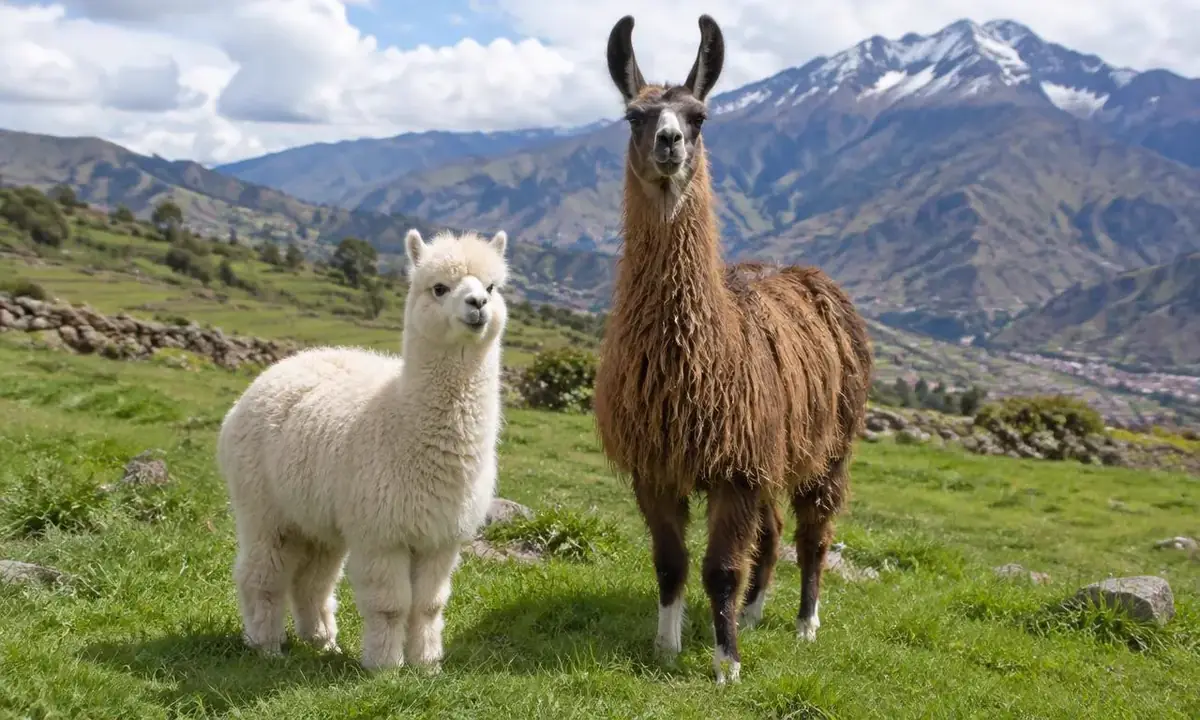
Look at the ears first, then the size and face. Llamas have tall, curved, banana-shaped ears, while alpacas have short, straight ears. A llama's head often reaches above an adult's head, but an alpaca's usually stays around chest height. Alpaca faces look round and woolly; llama faces look longer and bare.
- Check the ears: curved and long means llama, short and straight means alpaca.
- Compare height to a nearby person.
- Look at the face for a woolly, rounded muzzle on alpacas.
- Notice the back: llamas have a straighter, flatter back line.
- Watch the tail: llama tails often stand higher than alpaca tails.
- Touch the coat if allowed: alpaca fleece feels noticeably softer.
Why Is Alpaca Fiber Softer Than Llama Wool?
Alpaca fiber is softer because breeders selected alpacas for fine, uniform fleece with fewer coarse guard hairs. Alpaca fiber is often compared to cashmere, has no lanolin and is commonly described as warm and less itchy than sheep wool. Llamas carry a double coat, with a soft undercoat mixed with coarse outer hair.
Alpacas come in two breeds. Huacaya alpacas grow crimped, fluffy fleece and make up most of the world's herds, while Suri alpacas grow long, silky locks. Baby alpaca refers to the finest grade of fleece, not to young animals.
Do Llamas and Alpacas Spit, and Which Is Friendlier?
Both llamas and alpacas can spit, but they mainly spit at each other over food or rank, not at people. Llamas tend to be more confident and independent, and are often used as guard animals for sheep. Alpacas are herd animals that are usually shyer and prefer not to be touched.
In Cusco, women in traditional dress often pose with baby llamas or alpacas for photos, usually expecting a small tip. Ask before taking a picture and avoid feeding the animals unless invited.
How Do Vicuñas and Guanacos Relate to Llamas and Alpacas?
South America has four camelids: two wild, vicuña and guanaco, and two domesticated, alpaca and llama. Genetic studies indicate the llama descends mainly from the guanaco and the alpaca mainly from the vicuña. Andean people domesticated both several thousand years ago. The vicuña appears on Peru's coat of arms.
| Camelid | Wild or domestic | Notes |
|---|---|---|
| Llama | Domestic | Largest, pack animal |
| Alpaca | Domestic | Bred for fiber |
| Guanaco | Wild | Ancestor of the llama, wider range |
| Vicuña | Wild | Smallest, finest fiber, protected |
Vicuña fiber is among the most expensive natural fibers, and the species recovered from near extinction under strict protection.
Why Were Llamas and Alpacas So Important to the Incas?
Llamas and alpacas powered the Inca economy. Llama caravans carried goods along the Inca road network, alpaca fiber became fine cloth that was valued like currency, and both animals supplied meat, dung fuel and offerings in religious ceremonies. The state tracked herds carefully, partly with knotted-cord records called quipus.
Learn how the Inca state built its capital in our Cusco Peru guide, and see the empire's best-known site in our Machu Picchu history guide.
Where Can You See Llamas and Alpacas Near Cusco and Machu Picchu?
You can see llamas grazing on the terraces of Machu Picchu itself, which are a favorite photo stop. Near Cusco, textile centers on the road to the Sacred Valley keep llamas, alpacas and sometimes vicuñas, and the high country around Rainbow Mountain and Humantay Lake has working herds.
- Machu Picchu terraces: resident llamas trim the grass.
- Sacred Valley road: weaving centers show all four camelids.
- Cusco streets: photo opportunities with baby llamas and alpacas.
- High-altitude treks: alpaca herds near herding villages.
Plan the citadel visit with our Machu Picchu tickets guide, or explore more nearby stops in our guide to things to do in Cusco. To see highland herds on a day out, look at our Rainbow Mountain tour.
Frequently asked questions
Are llamas and alpacas the same species?
Llamas and alpacas are separate species, Lama glama and Vicugna pacos, but they are closely related and can interbreed. Their offspring is called a huarizo, which is fertile. Breeders generally avoid crossing them because the mixed fleece is lower in quality than pure alpaca fiber.
Can you eat llama or alpaca meat in Peru?
Alpaca meat is served in many Cusco restaurants, often as grilled steak, and is described as lean and mild. Llama meat is eaten in highland communities and dried into charqui, the word behind jerky. Both meats are legal and common in Andean cooking.
Is alpaca wool better than sheep wool?
Alpaca fiber is often considered warmer for its weight and softer than most sheep wool, and it contains no lanolin, which some people find less irritating. Fine merino sheep wool is competitive in softness. Quality varies with grade, so check labels for baby alpaca or royal alpaca.
Do llamas live in the wild in Peru?
Llamas do not live in the wild in Peru; all llamas are domesticated and owned by herders, even when they roam freely on hillsides. The wild camelids of Peru are the vicuña and the guanaco. Vicuñas are easy to spot on high plateaus during treks.
How do you tell a baby llama from a baby alpaca?
A baby llama, called a cria like a baby alpaca, already shows longer curved ears and longer legs. A baby alpaca has short ears and a rounder, fluffier face. Size is less helpful with young animals, so the ears are the most reliable clue.
Where can you see llamas and alpacas in Peru?
In Cusco you will see both in the historic center, often posing with women in traditional dress for a small tip. Textile centers on the road to Pisac keep herds you can feed, and Rainbow Mountain, Sacsayhuamán and the high Andes trek routes all pass grazing animals. Alpacas outnumber llamas in the Cusco region.
Can llamas or alpacas be kept as pets?
Llamas and alpacas can be kept as pets in many parts of the US, but they are herd animals and should never live alone, so owners keep at least two. Both need pasture, shelter, shearing and a livestock vet. Check local zoning rules first, because many neighborhoods do not allow livestock.
Want to see llamas at Machu Picchu?
Tell us your dates and we will plan your Machu Picchu and Sacred Valley days. Prefer to read first? Get the free Machu Picchu trip guide.
Sources checked October 3, 2026
Recommended tours
Day Tours · 1 day
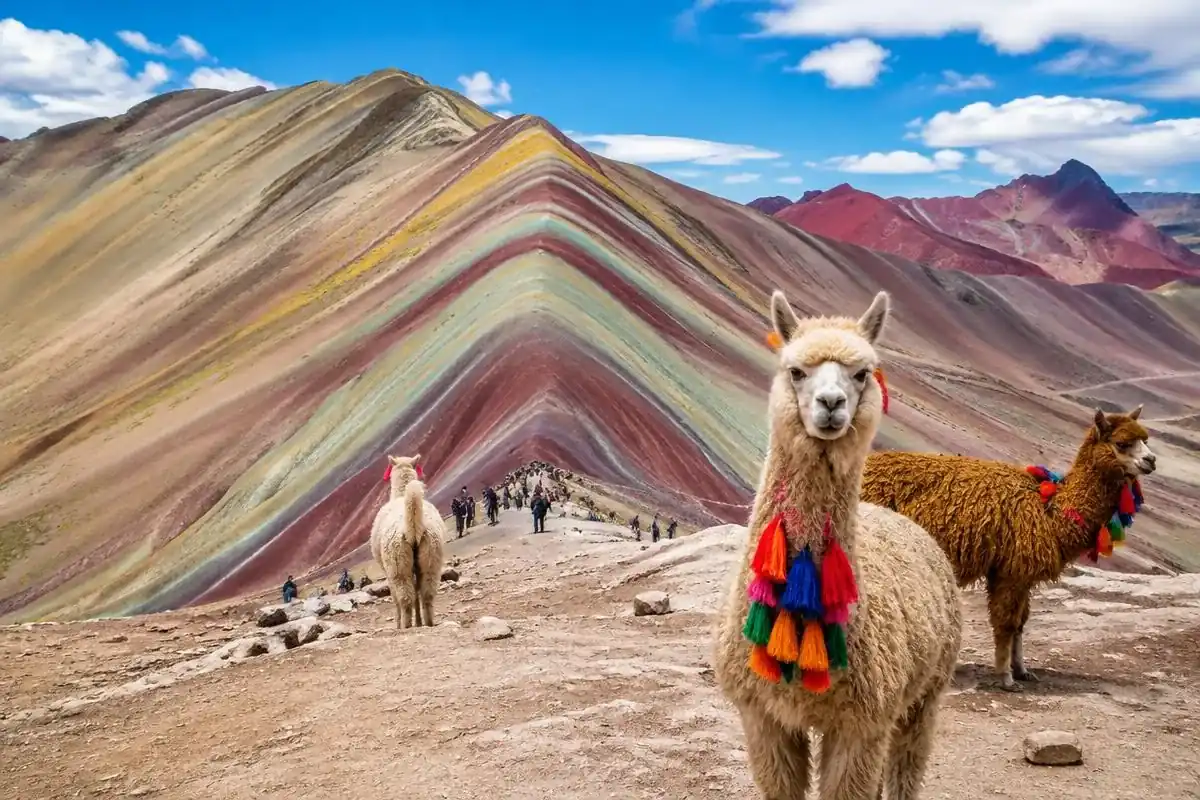
Rainbow Mountain Full Day Tour
Hike to Vinicunca's colourful stripes at 5,036 m with breakfast, lunch and guide.
from $49
View tour →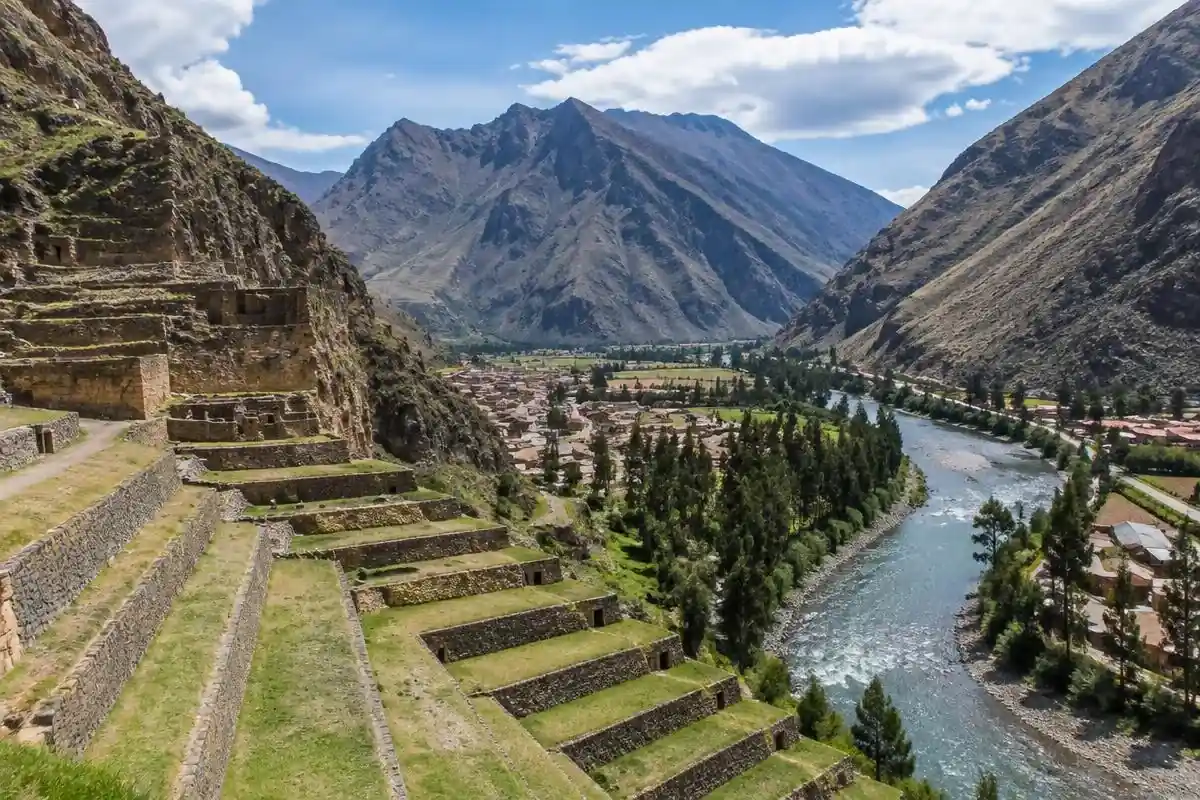
Day Tours · 1 day
Sacred Valley Full Day Tour
Chinchero, Moray, Maras salt mines, Ollantaytambo and Pisac in one full day from Cusco, with buffet lunch.
from $49
View tour →Keep planning
- Quipu (Khipu): What the Inca Knot Records Were and How to Read Them
- Machu Picchu Tickets 2026: Prices, Ticket Types and How to Buy
- Best Time to Visit Machu Picchu: Best Months, Seasons and Time of Day
- How to Get to Machu Picchu: Every Route From Cusco Compared
- Machu Picchu Bus: How the Shuttle From Aguas Calientes Works
- Machu Picchu Hotels: Best Places to Stay Near the Citadel by Area and Budget
- Machu Picchu Map: Where It Is in Peru and How the Ruins Are Laid Out
- Machu Picchu Cost Breakdown: How Much It Costs to Go in 2026