
Quipu (Khipu): What the Inca Knot Records Were and How to Read Them
By the Goo Machu Picchu team · Checked against official sources (editorial policy) · Updated October 2026 · 4 min read
A quipu, also spelled khipu, is a device of knotted cords that the Incas and earlier Andean peoples used to keep records. A main cord holds dozens or hundreds of hanging strings, and knot type, position and color stored numbers such as census counts and tribute. The Inca Empire relied on quipus instead of known writing.
- Meaning
- Knot, in Quechua
- Materials
- Cotton or camelid fiber
- Number system
- Base 10 (decimal)
- Keepers
- Quipucamayocs
- Surviving examples
- Roughly 1,000 known
- Era
- Mainly Inca, roots in earlier Wari culture
What Is a Quipu and What Does the Word Mean?
Quipu: an Andean recording device made of knotted strings, from the Quechua word khipu, meaning knot. Inca administrators used quipus to store numerical information for the empire, from population counts to storehouse contents. Some scholars think quipus may also have encoded names or narratives, though that remains unproven.
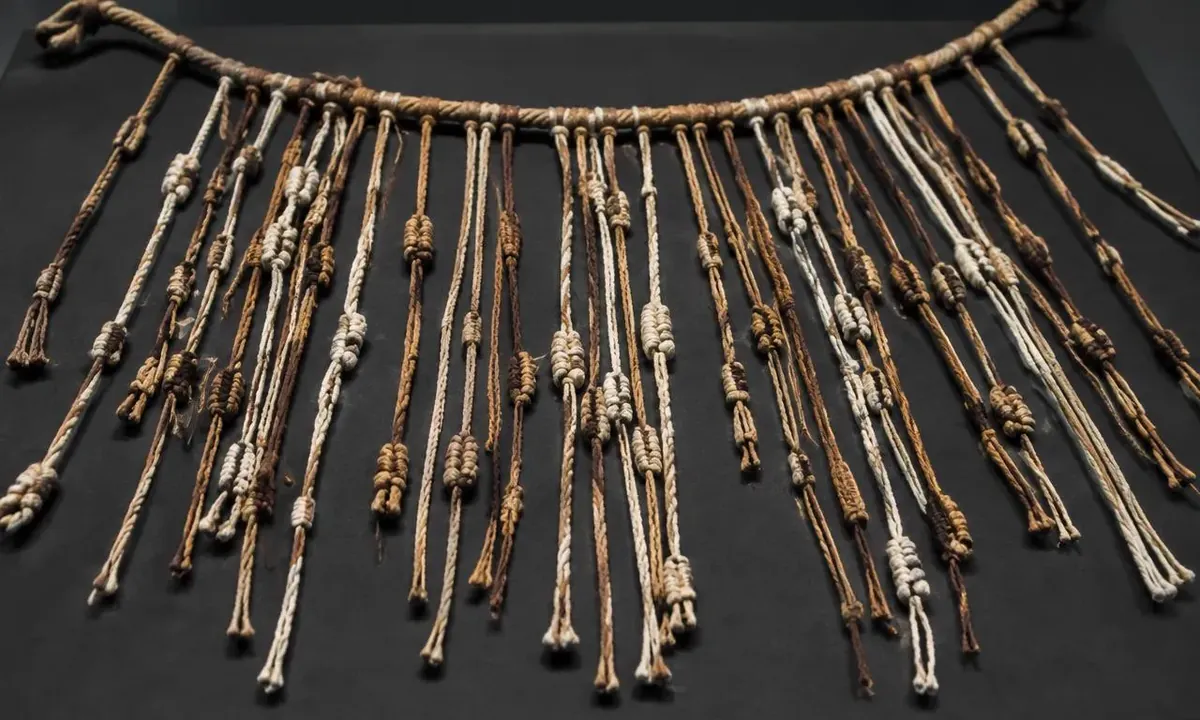
How Is a Quipu Built? Cords, Colors and Knots
A quipu is built from one primary cord with many pendant cords tied along it, and some pendants carry subsidiary cords. Makers spun cotton or alpaca and llama fiber, sometimes dyed in several colors. Color, spacing, the direction of each knot and the way cords were attached all likely carried meaning.
- Primary cord: the thick top cord that holds everything.
- Pendant cords: hanging strings where most knots sit.
- Subsidiary cords: smaller strings tied to pendants.
- Top cords: occasional cords pointing up, sometimes holding totals.
- Color: possibly marking categories such as places or goods.
- Knot direction: an S or Z tie that may signal meaning.
How Did the Incas Record Numbers on a Quipu?
The Incas recorded numbers on a quipu with a base-10 positional system, like the decimal system Americans use. Clusters of knots near the bottom of a cord meant units, the next level up meant tens, then hundreds and thousands. A missing cluster in a position served as zero, decoded by Leland Locke in 1912.
| Knot type | Where used | Value |
|---|---|---|
| Figure-eight knot | Units position | 1 |
| Long knot (2 to 9 turns) | Units position | 2 to 9 |
| Single knots | Tens, hundreds and higher | 1 to 9 per cluster |
| Empty space | Any position | Zero |
For example, a cord with three single knots at the hundreds level, none at the tens level and a long knot of five turns at the bottom would read 305.
Who Were the Quipucamayocs?
Quipucamayocs were the trained Inca officials who made, kept and read quipus. They worked at every level of government, from villages to the capital in Cusco, recording tribute, labor duties, harvests and census results. Spanish chroniclers reported that quipucamayocs could recite the meaning of their cords from memory.
This record keeping helped the Inca state manage roads, storehouses and the huge llama and alpaca herds described in our llama vs alpaca guide. Learn how the empire organized its capital in our Cusco Peru guide.
Were Quipus a Form of Writing?
Whether quipus were a form of writing is still debated. Most surviving quipus clearly record numbers, but some do not fit numerical patterns, and Spanish accounts describe quipus used for history, laws and songs. Researchers such as Gary Urton and Sabine Hyland have explored possible narrative or name-based encoding, without a full decipherment.
Communities in the Peruvian Andes, such as San Juan de Collata and San Cristóbal de Rapaz, preserved later khipus, which give researchers rare clues. The Spanish Third Council of Lima in 1583 ordered some quipus destroyed, which reduced the surviving record.
How Many Quipus Survive and Where Can You See One?
Roughly 1,000 quipus are known to survive, most found in burials on Peru's dry coast and now held in museums in Peru, Europe and the US. In Lima, the Museo Larco displays quipus. Some museums in Cusco and the American Museum of Natural History in New York also hold examples.
Collections and displays change, so check a museum's current exhibits before visiting. Plan a Lima stop on your way to Cusco with our Lima to Machu Picchu guide, and explore wider Inca history in our Machu Picchu history guide.
Did Other Andean Cultures Use Quipus Before the Incas?
Yes. The Wari culture, which flourished in the Peruvian Andes from about 600 to 1000 AD, made knotted cord records centuries before the Incas. Wari examples often use wrapped colored thread rather than the knot clusters typical of Inca quipus. The Incas adopted and standardized the tradition across their empire.
Some researchers have proposed far older cord records at Caral on the Peruvian coast, but that interpretation is disputed. See how Inca builders worked in our Machu Picchu facts guide.
Want this handled for you? Take a look at our Machu Picchu vacation packages.
Original quipus survived in desert tombs, but the empire they served was run from Cusco; learn more in our Cusco Peru travel guide and Machu Picchu history guide. Herd counts often recorded animals covered in our llama vs alpaca guide.
Frequently asked questions
How do you pronounce quipu?
Quipu is pronounced KEE-poo in English. The Quechua spelling khipu is pronounced with a slightly breathier k at the start. Both spellings refer to the same Andean knotted-cord device, and you will see both used in museums, books and research papers.
How do you make a simple quipu?
Make a simple quipu by tying several strings to one thicker cord, then knotting numbers in base 10. Tie single knots in clusters for tens and hundreds, a long knot with several turns for units 2 to 9, and a figure-eight knot for 1. Leave space between levels.
Can anyone read quipus today?
Researchers can read the numerical values on many quipus using the base-10 knot system, but no one can yet read any non-numerical meaning they may hold. Large databases such as the Open Khipu Repository help scholars compare cords and look for patterns that might reveal more.
Why did the Incas not have writing?
The Incas had no known alphabet or script, but quipus served many of writing's administrative jobs. Oral tradition, memory specialists and textile designs called tocapu carried other information. Some scholars argue quipus or tocapu could be considered writing, which keeps the question open.
Who were the chasquis, and did they carry quipus?
Chasquis were relay runners on the Inca road network. Each ran a short stretch and passed messages, small goods and, according to Spanish chroniclers, quipus to the next runner, so information could cross the empire in days. Quipucamayocs, the trained record keepers, then read and stored the knotted cords at each center.
Curious about Inca culture in person?
Tell us your dates and we will plan Cusco, the Sacred Valley and Machu Picchu. Prefer to read first? Get the free Machu Picchu trip guide.
Sources checked October 3, 2026
Recommended tours

Packages · 7 days
Machu Picchu Vacation Packages, 3, 5 and 7 Days
3, 5 or 7 days from Cusco with hotels, trains, Machu Picchu tickets and guides arranged. From $479.
from $1290
View tour →
Day Tours · 1 day
Sacred Valley Full Day Tour
Chinchero, Moray, Maras salt mines, Ollantaytambo and Pisac in one full day from Cusco, with buffet lunch.
from $49
View tour →Keep planning
- Llama vs Alpaca: How to Tell the Difference Between Peru's Andean Camelids
- Machu Picchu Tickets 2026: Prices, Ticket Types and How to Buy
- Best Time to Visit Machu Picchu: Best Months, Seasons and Time of Day
- How to Get to Machu Picchu: Every Route From Cusco Compared
- Machu Picchu Bus: How the Shuttle From Aguas Calientes Works
- Machu Picchu Hotels: Best Places to Stay Near the Citadel by Area and Budget
- Machu Picchu Map: Where It Is in Peru and How the Ruins Are Laid Out
- Machu Picchu Cost Breakdown: How Much It Costs to Go in 2026