
Peru Currency Guide: The Peruvian Sol Explained for American Travelers
By the Goo Machu Picchu team · Checked against official sources (editorial policy) · Updated October 2026 · 5 min read
Peru's currency is the Peruvian sol (code PEN, symbol S/), divided into 100 céntimos. US dollars are accepted at many hotels and tour companies, but taxis, markets, small restaurants and the Machu Picchu bus and town expect soles, so most American travelers carry both and use ATMs or exchange houses for local cash.
- Currency
- Peruvian sol
- Code and symbol
- PEN, S/
- Banknotes
- S/10, 20, 50, 100, 200
- Coins
- 10, 20, 50 céntimos; S/1, 2, 5
- Issued by
- Central Reserve Bank of Peru (BCRP)
- Dollars
- Accepted at many hotels and tours
What Is the Currency of Peru Called?
The currency of Peru is called the sol, plural soles, and it is issued by the Central Reserve Bank of Peru. The name comes from the Spanish word for sun, linked to Inti, the Inca sun god. Prices are written with S/ before the number, such as S/ 25.
Peru introduced the nuevo sol in 1991 to replace the inti after severe inflation, and officially shortened the name to sol in 2015. Older guidebooks and some converters still say nuevo sol, but it is the same currency.
Which Peruvian Banknotes and Coins Will You Use?
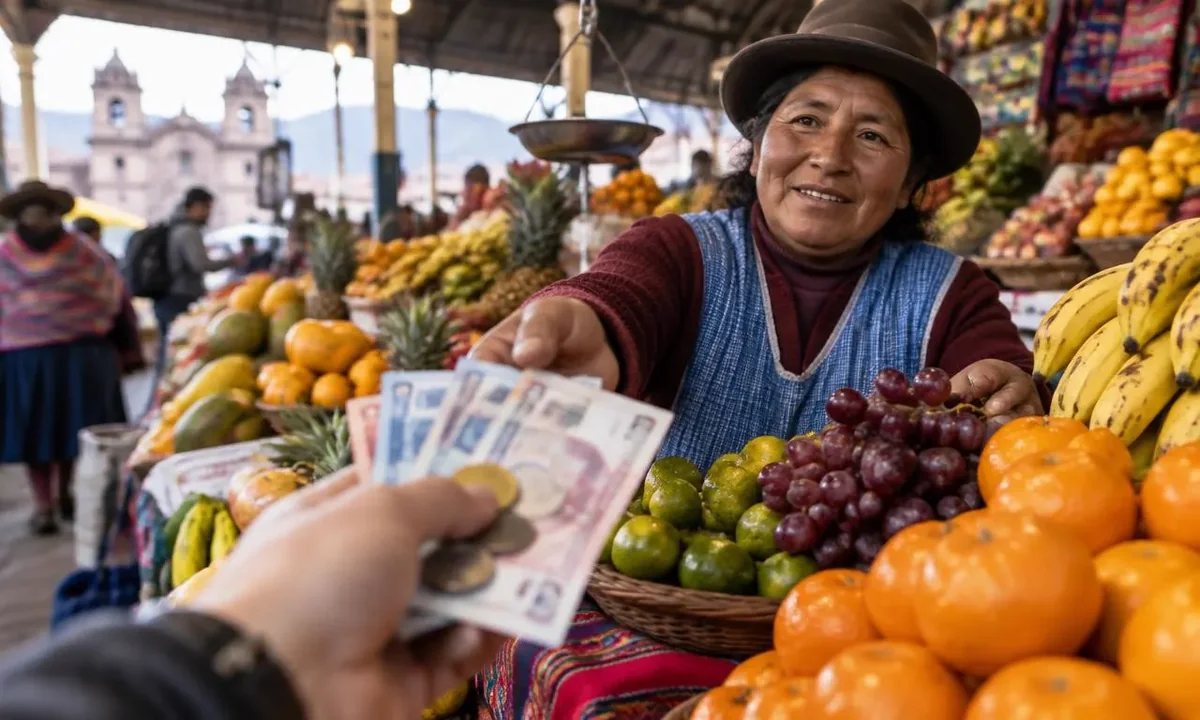
Peru uses banknotes of S/10, 20, 50, 100 and 200, plus coins of 10, 20 and 50 céntimos and S/1, 2 and 5. Travelers use S/10 and S/20 notes and coins most, since small shops and taxis often cannot break S/100 or S/200 notes.
| Denomination | Type | Typical use |
|---|---|---|
| 10, 20, 50 céntimos | Coin | Small change, bathrooms |
| S/1, S/2, S/5 | Coin | Snacks, tips, toilets |
| S/10, S/20 | Note | Taxis, meals, markets |
| S/50 | Note | Restaurants, shops |
| S/100 | Note | Hotels, larger purchases |
| S/200 | Note | Rarely used, hard to break |
Can You Use US Dollars in Peru?
You can use US dollars in Peru at many hotels, tour operators and some shops in tourist areas, and some prices are quoted in dollars. Change is often returned in soles at a less favorable rate. Taxis, markets, street food and local buses expect soles, so dollars alone are not enough.
- Bring crisp, unmarked bills; torn or written-on notes are often refused.
- Small bills like $1, $5 and $20 are easier to spend than $100s.
- Machu Picchu entrance tickets are priced in soles.
- Ask whether a price is in soles or dollars before paying.
How Do You Get Soles: ATMs, Exchange Houses or Banks?
The easiest way to get soles is withdrawing from an ATM inside a bank or shopping mall with a debit card. Official exchange houses, called casas de cambio, swap clean dollars at fair rates. Airport exchange counters usually give poorer rates, so change only a small amount there.
- Tell your US bank you are traveling to Peru.
- Check your card's foreign ATM and transaction fees.
- Withdraw from ATMs inside banks such as BCP, Interbank or BBVA.
- Choose to be charged in soles, not dollars, when asked.
- Count cash at the counter in exchange houses before leaving.
- Keep some cash separate in case a card is blocked.
Peruvian ATMs often add their own withdrawal fee and have per-transaction limits, so fewer, larger withdrawals usually cost less.
Are Credit Cards Accepted in Peru?
Visa and Mastercard are widely accepted in hotels, larger restaurants, supermarkets and airline and train bookings in Peru. American Express is accepted less often. Some businesses add a card surcharge of a few percent, and small shops, markets and taxis are usually cash only.
Use a card with no foreign transaction fee to save around 3 percent. Train and entrance tickets for Machu Picchu are normally paid online by card; see our Machu Picchu tickets guide and Machu Picchu train guide.
How Do You Spot a Fake Peruvian Bill?
Counterfeit notes do circulate in Peru, especially S/50, S/100 and US $100 bills. Check every note for the color-shifting number, a clear watermark of the portrait, a security thread and raised printing you can feel. Coins of S/5 are also faked, so check weight and edge detail.
Alongside this Peru Currency guide, related reading: our Peru visa requirements for US citizens guide.
- Tilt the note to see the number change color.
- Hold it to light to see the watermark and thread.
- Feel the raised ink on the portrait and lettering.
- Refuse notes that feel waxy, too smooth or are a different size.
How Much Cash Should You Carry for Cusco and Machu Picchu?
Many travelers carry the equivalent of about $30 to $60 per day in soles for meals, taxis, snacks, tips and small entrance fees in Cusco and Aguas Calientes, using cards for hotels and bookings. Daily needs vary widely with travel style, so treat this as a rough starting point, not a budget.
Aguas Calientes has ATMs, but they can run out of cash on busy days, so arrive with enough soles. Full trip budgets are in our Machu Picchu cost guide, and Cusco money tips are in our Cusco Peru guide.
How Much Should You Tip in Peru?
Tipping in Peru is appreciated but less fixed than in the US. Around 10 percent is common in sit-down restaurants if service is not already included. Trekking crews, guides and drivers usually receive tips in soles at the end of a tour, and taxi drivers are not usually tipped.
Tour operators often share suggested tip ranges for porters and cooks; on multi-day hikes such as the Inca Trail, crews depend on these tips. See our Inca Trail permits guide for planning a trek.
Alongside this Peru Currency guide, if you would rather not plan every piece yourself, see our Machu Picchu vacation packages.
Cash matters most at markets and small sites, such as the Pisac Sunday market and the Maras salt mines, and when budgeting a full trip with our Machu Picchu cost breakdown.
Frequently asked questions
What is the exchange rate of the Peruvian sol to the US dollar?
The sol has traded roughly between 3.3 and 4.0 soles per US dollar in recent years, and the rate changes daily. Check a live source such as the Central Reserve Bank of Peru or your bank's app before you travel, since printed rates go out of date quickly.
Should I exchange money before going to Peru?
Most US travelers do not need to exchange money before going to Peru, since US banks often give poor sol rates and ATMs in Lima and Cusco work well. Bringing some clean US dollars as backup is useful. Change a small amount at the airport only if needed.
Is the Peruvian sol a stable currency?
The Peruvian sol has been one of the more stable currencies in Latin America since the 1990s, supported by an independent central bank and low inflation. Before 1991, Peru's earlier currencies, the sol de oro and the inti, lost value rapidly during hyperinflation.
Can I use Apple Pay or contactless payment in Peru?
Contactless card and phone payments are increasingly accepted in larger stores, supermarkets and restaurants in Lima and Cusco. Acceptance is less consistent in small towns, markets and taxis. Carry a physical card and some cash as backup when traveling to Aguas Calientes or rural areas.
What are Yape and Plin in Peru?
Yape and Plin are popular Peruvian mobile payment apps that let people pay by phone number or QR code. Many market stalls and small shops display their QR codes. They generally require a Peruvian bank account, so most American visitors pay with cash or cards instead.
Where is the best place to exchange US dollars in Peru?
The best place to exchange US dollars in Peru is a licensed exchange house, called a casa de cambio, or a bank. They give much better rates than airport counters and are safer than street changers. Bring clean, untorn bills, count your soles before leaving the counter and check today's rate first.
Planning your Peru budget?
Tell us your dates and we will suggest a Machu Picchu plan that fits your budget. Prefer to read first? Get the free Machu Picchu trip guide.
Sources checked October 3, 2026
Recommended tours
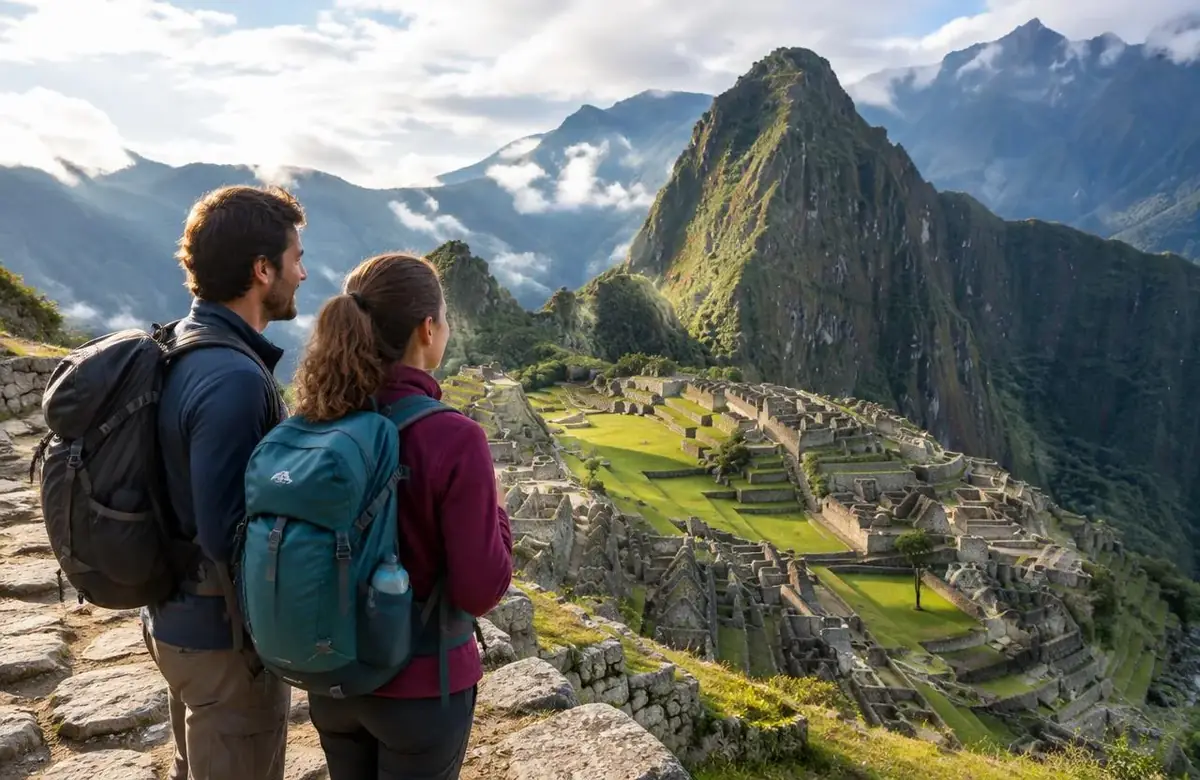
Packages · 7 days
Machu Picchu Vacation Packages, 3, 5 and 7 Days
3, 5 or 7 days from Cusco with hotels, trains, Machu Picchu tickets and guides arranged. From $479.
from $1290
View tour →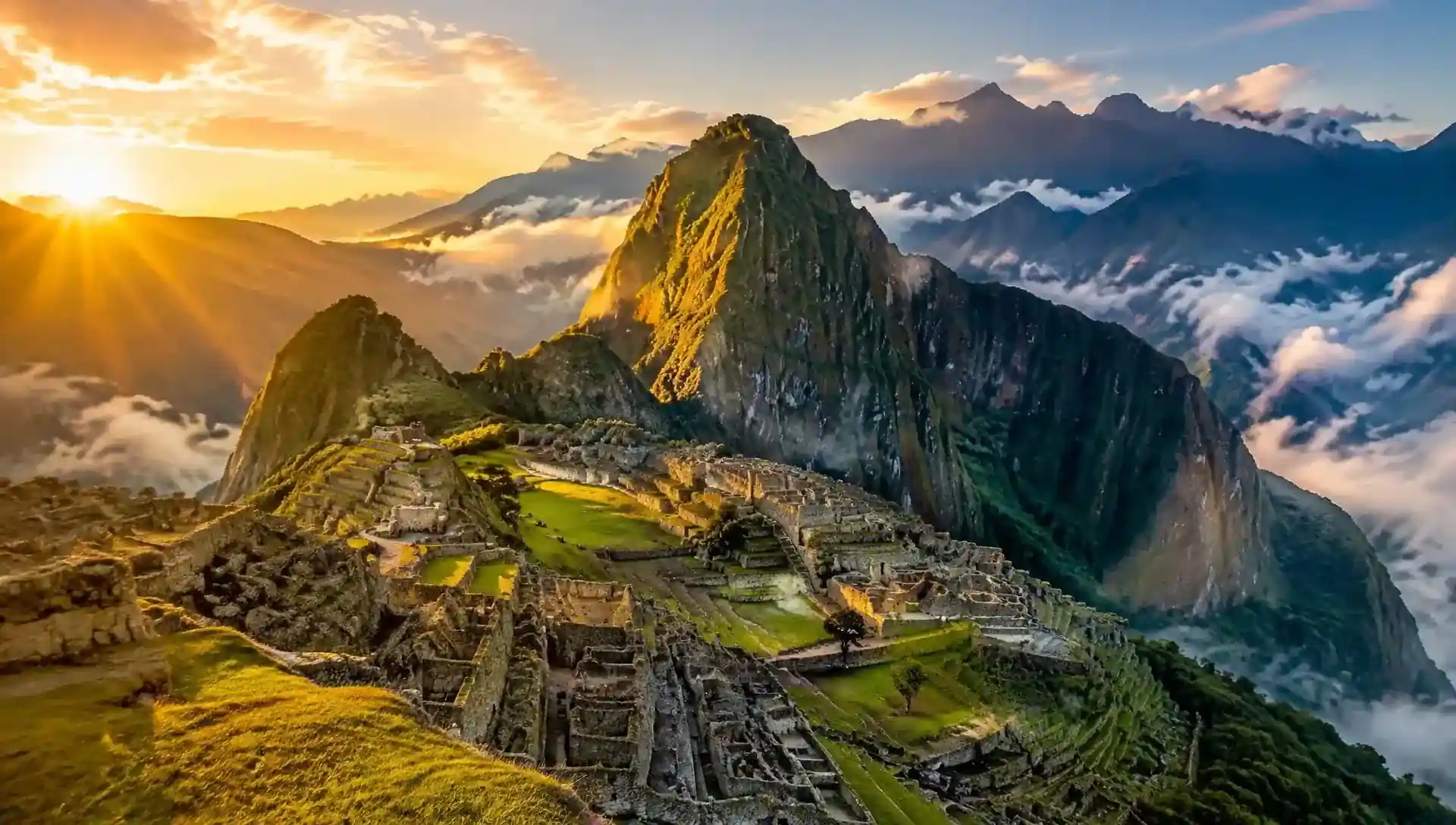
Machu Picchu · 1 day
Machu Picchu Day Trip from Cusco
Train, bus, entry ticket and guided tour of Machu Picchu in one easy day from Cusco.
from $379
View tour →Keep planning
- Machu Picchu Tickets 2026: Prices, Ticket Types and How to Buy
- Best Time to Visit Machu Picchu: Best Months, Seasons and Time of Day
- How to Get to Machu Picchu: Every Route From Cusco Compared
- Machu Picchu Hotels: Best Places to Stay Near the Citadel by Area and Budget
- Machu Picchu Map: Where It Is in Peru and How the Ruins Are Laid Out
- Machu Picchu Cost Breakdown: How Much It Costs to Go in 2026
- Machu Picchu Rules and Regulations: The Complete 2026 Visitor Code
- Machu Picchu in December: Is a Rainy-Season Holiday Visit Worth It?