
Moray Ruins: The Inca Circular Terraces of the Sacred Valley Explained
By the Goo Machu Picchu team · Checked against official sources (editorial policy) · Updated October 2026 · 4 min read
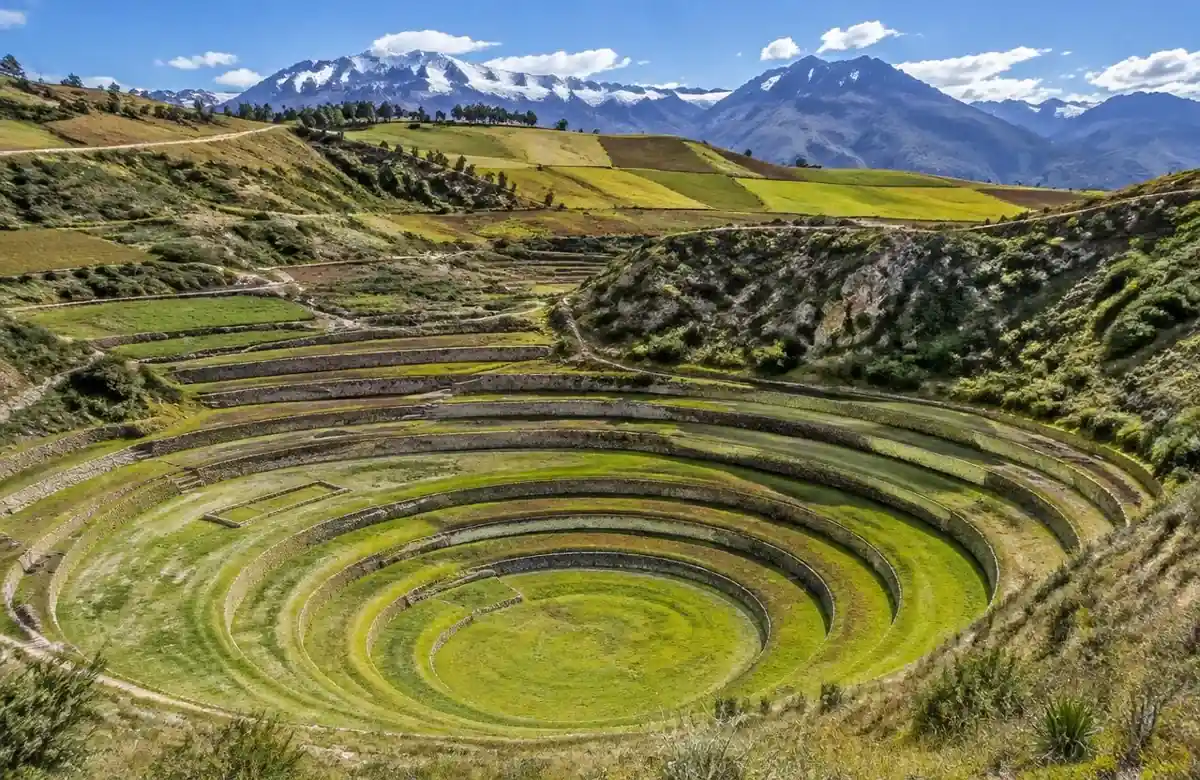
The Moray ruins are a set of Inca terraced circular depressions on a high plateau about 31 miles (50 km) northwest of Cusco, near the village of Maras, at roughly 11,500 feet (3,500 m). The largest bowl is about 98 feet (30 m) deep, and the temperature can differ by up to about 27°F (15°C) from top to bottom.
- Quechua name
- Muray
- Location
- Near Maras, Urubamba Province
- Elevation
- About 11,500 ft (3,500 m)
- Largest bowl depth
- About 98 ft (30 m)
- Entry
- Cusco Tourist Ticket
- Time needed
- About 1 hour
What Are the Moray Ruins?
The Moray ruins are an Inca archaeological site made of several natural sinkholes reshaped into rings of stone terraces, linked by an irrigation system. The main complex has one large bowl and smaller ones beside it. Seen from the rim, the concentric terraces look like a giant amphitheater carved into the plateau.
Stone steps jut out of the terrace walls, letting people move between levels. The surrounding farmland of the Maras plateau, with snowcapped peaks behind, makes the site one of the most photographed in the Sacred Valley.
Moray sits near the Maras salt pans and on the way to Ollantaytambo's Inca fortress. Carry small soles for the entrance, as explained in our Peru currency guide, and see wider plans in things to do in Cusco.
What Was Moray Used For?
The exact purpose of Moray is unknown, but the most popular theory is that the Incas used it as an agricultural research station. The depth and shape of the bowls trap cold air at the bottom, creating microclimates, so crops could be tested at conditions similar to much higher or lower elevations within one site.
Other researchers see Moray as an Inca ceremonial center, suggesting ceremonial or seasonal ritual use, or combined farming and ritual. Signs and guides often present the laboratory idea as fact, but it remains a hypothesis supported by temperature measurements rather than written Inca records.
Why Is It Colder at the Bottom of Moray?
The bottom of Moray is colder because cold air is heavier than warm air and drains downslope into the closed bowl, especially on calm, clear nights. Heat escapes upward and the cold air stays trapped below. This inversion can make the bottom terraces up to about 27°F (15°C) cooler than the rim.
| Part of the bowl | Relative temperature | Effect on crops |
|---|---|---|
| Rim | Warmest | Like lower valleys |
| Upper terraces | Slightly cooler | Mid-elevation conditions |
| Lower terraces | Noticeably cooler | Higher-elevation conditions |
| Bottom | Coldest at night | Like high puna farmland |
Moving a planting a few terraces up or down changes its effective climate, which is why the laboratory theory is so appealing.
How Much Does It Cost to Visit Moray?
Moray does not sell a single-site ticket for most foreign visitors. Entry is through the Cusco Tourist Ticket, the Boleto Turístico, reported at about S/130 for the full 10-day pass, or about S/70 for the partial Sacred Valley circuit that also covers Pisac, Ollantaytambo and Chinchero. Check current prices before you go.
The nearby Maras salt mines are not covered by the tourist ticket and charge their own community fee; details are in our Maras salt mines guide.
Can You Walk Down Into the Moray Terraces?
Visitors can no longer walk down into the main Moray terraces. Access to the largest bowl was closed to protect the walls after rain damage and wear, so you walk a path around the rim and view it from above. Rules can change, and some smaller sections may open seasonally.
In early 2010 heavy rains caused partial collapses of some terrace walls, which were later restored. The rim path is easy, but it is at high altitude, so walk slowly.
How Do You Visit Moray and the Maras Salt Mines Together?
Most travelers visit Moray and the Maras salt mines together, since they are about 15 minutes apart by road. Half-day tours from Cusco include both, and many full-day Sacred Valley itineraries add Chinchero. Independent travelers can hire a taxi from Urubamba, Cusco or the Maras turnoff for both sites.
For the full picture, start with our day trips from Cusco guide.
- Buy your Cusco Tourist Ticket for Moray.
- Carry cash for the separate salt mines fee.
- Visit Moray first in the morning for clearer skies.
- Drive about 15 minutes to the salt mines.
- Optionally hike down from the salt mines to the Urubamba River.
- Continue to Ollantaytambo or return to Cusco.
Many itineraries end in Ollantaytambo, the Sacred Valley rail town for the next morning's Machu Picchu train. Our Sacred Valley tour covers the valley's main sights.
Frequently asked questions
Is Moray worth visiting?
Moray is worth visiting if you enjoy Inca engineering and unusual landscapes. The visit is short, around an hour, so it pairs best with the Maras salt mines. Travelers expecting large buildings may find it modest, since Moray is all terraces and views.
Who built Moray?
The terraces at Moray are attributed to the Incas, who reshaped natural sinkholes on the plateau, probably in the 15th century. Some researchers suggest earlier peoples used the depressions before the Incas expanded them. No written Inca records describe its construction.
How far is Moray from Cusco?
Moray is about 31 miles (50 km) northwest of Cusco, roughly 1.5 to 2 hours by road via Chinchero and the Maras turnoff. The last section is a rural road across farmland. Distances from Urubamba and Ollantaytambo are shorter, about 45 minutes.
What is the best time to visit Moray?
The best time to visit Moray is the dry season, about May to October, when skies are clear and the terraces photograph well. Morning light is softer and winds are calmer. In the rainy season the terraces turn greener, but afternoon storms are common.
Is Moray higher than Cusco?
Moray, at about 11,500 feet (3,500 m), is slightly higher than central Cusco at about 11,150 feet. Walking the rim path is easy, but you may still feel breathless, so take your time. Read our [Cusco altitude guide](/guides/cusco-altitude) before planning a Sacred Valley day.
Is Moray an alien landing site?
No. Theories about aliens are popular online, but archaeologists see Moray as Inca terraces built into natural sinkholes, most likely to test or grow crops in different microclimates. Its stone retaining walls, drainage and irrigation channels match Inca farming methods found across the Sacred Valley. No evidence supports anything else.
Can you bike, ride an ATV or ride horses to Moray?
Yes. Many Sacred Valley tours offer mountain biking or ATV rides on the farm tracks between Moray and the Maras salt mines, and some local communities offer horseback riding. These rides cross high, uneven ground, so choose a licensed operator, wear a helmet, and save them for after a few acclimatization days.
Want Moray built into your Sacred Valley day?
Tell us your dates and we will plan Moray, the salt mines and your Machu Picchu train in one smooth route. Prefer to read first? Get the free Machu Picchu trip guide.
Sources checked October 3, 2026
Recommended tours
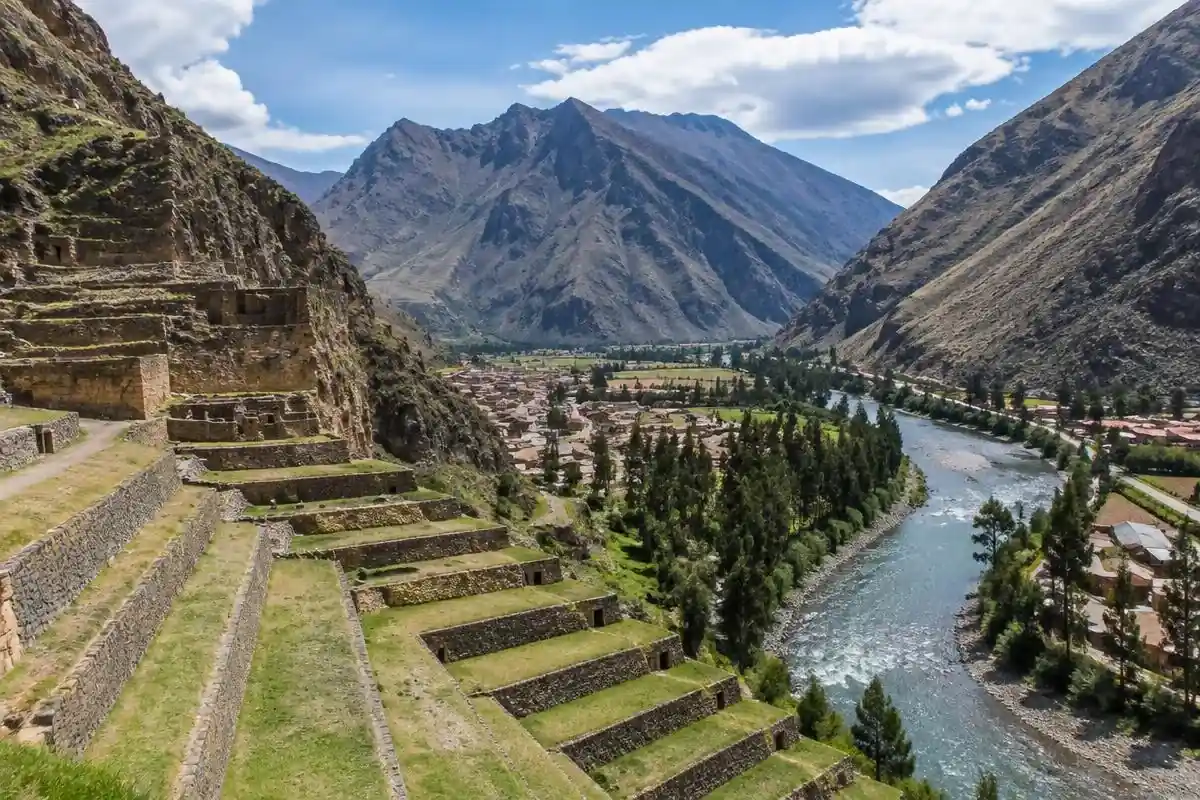
Day Tours · 1 day
Sacred Valley Full Day Tour
Chinchero, Moray, Maras salt mines, Ollantaytambo and Pisac in one full day from Cusco, with buffet lunch.
from $49
View tour →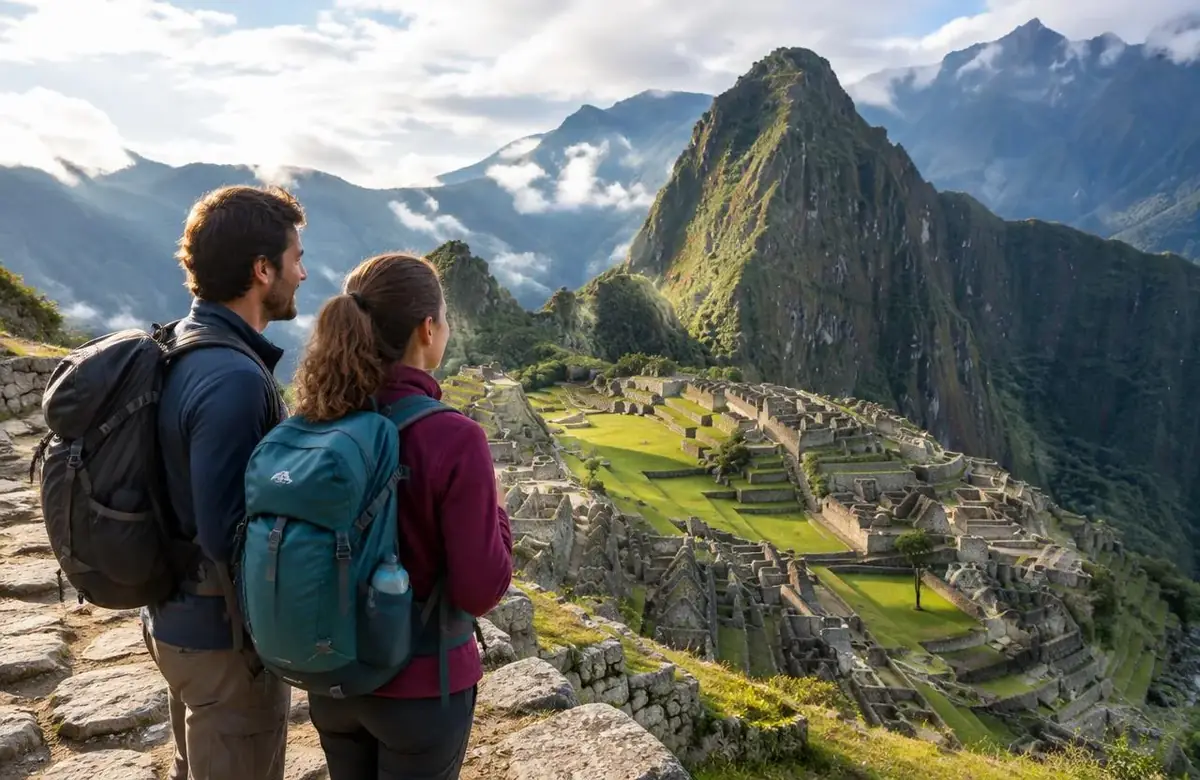
Packages · 7 days
Machu Picchu Vacation Packages, 3, 5 and 7 Days
3, 5 or 7 days from Cusco with hotels, trains, Machu Picchu tickets and guides arranged. From $479.
from $1290
View tour →Keep planning
- Aguas Calientes Hotels: Where to Stay in Machu Picchu Town and How to Choose
- Aguas Calientes Hot Springs: A Practical Guide to the Thermal Baths Below Machu Picchu
- Ollantaytambo: The Inca Fortress Town of the Sacred Valley Explained
- Sacsayhuamán: The Megalithic Inca Fortress Above Cusco Explained
- Qorikancha: The Golden Inca Temple of the Sun in Cusco
- Maras Salt Mines: How the Salineras de Maras Work and How to Visit
- Pisac Ruins: The Inca Citadel and Market Town of the Sacred Valley
- Things to Do in Cusco: The Best Sights, Day Trips and Local Food